


Introduction: The Critical Need for Mattress Spring Fatigue Testing
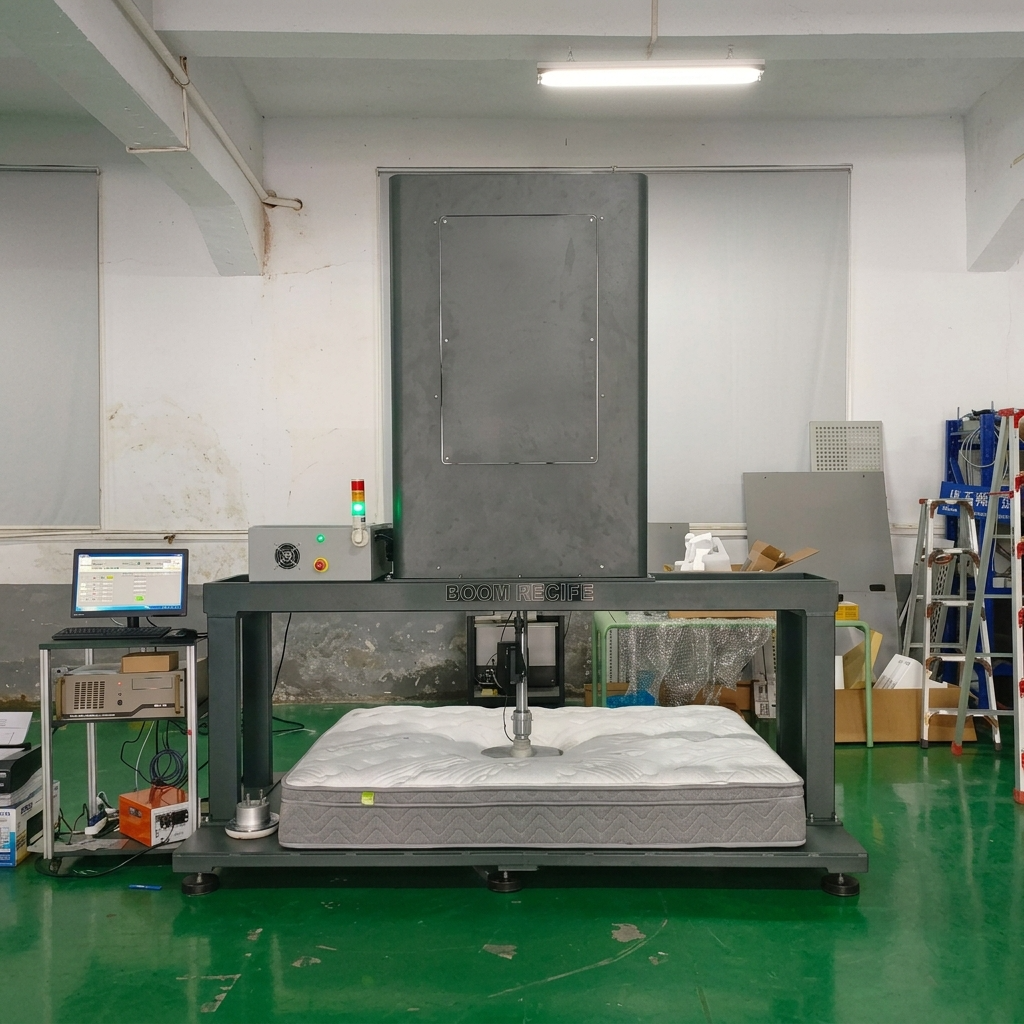
In the competitive mattress manufacturing industry, product durability directly impacts brand reputation, customer satisfaction, and warranty costs. A mattress that loses support, develops sagging, or experiences spring failure after months of use leads to returns and dissatisfied customers. The Computerized Mattress Spring Fatigue Testing Machine is a specialized testing system designed to evaluate the capacity of mattresses to withstand long-term repeated loads and measure compression deformation. By simulating years of nightly use in a controlled laboratory environment, this machine provides objective, repeatable data that helps manufacturers ensure product quality and compliance with international standards.
Standards Compliance: ASTM F1566-99
This testing machine is manufactured in strict accordance with ASTM F1566-99, the Standard Test Methods for Evaluation of Innersprings and Boxsprings. This standard outlines nationally recognized methods for testing mattress innersprings and boxsprings to ensure uniformity of results.
The standard specifies four separate test methods for evaluating mattress innerspring or boxspring units, including measurements of firmness, firmness retention, durability, and effect of impact. The durability test (Section 7), impact test (Section 8), and firmness retention test (Section 9) require the use of an upholstered innerspring or boxspring. The Computerized Mattress Spring Fatigue Testing Machine is specifically designed to perform these critical durability evaluations.
The Koenig Fatigue Test Method
The Computerized Mattress Spring Fatigue Testing Machine adopts the Koenig fatigue test method for mattresses, a widely recognized approach for assessing long-term durability[reference:6]. This method evaluates the mattress’s ability to withstand repeated impact loads over extended periods.
In the Koenig fatigue test, a specified impact block is used to apply cyclic loads to the mattress surface, simulating the repeated compression that occurs during normal use. The test provides critical data on how the spring system responds to long-term repetitive loading, including load-bearing capacity, fatigue resistance, and recovery characteristics—key indicators of mattress longevity and user comfort.
How the Computerized Mattress Spring Fatigue Testing Machine Works
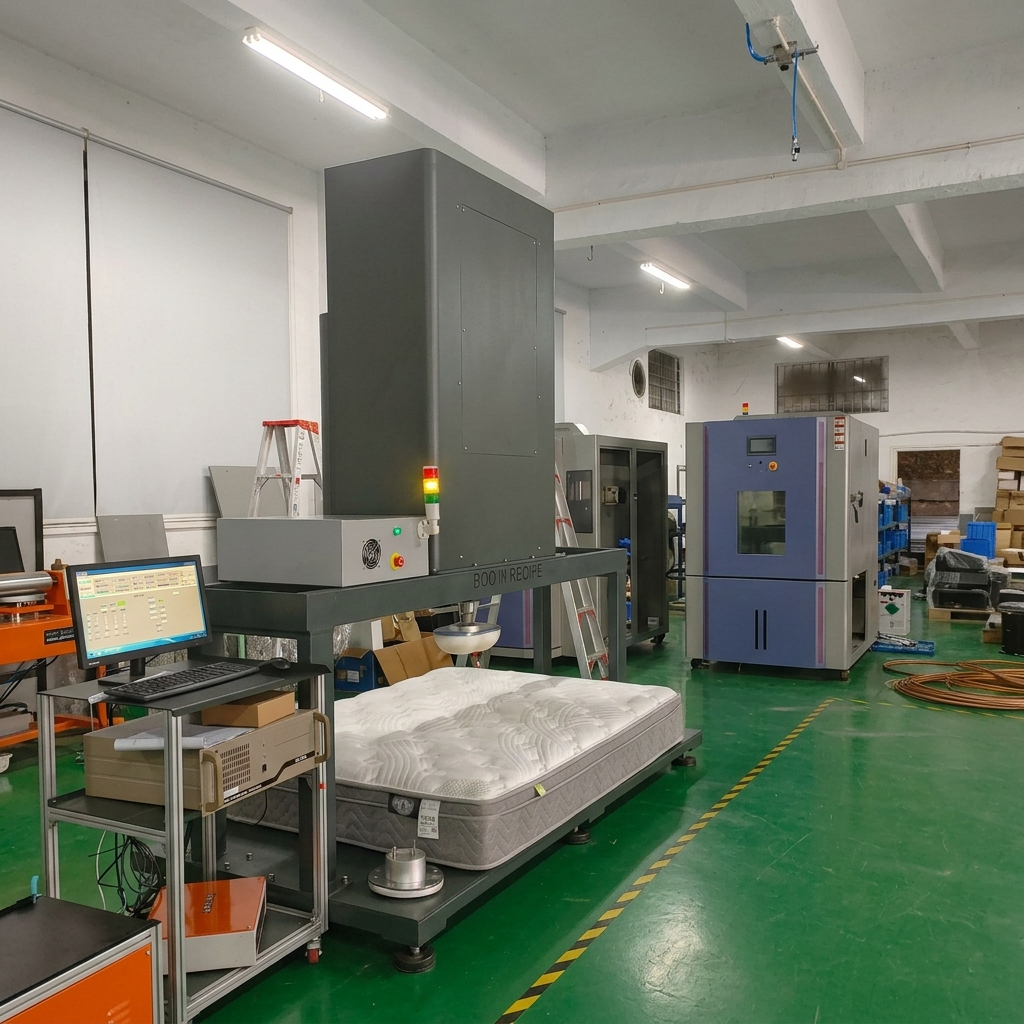
The Computerized Mattress Spring Fatigue Testing Machine operates on a robust electromechanical principle. An electric motor drives an eccentric wheel mechanism that converts rotary motion into controlled vertical reciprocating motion. After adjusting the impact height of the impact block to the desired position, the machine continuously impacts the mattress at a frequency of 120–160 cycles per minute.
Key operational features include:
- Double hemispherical ram head: The impact block features a double hemispherical design that simulates the load distribution of the human body.
- Adjustable stroke and impact height: The pushrod stroke on the mattress is adjustable, with maximum force reaching 1025N (230 lbf) and minimum force of 22N (5 lbf).
- Load cell sensor: A high-precision load cell is located on the ram head to measure the force being applied to the mattress in real time.
- Programmable counter: A digital counter records impact cycles and automatically stops the unit once the preset number of cycles is reached.
- LCD touch screen controller: Provides intuitive parameter setting and real-time monitoring of test progress.
Comprehensive Testing Capabilities
The Computerized Mattress Spring Fatigue Testing Machine offers a range of testing capabilities to meet diverse quality assurance needs:
1. Long-Term Repeated Load Testing
The machine evaluates the mattress’s capacity to withstand long-term repeated loads[reference:16]. By applying cyclic impacts at 120–160 cycles per minute, the test simulates years of nightly use in a matter of days, revealing how the spring system performs under sustained stress.
2. Compression Deformation Measurement
The tester measures compression deformation of the mattress, providing critical data on how much the mattress compresses under repeated loading. This measurement is essential for assessing long-term support retention and identifying potential sagging issues.
3. Spring Durability and Fastness Evaluation
By using a specific impact block on the mattress repeatedly, the machine assesses the durability and fastness of mattress springs. The test identifies weak points in the spring system, such as fatigue fractures, loss of tension, or connection failures.
Key Technical Specifications
Professional Computerized Mattress Spring Fatigue Testing Machines feature the following specifications:
- Design Criteria: ASTM F1566
- Maximum Force: 1025N (230 lbf)
- Minimum Force: 22N (5 lbf)
- Impact Frequency: 120–160 cycles per minute (adjustable)
- Impact Height: 0–300mm (adjustable)
- Counter Range: 0–99,999 cycles
- Display Accuracy: 0.001 kgf
- Deformation Precision: 0.001 mm
- Maximum Specimen Size: 2.2m × 2.2m
- Power Supply: 380V, 2KW DC
- Controller: LCD touch screen
Applications and Industries
The Computerized Mattress Spring Fatigue Testing Machine is widely used across multiple sectors:
- Mattress Manufacturers: Validate new spring designs and ensure batch-to-batch quality consistency.
- Innerspring and Boxspring Suppliers: Certify component durability for OEM customers.
- Testing Laboratories: Conduct third-party compliance testing per ASTM F1566-99.
- R&D Departments: Compare different spring materials, wire gauges, and coil configurations.
- Quality Control Departments: Perform routine production testing to identify defects before shipment.
Key Benefits for Manufacturers and Testing Laboratories
- Standard Compliance: The tester is manufactured according to ASTM F1566-99, ensuring test results are recognized and comparable across the industry.
- High Efficiency: Operating at 120–160 cycles per minute, the machine completes fatigue tests significantly faster than manual or slower systems.
- Automated Operation: The programmable counter with automatic stop function enables unattended testing, freeing technician time for other tasks.
- Precision Measurement: High-accuracy load cell and deformation sensors (0.001 mm precision) ensure reliable, repeatable results.
- Versatility: Suitable for testing innerspring, boxspring, and foam mattresses.
- Data-Driven Quality: Comprehensive data on compression deformation and spring durability enables continuous product improvement.
Testing Procedure Overview
A typical test using the Computerized Mattress Spring Fatigue Testing Machine follows this workflow:
- Specimen Mounting: Insert the mattress onto the test frame and slide the actuator to position the desired test location under the ram head.
- Parameter Setting: Program impact height, test frequency (120–160 cycles/min), and target cycle count via the LCD touch screen.
- Test Execution: Initiate the test. The machine automatically performs cyclic impacts while the load cell records force data in real time.
- Cycle Monitoring: The counter displays accumulated cycles. The machine stops automatically once the preset number of cycles is reached.
- Data Analysis: The system generates force-deflection data and compression deformation measurements for analysis.
- Report Generation: Produce comprehensive test reports documenting test parameters, force data, and pass/fail determination.
Conclusion: The Essential Tool for Mattress Spring Durability Testing
The Computerized Mattress Spring Fatigue Testing Machine is an indispensable instrument for any mattress manufacturer, testing laboratory, or quality control department committed to product durability and compliance with ASTM F1566-99 standards. By adopting the Koenig fatigue test method and operating at 120–160 cycles per minute with automatic cycle counting and stop functionality, this machine provides efficient, repeatable, and objective data on long-term repeated load capacity and compression deformation. Whether you are developing new spring designs, conducting routine quality control, or certifying products for regulatory compliance, this tester delivers the insights needed to build mattresses that maintain their support, comfort, and structural integrity over years of daily use.
Post time: Aug-17-2026


