


Introduction: The Multi-Purpose Solution for Material Mechanical Testing
The Electronic Desktop Tensile Testing Machine is a precision instrument designed for a wide range of mechanical property tests on various materials. Its compact desktop design, combined with exceptional versatility, makes it an ideal choice for quality control laboratories, R&D departments, and production facilities across multiple industries. By simply changing fixtures, this single machine can perform tensile strength, elongation, tear strength, adhesive force, tensile stress, peeling force, shear force, and rubber-to-metal bonding strength tests on both finished products, semi-finished products, and standard dumb-bell specimens. This adaptability makes it an indispensable tool for manufacturers of shoe soles, tires, rubber hoses, V-belts, plastic sheets, packaging films, acrylic, FRP, ABS, EVA, PV materials, and many other materials.
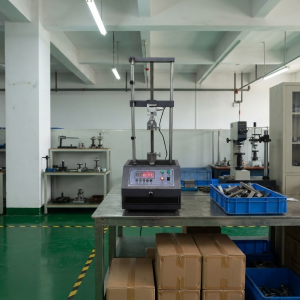
How the Electronic Desktop Tensile Testing Machine Works
The Electronic Desktop Tensile Testing Machine operates on a precision electromechanical principle. A high-performance servo motor drives a precision ball screw mechanism, applying a controlled tensile or compressive force to the test specimen. A high-accuracy load cell measures the applied force, while an optical encoder tracks crosshead displacement. The machine’s advanced electronic control system synchronizes these measurements, generating real-time force-displacement or stress-strain curves. The desktop design offers a compact footprint while maintaining exceptional rigidity and alignment, essential for accurate and repeatable test results across a wide range of materials and specimen types.
Comprehensive Testing Capabilities
With its interchangeable fixture system, the Electronic Desktop Tensile Testing Machine performs a complete spectrum of mechanical tests on virtually any material.
1. Tensile Strength and Elongation Tests
Measures the maximum tensile force a material can withstand before failure, along with the elongation percentage at break. Essential for rubber, plastics, films, and textile materials.
2. Tear Strength Test
Evaluates the resistance of materials to tearing, critical for rubber, films, textiles, and packaging materials.
3. Peel Test (Adhesive Force)
Measures the force required to separate two bonded materials. Supports 90° and 180° peel configurations for adhesive tapes, labels, and laminated materials.
4. Adhesive Bond Strength Test
Evaluates the strength of adhesive bonds between materials, including rubber-to-metal bonding.
5. Shear Strength Test
Measures the resistance of materials or adhesive bonds to sliding or cutting forces.
6. Compression Test (with optional fixtures)
Evaluates material behavior under compressive loads, suitable for foams, rubber, and packaging materials.
7. Flexural / Bending Test (with optional fixtures)
Determines the flexural strength and stiffness of rigid plastics, composites, and other materials.
8. Coefficient of Friction Test (with optional fixtures)
Measures the static and dynamic friction of films, paper, and other materials.
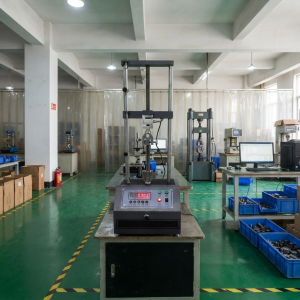
Wide Range of Material Applications
The Electronic Desktop Tensile Testing Machine is suitable for physical property testing across a diverse array of materials and products:
- Rubber and Elastomers: Tear strength, tensile strength, elongation, rubber-to-metal bonding strength
- Plastics and Polymers: Tensile strength, flexural strength, elongation, modulus for ABS, FRP, EVA, PV materials
- Films and Packaging Materials: Tensile strength, tear resistance, peel strength, heat seal strength
- Adhesives and Tapes: Peel adhesion, shear adhesion, tack, bonding strength
- Shoe Materials: Sole tensile strength, adhesion between sole and upper, tear resistance
- Tire and Rubber Products: Tensile strength, tear resistance, adhesion to cord
- Textiles and Fabrics: Tensile strength, seam strength, tear resistance
- Paper and Cardboard: Tensile strength, burst strength, tear resistance
Interchangeable Fixture System: One Machine, Multiple Tests
One of the key advantages of this tester is its interchangeable fixture system. The machine features a quick-change coupling mechanism that allows operators to switch between different grips and fixtures in seconds. Common fixture options include:
- Pneumatic Grips: Ideal for delicate films, rubber, and textiles requiring consistent clamping pressure
- Mechanical Wedge Grips: Suitable for high-force tests on plastics, rubber, and composites
- Roller Grips: Prevent specimen damage during fiber and yarn testing
- Peel Test Fixtures: 90° and 180° peel test configurations for adhesive and tape testing
- Compression Platens: Flat plates for compression testing of foams and packaging materials
- Bending Fixtures: 3-point and 4-point bend configurations for flexural testing
- Adhesion Test Fixtures: Specialized grips for rubber-to-metal bond testing
Key Technical Specifications
Professional Electronic Desktop Tensile Testing Machines feature the following specifications:
- Force Capacity: Typically 100N, 200N, 500N, 1kN, 2kN, 5kN, 10kN (customizable)
- Load Cell Accuracy: ±0.5% of reading (Class 1)
- Crosshead Speed Range: 0.001 – 500 mm/min (infinitely adjustable)
- Crosshead Stroke: Up to 800mm (depending on model)
- Displacement Resolution: 0.001 mm
- Control System: Computer or touch screen controller with professional test software
- Data Output: USB, Ethernet, RS-232 for data export
- Power Supply: 110V/220V AC, 50/60Hz
- Dimensions (W × D × H): Approx. 600 × 500 × 1200 mm (depending on model)
- Weight: Approx. 60–120 kg (depending on model)
Compliance with International Standards
The Electronic Desktop Tensile Testing Machine is designed to meet the requirements of numerous international testing standards:
- ASTM D412: Rubber – Tensile test method
- ASTM D638: Plastics – Tensile test method
- ASTM D882: Thin plastic films – Tensile test method
- ASTM D624: Rubber – Tear strength test
- ASTM D3330: Tape – Peel adhesion test
- ISO 37: Rubber – Tensile test
- ISO 527: Plastics – Tensile test
- GB/T 528: Rubber – Tensile test (Chinese standard)
- GB/T 1040: Plastics – Tensile test (Chinese standard)
- DIN 53504: Rubber – Tensile test (German standard)
Key Benefits for Manufacturers and Testing Laboratories
- Versatility: One machine replaces multiple specialized testers, saving floor space and capital investment
- Desktop Design: Compact footprint fits easily into any laboratory or production environment
- High Precision: Advanced load cell and displacement sensors ensure reliable, repeatable results
- Interchangeable Fixtures: Quick-change system adapts to virtually any specimen type and test standard
- Computer Control: Professional software provides real-time graphing, automatic calculations, and customizable reporting
- Wide Material Compatibility: Suitable for rubber, plastics, films, adhesives, textiles, and more
- Regulatory Compliance: Meets ASTM, ISO, GB, and DIN standards for material testing
Conclusion: The Essential Desktop Tester for Material Quality Assurance
The Electronic Desktop Tensile Testing Machine is the definitive solution for comprehensive material mechanical property testing in a compact, versatile package. Its robust design, high-precision measurement, extensive fixture compatibility, and wide range of applicable materials make it suitable for virtually any material testing application. Whether you are testing the tensile strength of rubber, the peel adhesion of a tape, or the tear resistance of a plastic film, this machine delivers the precise, repeatable data needed for quality assurance, R&D, and regulatory compliance. For any organization committed to material quality and performance, this electronic desktop tensile tester is an essential investment.
Post time: Aug-19-2026


