



In fast-paced development environments, products must prove their resilience not only to static high and low temperatures but to rapid transitions between them. The TE‑3007C FastRate Temperature Test Chamber (and comparable models) offers accelerated thermal cycling, enabling engineers to simulate real-world high/low temperature fluctuations in a fraction of the time. Reliable data from such tests helps validate product design, identify weakness early, and ensure durability under harsh environmental stress.
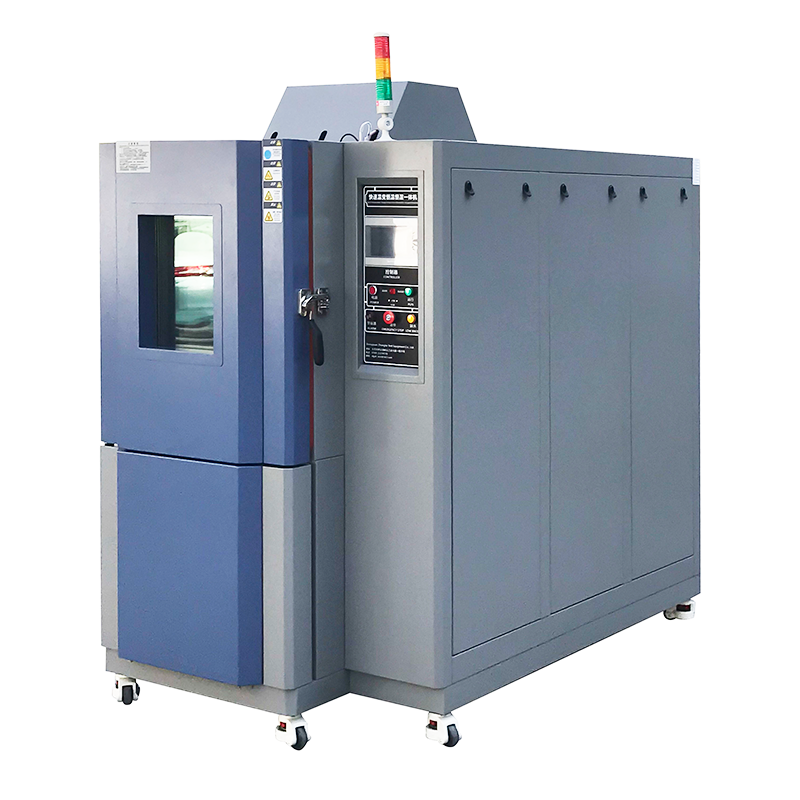
What makes a fast temperature test chamber different?
Unlike conventional climate chambers, fast-rate models deploy larger compressors, enhanced airflow, and advanced controls to accelerate temperature change (e.g., 5 °C/min to 20 °C/min or more). his capability is crucial when testing modern electronics, automotive components, material fatigue and other systems requiring rapid temperature shifts.
These chambers are especially suited for environmental stress screening (ESS), thermal shock testing and high-throughput durability validation.
Key Features & Specification Highlights
-
Temperature range: from ~-20 °C (or lower) up to +150 °C (with options to -40 °C or -60 °C)
-
Humidity range: 20% RH ~ 98% RH; Humidity precision ±3% RH; Temperature fluctuation ±0.5 °C
-
Fast ramp rates / lifting time: e.g., -40 °C to +125 °C in 5 ~ 20 °C per minute (varies by model)
-
Chamber size: e.g., internal 500 × 600 × 500 mm (W×H×D) for one typical model
-
Controller: PID/PLC touchscreen interface, data logging, temperature/humidity ramp programming
These kinds of specs place fast-rate chambers above typical walk-in or reach-in environmental chambers in terms of speed, responsiveness and testing throughput.
Why fast-ramp climate testing matters
Rapid temperature change testing (RTTC) helps identify design flaws, materials that cannot cope with steep thermal gradients, solder joints that crack, or coatings that peel. According to industry sources, using fast rate chambers helps expose failure modes much quicker than standard testing. For example:
-
Electronics and PCBs face continual hot-to-cold transitions in automotive or aerospace environments.
-
Consumer devices may be exposed to rapid outdoor/indoor changes.
-
New materials and adhesives need accelerated screening to validate durability.
By shortening test time and increasing thermal stress ramp rate, these chambers help reduce time-to-market and improve product reliability.
Applications Across Industries
-
Electronics & semiconductors – Assess PCB reliability, connector integrity under fast temperature swings
-
Automotive & EV components – Validate sensors, housings, power modules for thermal cycling
-
Materials & coatings – Evaluate thermal fatigue of plastics, composites, coatings
-
Packaging & logistics – Simulate extreme temperature conditions during shipping
Fast temperature test chambers are an increasingly important tool for R&D labs and quality assurance teams striving to ensure product robustness in varied and harsh environment conditions.
Selecting the Right Fast Temperature Test Chamber
When procuring a fast-rate chamber, key factors to consider:
-
Ramp rate capabilities – How fast it can change from low to high (or vice-versa)
-
Temperature/humidity range and precision – Matching the intended test profile
-
Chamber size and load capacity – Ensuring your test article fits and the system can handle its mass
-
Control system and data logging – Ease of programming, integration with test automation
-
Support & calibration – Ensuring long-term accuracy and compliance
Choosing the right model helps leverage all the advantages of fast-rate testing and ensures consistent, reliable results across test cycles.
Conclusion
For modern products facing increasingly stringent environmental demands, investing in a Fast Temperature Test Chamber is not optional—it’s essential. These systems provide accelerated life-cycle data, uncover design weaknesses earlier, and support compliance with global reliability standards. Whether you’re validating electronics, materials or packaged goods, fast-rate thermal cycling remains a cornerstone of high-quality product development.
Post time: Oct-23-2025


