


A floor drain looks like the simplest plumbing component in a bathroom, but it performs two opposing jobs at once: it must let water flow out quickly, and it must trap a small volume of water to stop sewer gas and insects from flowing back in. When either job fails, the consequence is immediate — a flooded bathroom, a lingering odor, or an insect infestation. The only reliable way to verify both functions before shipment is to test the drain under controlled flow, pressure, and vacuum conditions. This is exactly what a Floor Drain Comprehensive Performance Testing Machine is built to do.
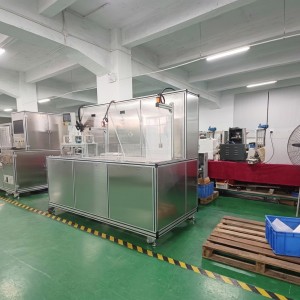
What a Floor Drain Comprehensive Performance Testing Machine Does
In short, a Floor Drain Comprehensive Performance Testing Machine reproduces the real-world conditions a floor drain faces and measures whether it performs within standard limits.
- It delivers water at a controlled pressure to measure drainage capacity and flow rate.
- It applies a vacuum (negative pressure) to verify that the water seal holds and does not break.
- It checks whether the trap retains enough water to block odor and gas backflow.
The result is a pass/fail judgment based on measurable values, not on visual inspection alone.
Why the Water Seal Is the Critical Test
The water seal is the small column of water that sits in the drain trap. Its only job is to act as a physical barrier between the room and the sewer.
- A trap seal that is too shallow breaks under negative pressure, letting sewer gas pass.
- A seal that evaporates or siphons away during heavy flow leaves the drain “open.”
Standards define a minimum water-seal depth that a drain must maintain. For example, EN 1253 and its national adoptions specify a minimum trap seal depth (commonly 50 mm) that the drain must retain after discharge. A Floor Drain Comprehensive Performance Testing Machine measures seal depth and negative-pressure resistance so this requirement can be verified and documented.
Core Tests the Machine Performs
Conclusion first: a comprehensive floor drain test covers drainage, seal integrity, odor resistance, and structural endurance under vacuum.
- Drainage capacity test — measures how fast the drain removes water at a given head, confirming it meets the rated flow.
- Water-seal depth test — verifies the trap retains the minimum seal depth after discharge.
- Odor / gas-tightness test — checks that no sewer gas passes the seal under a specified vacuum.
- Negative-pressure endurance test — confirms the seal holds under repeated negative pressure without siphoning.
Standards a Floor Drain Comprehensive Performance Testing Machine References
- EN 1253 (and BS EN 1253 / DIN EN 1253) — European standard for gullies and floor drains, covering trap seal depth and flow rates.
- ASME A112.6.3 — North American standard for floor and trench drains.
- GB/T 27710 — Chinese national standard for floor drain products, specifying sealing and drainage requirements.
These references give the test measurable acceptance criteria, so results are traceable rather than subjective.
Measurable Parameters of the LT-WY38
The Floor Drain Comprehensive Performance Testing Machine LT-WY38 operates within defined ranges that support repeatable testing:
- Working pressure: 0.3 MPa – 0.6 MPa (external supply).
- Vacuum pressure: -0.085 MPa – 0 MPa, adjustable.
- Test medium: room-temperature water and vacuum negative pressure.
- Power supply: water pump, heating, and cooling on three-phase AC380V; other functions on single-phase AC220V.
These parameters allow the machine to simulate both the inflow (pressure side) and the backflow risk (vacuum side) that a floor drain encounters in service.
How to Choose a Floor Drain Tester
- Match your target standard. EU/UK buyers typically need EN 1253 coverage; North American buyers reference ASME A112.6.3; domestic export checks often cite GB/T 27710.
- Confirm the vacuum range. A machine with adjustable negative pressure is needed to verify seal integrity, not just drainage.
- Check the medium and power configuration. Confirm the water pressure and electrical supply fit your site.
FAQ
What is a floor drain water seal, and why does it matter? The water seal is the trapped water inside the drain that blocks sewer gas and insects. If it breaks, gas and odors enter the room.
Which standards apply to floor drain testing? EN 1253, ASME A112.6.3, and GB/T 27710 are common references for flow, seal depth, and drainage performance.
What does a Floor Drain Comprehensive Performance Testing Machine measure? It measures drainage capacity, water-seal depth, odor/gas-tightness, and negative-pressure endurance.
Conclusion
A floor drain’s value is decided by two quiet details: how fast it drains and whether its water seal survives pressure swings. A Floor Drain Comprehensive Performance Testing Machine turns both details into measurable, standards-based results. For manufacturers selling into the EU, North America, or Southeast Asia, verifying these parameters before shipment is the difference between a component that performs and one that returns as a warranty claim.
Post time: Nov-24-2026


