



The Guardian’s Endurance Test: How Multi-Point Lock Fatigue Testing Ensures Decades of Security
A multi-point locking system is the sophisticated shield of modern doors and windows, distributing locking forces across multiple bolts for superior security and weather sealing. But what happens after years of daily slamming, seasonal frame movement, and constant engagement cycles? Wear in the gearbox, fatigue in the connecting rods, or failure of a single strike plate can compromise the entire system’s integrity. How can manufacturers guarantee that these complex mechanisms will perform flawlessly for 20,000, 50,000, or even 100,000 cycles? The Multi-Point Lockator Fatigue Testing Machine provides the definitive, protocol-driven answer. This advanced simulator recreates the exact forces and frequencies specified in international standards, rigorously validating the mechanical lifespan of multi-point locks under controlled, accelerated conditions. This guide details the critical test method that separates high-security hardware from substandard imitations.
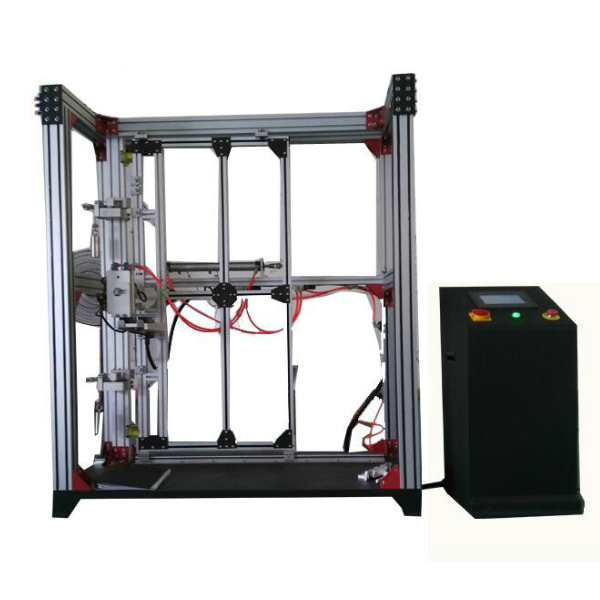
What is a Multi-Point Lock Fatigue Testing Machine?
A Multi-Point Lock Fatigue Testing Machine is a programmable, multi-axis testing system designed to evaluate the operational lifespan and mechanical durability of complex door and window locking mechanisms. Unlike testing a single latch, this machine simulates the real-world installation by mounting the complete multi-point lock onto a representative test frame (a simulated door or window sash). It then applies synchronized, cyclical forces—both parallel and perpendicular to the plane of the sash—mimicking the stresses of use, wind load, and frame deflection. By executing hundreds of cycles per hour, it compresses years of service into a matter of days, providing quantifiable data for multi-point locking system durability certification.
Decoding the Standardized Test Protocol
The rigorous testing method, as you’ve specified, is designed to replicate a lifetime of abusive use:
- Real-World Installation: The lock is installed on a test frame that matches the intended application dimensions and geometry, ensuring accurate load paths and alignment.
- Bi-Directional Force Application: The machine applies a defined force (e.g., 10N) simultaneously in two directions:
- Parallel to the Sash: Simulates forces from normal operation, closing, and friction.
- Perpendicular to the Sash: Simulates forces from wind pressure, attempted forced entry, or frame racking.
- Controlled Cycling & Maintenance: Tests run at a high frequency (e.g., 250-275 cycles/hour). Crucially, the protocol mandates periodic inspection and lubrication every 5,000 cycles, mirroring real-world maintenance needs and testing the lock’s performance with and without fresh lubrication.
The Precision Testing Workflow: From Setup to Failure Analysis
Executing a valid door window lock fatigue test requires meticulous adherence to the following process:
- Fixture & Lock Installation: The representative door/window test frame is mounted. The multi-point lock is installed per manufacturer instructions, with all connecting rods and strike plates correctly aligned.
- Actuator Alignment & Force Calibration: The machine’s robotic actuators are positioned to apply the precise 10N forces in the parallel and perpendicular vectors. Force sensors are calibrated.
- Programmed Accelerated Cycling: The test begins. The lock is engaged and disengaged thousands of times at the specified high frequency (250-275 cycles/hour), 24 hours a day.
- Periodic Maintenance & Inspection (Every 5,000 cycles): The test is paused. The lock is inspected for loose parts, wear, or deformation, and lubricated as per its manual. This cycle of stress and maintenance is repeated.
- Failure Detection & Final Assessment: The test runs until a predefined cycle count is reached or a failure occurs (e.g., broken component, failure to latch, excessive force required). A final teardown inspection identifies wear modes.
Why This Rigorous Fatigue Test is Non-Negotiable
For manufacturers of high-performance doors and windows, this test is a cornerstone of quality assurance and risk management:
- Prevent Catastrophic Field Failures: A failed multi-point lock in a commercial building can be a security disaster. This test identifies weak links (e.g., a specific gear or rod) before production, preventing callbacks and liability claims.
- Certify Compliance with High-End Standards: Passing a rigorous multi-axis fatigue test is often required to meet stringent European and international standards (e.g., EN 12209 for locks), which is essential for specification in commercial and high-security projects.
- Validate Design and Material Choices: Provides empirical data to compare different alloys, plastic composites, and gear designs under simulated long-term stress, driving engineering improvements.
- Build a Brand on Proven Reliability: Marketing doors and windows with locks certified to withstand 50,000+ cycles of dual-axis force builds immense trust with architects, builders, and end-users.
Key Capabilities of a Compliant Testing System
Selecting the right Multi-Point Lock Fatigue Testing Machine requires verification of these specific capabilities:
- Dual-Axis (or Multi-Axis) Force Application: The system must be able to apply and maintain synchronized, independent forces in at least two perpendicular directions simultaneously.
- High Cycle Frequency & Endurance: It must reliably operate at 250-300 cycles per hour for weeks or months without downtime or loss of calibration.
- Programmable Maintenance Intervals: The controller should allow for automatic pause and alert at set cycle counts (e.g., every 5,000) to facilitate inspection and lubrication.
- Versatile & Adjustable Fixturing: The test frame and actuator mounts must be adaptable to accommodate a wide variety of lock sizes and door/window profiles.
- Precise Force Control & Monitoring: Load cells must continuously verify that the applied 10N force is maintained within tolerance throughout the test.
Conclusion: Engineering Confidence for a Lifetime of Security
The true measure of a security product is not how it performs on day one, but how it performs on day 10,000. The Multi-Point Lockator Fatigue Testing Machine is the essential instrument that provides this long-term assurance. By subjecting locks to a controlled, accelerated simulation of a lifetime’s worth of stress and maintenance cycles, it delivers the empirical proof needed to certify performance, ensure compliance, and build unshakeable confidence. Investing in this level of validation is an investment in the core promise of security and durability that defines leading brands in the architectural hardware industry.
Post time: Dec-22-2025


