



The Unseen Workhorse: How a Caster Life Tester Ensures Your Office Chairs Roll Smoothly for Years
Office chair casters are the unsung heroes of the modern workplace, silently enduring miles of rolling, abrupt stops, and encounters with carpet edges and cable trays. A single failing caster—whether it cracks, seizes up, or loses its wheel—can render a perfectly good chair useless and frustrate the end-user. How can manufacturers guarantee that these critical components will last for the entire lifespan of the chair? The Office chair caster life testing machine provides the definitive, data-driven answer. This specialized furniture testing equipment simulates years of real-world movement in a matter of days, separating reliable casters from those destined for premature failure. This guide delves into why this test is a cornerstone of quality office furniture manufacturing.
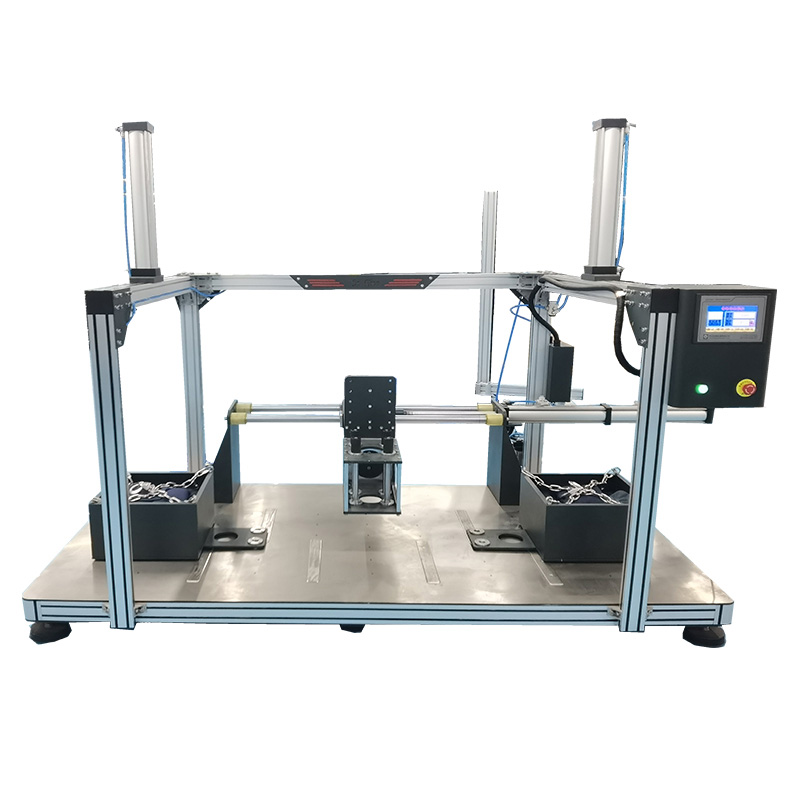
What is an Office Chair Caster Life Testing Machine?
An Office chair caster life testing machine is a precision-engineered laboratory instrument designed to evaluate the durability and rolling lifespan of casters (universal wheels) under a simulated load. Its primary function, as per your description, is to assess the caster’s ability to move continuously while supporting weight, mimicking the daily back-and-forth motion of an office chair. The test is typically divided into two critical methods: a smooth surface endurance test and an obstacle test, where the casters are driven over a standardized barrier thousands of times. This process accelerates wear and tear, providing a predictive measure of the caster’s long-term performance and reliability.
Core Testing Methods: Simulating Real-World Challenges
The machine comprehensively evaluates caster durability through two primary modes:
- Smooth Surface Endurance Test: The chair, loaded with a standard weight, is pushed and pulled back and forth over a smooth track for a set number of cycles. This tests general wear on the wheel material, bearing, and swivel mechanism.
- Barrier/Obstacle Test: This more aggressive test involves rolling the casters over a recurring barrier or a series of bumps. This simulates the impactful stress of crossing carpet edges, door thresholds, or cables, which is the leading cause of caster stem breakage and wheel damage.
Together, these methods provide a complete picture of caster durability under both normal and abusive conditions.
How the Machine Simulates a Decade of Daily Commutes
The operation of a chair wheel tester is an automated and precisely controlled process that aligns with standards like BIFMA. Here’s a breakdown:
- Setup: An office chair is mounted on the machine, and a specified load is placed on the seat to simulate a user’s weight.
- Programming: The operator uses the control system to set the test parameters: the total number of cycles (often tens of thousands), the travel distance, the speed, and the test method (smooth or barrier).
- Execution: The machine’s “force circulation device” automatically engages, applying a left-and-right reciprocating push-and-pull action to the chair, driving the casters along the test path.
- Evaluation: After the preset cycles are complete, the casters are inspected for failure. Criteria include excessive wheel wear, cracking, loss of rolling ability, swivel mechanism seizure, or stem breakage.
Why Caster Testing is Non-Negotiable for Quality Assurance
Integrating a rigorous caster durability test into your office chair quality control process is a strategic business decision with a clear ROI:
- Ensure Compliance with BIFMA Standards: Passing a standardized caster test is a fundamental requirement of BIFMA certification, a key benchmark for corporate and institutional purchasers.
- Prevent Costly Returns and Warranties: Caster failure is a common reason for customer complaints. Proactive testing identifies weak designs or subpar materials before they reach the market.
- Protect Flooring and Enhance User Satisfaction: Durable casters roll smoothly without damaging expensive office flooring, while faulty casters create a frustrating user experience.
- Build a Reputation for Reliability: Chairs that pass rigorous durability testing allow you to market your products with confidence, building long-term brand trust.
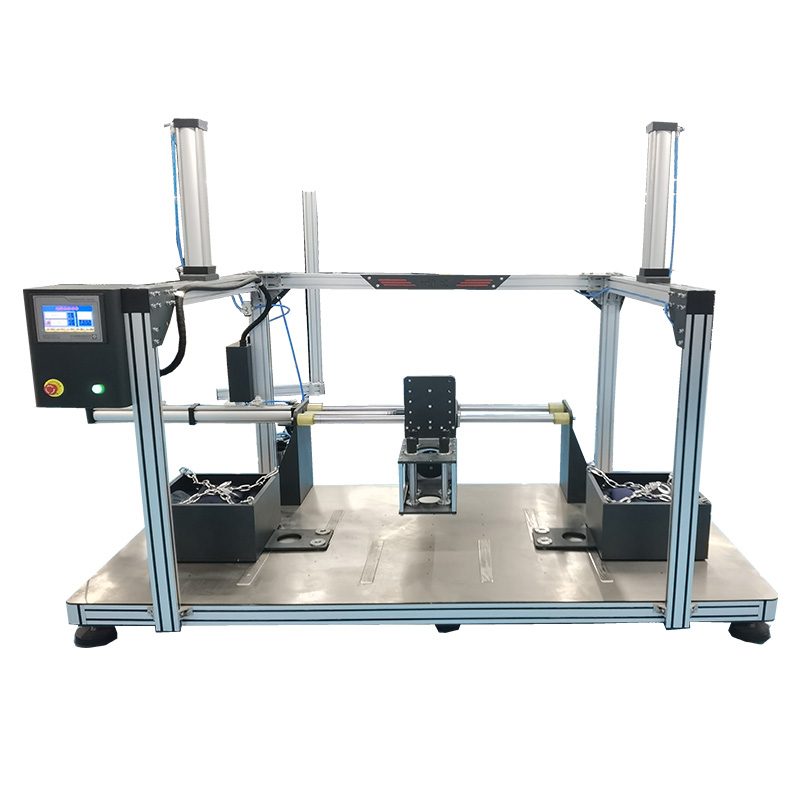
Key Specifications to Consider When Choosing a Machine
Selecting the right Office chair caster life testing machine requires careful evaluation of its capabilities:
- Test Versatility: Ensure the machine can perform both smooth surface and barrier tests to fully assess caster performance.
- Load Capacity: The machine must accommodate the standard loads required by testing protocols (e.g., BIFMA specifies 110kg / 242lbs).
- Programmability and Control: Look for a system that allows precise setting of cycle count, speed, and travel distance, with automatic shutdown upon completion or failure detection.
- Durability and Build Quality: The tester itself must be robust enough to withstand millions of reciprocating cycles without failure or loss of accuracy.
- Compliance with Standards: Verify that the machine’s design and test methods are aligned with the relevant international standards you need to meet (BIFMA, EN, etc.).
Conclusion: Roll with Confidence by Validating Every Wheel
In the competitive office furniture market, no detail is too small to overlook. The humble caster plays an outsized role in the overall user perception of your chair’s quality. An Office chair caster life testing machine provides the undeniable proof that your casters are built to last. By subjecting them to a simulation that is often harsher than real life, you can launch every product with the confidence that it will deliver a smooth, reliable, and frustration-free experience for years to come. This isn’t just about testing a component; it’s about ensuring the complete integrity and reputation of your product.
Post time: Nov-19-2025


