



Is Your Office Chair Built to Last? The Critical Role of Repeated Impact Testing
An office chair is one of the most abused pieces of furniture in any workspace. It’s leaned back, rolled around, and sat down in countless times a day. But how can manufacturers be sure their chairs will withstand years of this daily punishment without failing? The answer lies not in guesswork, but in a precise, standardized simulation: the Office Chair Repeated Impact Test Machine. This essential piece of furniture testing equipment is the definitive method for assessing durability, safety, and overall quality, ensuring your products meet industry standards and customer expectations. This guide dives deep into how it works and why it’s non-negotiable for any serious manufacturer.
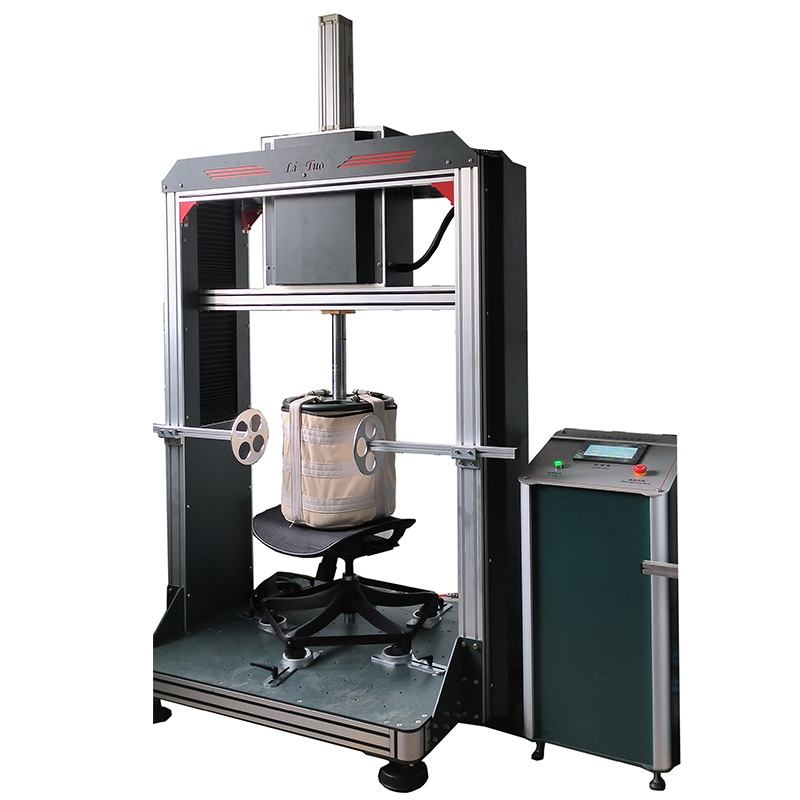
What is an Office Chair Repeated Impact Test Machine?
An Office Chair Repeated Impact Test Machine is a specialized laboratory device designed to simulate the repetitive sitting impacts an office chair endures over its entire lifespan. As you specified, this multi-function equipment can perform both repeated impact tests and disposable impact tests on the seat surface. The core purpose is to assess the durability of the chair under vertical forces in an accelerated, controlled, and measurable way. It essentially acts as a “robot user” that sits down on the product in an abusive manner thousands of times, providing quantifiable data on the chair’s structural integrity and one-impact capacity.
Key Components: The Anatomy of a Durability Simulator
A reliable chair durability tester is built from several key components that work in concert:
- Impact Hammer/Drop Weight: A weighted mass that is dropped onto the seat surface from a predetermined height to simulate a person sitting down.
- Lifting & Release Mechanism: An automated system that consistently lifts and releases the weight at a specified frequency (e.g., every 2 seconds).
- Test Frame & Chair Baseplate: A rigid structure that securely holds the office chair in its standard use position during testing.
- Electronic Counter & Controller: The brain of the machine, which sets the number of cycles, controls the impact frequency, and may monitor for premature failure.
How Does a Chair Impact Tester Simulate Years of Use?
The operation of a seat impact tester is a brutal yet precise process that aligns with standards like BIFMA. Here’s a simplified breakdown:
- Setup: The office chair is securely fastened to the baseplate in a normal sitting position.
- Programming: The operator inputs the test parameters—such as the number of cycles (e.g., 100,000 impacts), drop height, and impact frequency—as required by the relevant BIFMA testing standard.
- Execution: The machine automatically lifts and drops the impact hammer onto the center of the seat surface repeatedly. This continuous, rhythmic impact simulates years of normal and abusive use in just a few hours or days.
- Evaluation: After the test cycle is complete, the chair is inspected for failures such as frame cracks, weld breaks, gas lift cylinder failure, or permanent deformation of the seat pan.
Why This Test is Non-Negotiable for Quality Control
Implementing a Office Chair Repeated Impact Test Machine in your office chair quality control process is a strategic decision that delivers tangible benefits:
- Prevents Product Failure: Identifies design weaknesses and material flaws before mass production, saving enormous costs in recalls and warranties.
- Ensures Compliance & Safety: Verifies that your products meet or exceed international safety and durability standards (like BIFMA), which is critical for market access and liability reduction.
- Builds Brand Reputation: Chairs that pass rigorous durability testing are less likely to fail in the field, leading to higher customer satisfaction and brand trust.
- Drives R&D Innovation: Provides invaluable data that engineers can use to improve designs, select better materials, and create more robust products.
Key Specifications to Consider When Choosing a Machine
Selecting the right Office Chair Repeated Impact Test Machine is critical for obtaining valid and reliable results. Focus on these key specifications:
- Impact Energy & Weight: The machine must be capable of delivering the specific impact energy (a function of weight and drop height) required by the testing standards you follow.
- Cycle Speed & Accuracy: Look for consistent impact frequency (e.g., 10-30 cycles per minute) and a high-precision counter to ensure test repeatability.
- Versatility (Multi-Function): As per your product description, ensure the machine can perform both repeated impact and disposable impact tests to cover all compliance needs.
- Build Quality & Safety: The frame must be extremely rigid to withstand the repeated forces, and include safety guards to protect operators.
- Data Logging: Advanced models may offer features like automatic stop on failure detection, providing even more precise test data.
Conclusion: Build Trust by Testing to the Extreme
In the competitive office furniture market, durability is a primary selling point. An Office Chair Repeated Impact Test Machine is not merely a quality control expense; it is a powerful tool for building product integrity and customer trust. By rigorously simulating a lifetime of use in a controlled environment, you can confidently bring chairs to market that are proven to be safe, reliable, and long-lasting. In an era where quality is paramount, this machine provides the undeniable proof that your products are built for business.
Post time: Nov-12-2025


