



Built for Impact: How Vertical Drop Testing Guarantees Your Skates Can Take a Landing
The true test of a roller skate, skateboard, or scooter isn’t on smooth pavement—it’s in the unexpected jolt of a cracked sidewalk, the hard landing from a curb, or the stress of an ambitious jump. These vertical impacts transmit immense force directly through the wheels and into the frame, where a weak point can lead to cracks, breaks, and rider injury. How can manufacturers move beyond theoretical strength ratings to prove their products can survive real-world abuse? The Roller Skates Vertical Impact Testing Machine is the definitive answer. This specialized apparatus simulates harsh landings with scientific repeatability, providing irrefutable data on the impact durability of the entire assembly. This guide explores how it serves as the cornerstone of safety and performance validation in action sports.
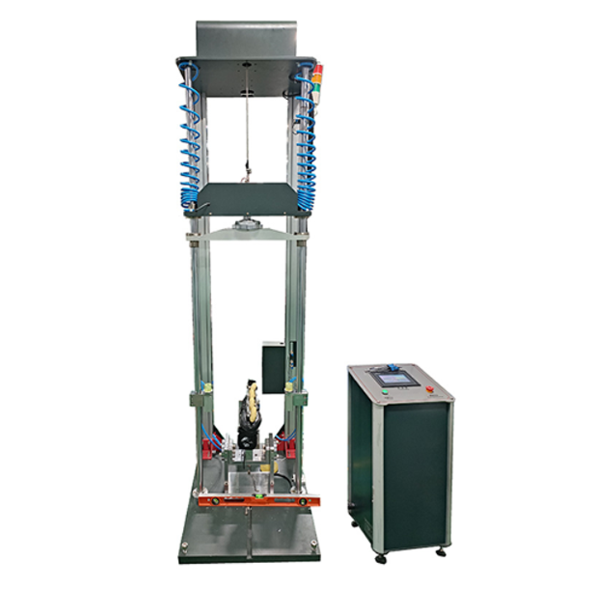
What is a Roller Skate Vertical Impact Testing Machine?
A Roller Skates Vertical Impact Testing Machine is a dynamic mechanical test system designed to evaluate the structural integrity of skates, skateboards, and scooters under sudden vertical loading. As per your product description, its core function is anti-impact strength testing. The machine typically operates by lifting a complete product or a critical sub-assembly (like a truck and wheel) to a predetermined height and releasing it in a guided free-fall onto a standardized anvil or impact surface. By measuring the forces involved and inspecting for damage, it quantifies the product’s ability to absorb shock without permanent deformation or catastrophic failure, making it essential for sports equipment safety test protocols.
The Science of the Simulated Landing
The test replicates physics through controlled parameters:
- Controlled Drop Height: The product is raised to a specific height, defining the potential energy of the impact. Higher drops simulate more severe landings.
- Guided Free-Fall & Impact: The product is dropped along guide rails or rods to ensure a perfectly vertical, consistent impact on the target area (e.g., a single wheel or the deck center).
- Energy Transfer & Measurement: Upon impact, the kinetic energy is transferred through the product’s structure. Advanced machines use a load cell in the anvil to measure the peak impact force (G-forces) and the force-time pulse.
- Post-Impact Inspection: The critical assessment. The product is examined for functional and structural damage: cracked frames, bent axles, wheel hub fractures, or compromised deck laminates.
The Standardized Impact Testing Protocol
Conducting a reliable skateboard impact durability test follows a rigorous, repeatable process:
- Sample Configuration: The skate, board, or scooter is configured in a riding posture (wheels down) and securely attached to the machine’s drop carriage.
- Parameter Setting: The test standard (e.g., referencing aspects of ASTM F2264 for skateboards) dictates key parameters: drop height, impact surface (steel, concrete replica), and number of successive drops.
- Execution & Cycling: The machine releases the sample for the initial impact. For fatigue testing, this may be repeated dozens or hundreds of times at the same or increasing heights.
- Real-Time Data Capture: Sensors record the shock pulse. A sudden change in the pulse profile can indicate internal damage even before it’s visually apparent.
- Pass/Fail Evaluation: After the test sequence, the product must remain fully functional with no critical cracks, permanent deformation exceeding limits, or wheel bearing failure.
Why Vertical Impact Testing is a Safety Imperative
For brands in the action sports industry, this test is a non-negotiable component of product liability and brand trust:
- Prevent Catastrophic Field Failures: Identifying a weak truck casting or a poor deck laminate bond in the lab prevents a high-speed failure that could cause serious rider injury and devastating lawsuits.
- Validate Design for “Street” Use: Provides objective proof that a product marketed for all-terrain or aggressive use can actually withstand the impacts such use entails.
- Benchmark & Improve Materials: Offers comparative data on different aluminum alloys for frames, composite layups for decks, and urethane formulas for wheels, driving material science innovation in the industry.
- Comply with Evolving Safety Standards: As regulations for micro-mobility and sports equipment tighten, data from certified impact tests will become crucial for market access and retail partnerships.
Key Specifications of a Reliable Impact Tester
Selecting the right Roller Skates Vertical Impact Testing Machine requires evaluating its ability to deliver consistent, real-world simulation:
- Adjustable Drop Height & Mass: The system must allow precise setting of drop height and potentially accommodate added mass to simulate different rider weights.
- Robust Guide System & Anvil: Guides must ensure frictionless, true vertical falls. The anvil must be massive and rigid to not absorb impact energy, ensuring it’s all transferred into the test sample.
- High-Speed Data Acquisition: To capture the short-duration impact event (often milliseconds), the system needs a high-sample-rate data acquisition system.
- Durable Construction: The tester itself must withstand thousands of high-energy impacts without degradation of its alignment or function.
- Safety Enclosures: Full protective guarding is mandatory to contain any fragments in case of a catastrophic sample failure during testing.
Conclusion: The Foundation of Trust on Every Landing
In action sports, confidence in your equipment is paramount. The Roller Skates Vertical Impact Testing Machine builds this confidence directly into the product at the design and manufacturing stage. By subjecting products to controlled, measurable impacts that are often harsher than typical use, it provides empirical evidence of durability and safety. This investment goes beyond simple compliance; it is a commitment to engineering products that empower riders to push limits without fear of equipment failure, solidifying your brand’s reputation for reliability and performance where it matters most.
Post time: Dec-23-2025


