



Don’t Just Guess the Strength: Your Guide to Single Column Table Tension Testers
In the world of manufacturing and quality control, knowing the exact strength of your materials isn’t a luxury—it’s a necessity. Whether you’re producing a medical device, a car component, or a simple plastic toy, failure is not an option. How can you ensure your materials can withstand the forces they’ll face in the real world? Enter the Single Column Table Tension Tester. This compact yet powerful universal testing machine is the key to unlocking precise data on tension, compression, and bending properties. This definitive guide will walk you through how it works, why it’s essential, and how to choose the right one for your lab.
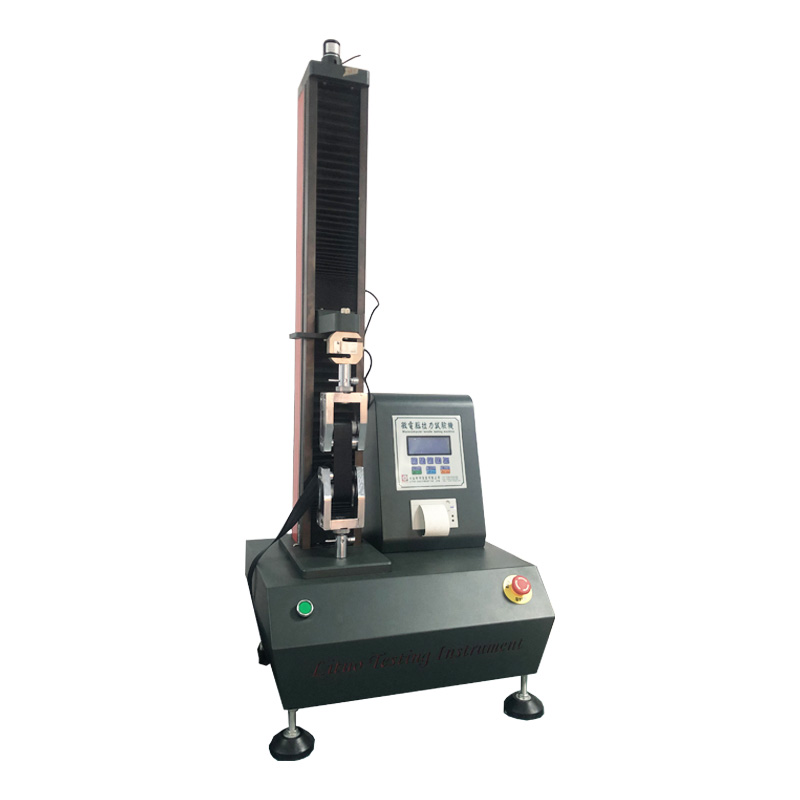
What is a Single Column Table Tension Tester?
A Single Column Table Tension Tester, often referred to as a table top tensile tester, is a benchtop instrument designed to perform static tension and compression tests on materials, components, and structures. It features a single vertical column that provides the framework for a moving crosshead. The system works by applying a controlled, measurable force to a sample until it yields or fractures, providing critical data on properties like tensile strength, elongation, compression strength, and modulus of elasticity. Its compact size makes it ideal for quality control labs, R&D departments, and educational settings where space is limited but precision is paramount.
Key Components and Their Functions
To achieve accurate results, a reliable table top universal tester is built around several key components:
- Load Frame: The single rigid column and base that provide stability.
- Drive System: Typically a ball screw or lead screw, which moves the crosshead up and down at a controlled speed.
- Load Cell: The heart of the system, a sensor that precisely measures the force applied to the sample.
- Grips and Fixtures: Specialized jaws and holders that securely grip the sample for tension, compression, or bending tests.
- Digital Controller & Software: The interface for setting test parameters, displaying real-time data (force, displacement), and generating reports.
How Does a Table Top Tensile Tester Work?
The operation of a Single Column Table Tension Tester is a precise, automated process. First, the operator selects the appropriate grips and installs the sample. Through the software, they input the test standard (e.g., ASTM D638, ISO 527) or set parameters like test speed and desired stop conditions. Upon starting, the drive system moves the crosshead, applying a stretching (tension) or crushing (compression) force. The digital force gauge (load cell) continuously records the force, while an encoder tracks the crosshead displacement. The software plots this data as a force-displacement curve, from which key mechanical properties are automatically calculated, providing a complete picture of the sample’s performance under stress.
Wide-Ranging Applications Across Industries
The versatility of the Single Column Table Tension Tester makes it a vital tool across countless sectors. It is indispensable for conducting a reliable material tension test and more. Key applications include:
- Plastics & Polymers: Measuring tensile strength, elongation, and modulus of plastic films, parts, and composites.
- Rubber & Elastomers: Testing for elongation at break and compression set.
- Metals: Performing tension tests on thin metals, wires, and foils.
- Textiles & Fibers: Determining the breaking strength of yarns, fabrics, and non-wovens.
- Adhesives: Conducting peel and lap-shear tests.
- Paper & Packaging: Testing the compression strength of corrugated boxes or the tensile strength of paper.
Critical Factors for Choosing the Right Tester
Selecting the ideal table top tensile tester for your needs requires careful consideration of several factors:
- Force Capacity: This is the most crucial spec. Choose a machine with a maximum force (e.g., 5kN, 10kN) that comfortably exceeds your strongest sample’s expected breaking force.
- Test Space: Ensure the distance between the columns and the vertical testing space can accommodate your largest samples and required fixtures.
- Accuracy & Resolution: Look for a high-quality load cell with accuracy of ±0.5% or better for reliable data.
- Software Capabilities: The software should be intuitive, support relevant international standards, and allow for easy data export and reporting.
- Grip & Fixture Availability: Verify that the manufacturer offers a wide range of grips (e.g., manual, pneumatic, tensile, compression) for your specific applications.
Conclusion: Empowering Your Quality Assurance with Precision
In conclusion, a Single Column Table Tension Tester is more than just a piece of lab equipment—it is a fundamental pillar of a robust quality assurance program. By providing accurate, repeatable data on the mechanical properties of your materials, it empowers you to prevent product failure, optimize designs, and ensure customer satisfaction. Investing in the right table top universal tester is a direct investment in the reliability of your products and the strength of your brand.
Post time: Nov-11-2025


