


As smart toilets become increasingly sophisticated, their reliability depends not only on the overall ceramic body and electronic control system, but also on the durability of critical functional components. Pumps, valves, spray assemblies and instant heating systems may undergo thousands of repeated operations during the product’s service life.
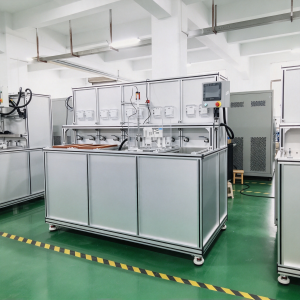
For manufacturers aiming to improve product reliability and quality control, the Smart Toilet Component Fatigue Testing Machine provides an effective solution for evaluating the long-term durability of these key components.
Why Is Component Fatigue Testing Important for Smart Toilets?
A smart toilet may perform normally during initial inspection but experience performance degradation after repeated operation. Components such as booster pumps, pressure reducing valves and flush valves are continuously exposed to water pressure, mechanical movement and repeated operating cycles.
Without appropriate fatigue testing, potential problems may only become apparent after the product reaches the market.
A Smart Toilet Component Fatigue Testing Machine allows manufacturers to simulate repeated operating conditions in a controlled laboratory environment. It can help identify problems such as:
- Component fatigue after repeated operation
- Declining pump performance
- Valve leakage or malfunction
- Spray assembly durability problems
- Failure of instant heating flushing components
- Reduced reliability of flushing components
This makes component life testing an important part of smart toilet product development and quality assurance.
What Components Can Be Tested?
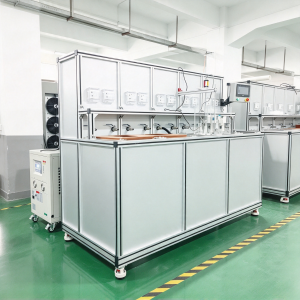
The Smart Toilet Component Fatigue Testing Machine is designed for testing a range of key smart toilet components, including:
Booster Pumps
Booster pumps are important for maintaining sufficient water pressure for different smart toilet functions. Repeated operation can place continuous demands on the pump and its associated components.
Fatigue testing can help manufacturers evaluate pump durability and identify potential performance degradation.
Pressure Reducing Valves
Pressure reducing valves control water pressure within the system. Their long-term reliability is particularly important for maintaining stable operation.
Repeated testing can help assess whether the valve continues to function properly after extended operation.
Spray Gun Assemblies
The spray gun is one of the most frequently operated components in many smart toilets. Repeated extension, retraction and water-flow operation can create mechanical and functional fatigue.
A controlled fatigue test provides manufacturers with useful data for evaluating its expected service life.
Instant Heating Flushing Assemblies
Instant heating systems must repeatedly respond to changes in water flow and operating conditions. Long-term testing can help manufacturers identify potential reliability issues before mass production.
Flush Valves
Flush valves experience repeated opening and closing cycles throughout their service life. Flush valve fatigue testing can therefore be an important part of reliability verification.
Multi-Station Testing Improves Laboratory Efficiency
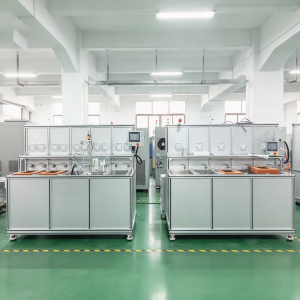
One major advantage of the Smart Toilet Component Fatigue Testing Machine is its multi-station configuration.
The equipment can be configured with up to 6 testing areas, with 3 test stations in each area. The number and configuration of test stations can also be customized according to the manufacturer’s requirements.
This allows manufacturers to test multiple components or samples simultaneously rather than testing each sample individually.
For companies with large production volumes, multi-station testing can significantly improve laboratory efficiency while providing a more consistent testing environment.
Suitable for R&D and Quality Control
The application of a Smart Toilet Component Fatigue Testing Machine is not limited to final inspection.
It can be used throughout the product development and manufacturing process:
Product Development → Prototype Testing → Component Verification → Fatigue Testing → Mass Production → Quality Control
During product development, engineers can use fatigue testing to compare different component designs.
During mass production, manufacturers can use testing to verify component consistency and monitor product quality.
This makes the machine useful for both smart toilet manufacturers and component suppliers.
Supporting Reliable Smart Bathroom Products
Smart toilets combine sanitary ceramics, mechanical components, water systems, electrical components and intelligent controls. The reliability of the finished product therefore depends on the performance of many individual components.
Testing the complete smart toilet is important, but testing critical components separately can provide additional information about potential failure points.
The Smart Toilet Component Fatigue Testing Machine focuses specifically on these critical components, allowing manufacturers to evaluate their durability under repeated operation.
By identifying weaknesses earlier, manufacturers can optimize component selection and product design before large-scale production.
Conclusion
As smart toilets continue to develop toward greater functionality and higher reliability, component durability testing is becoming increasingly important for manufacturers.
The Smart Toilet Component Fatigue Testing Machine provides a dedicated solution for fatigue and life-cycle testing of booster pumps, pressure reducing valves, spray gun assemblies, instant heating flushing assemblies, flush valves and other smart toilet components.
With configurable multi-station testing areas and customized test configurations, it can support product R&D, reliability verification and quality control throughout the manufacturing process.
For smart toilet manufacturers seeking to build more reliable products and strengthen their internal testing capabilities, investing in professional component fatigue testing equipment can be an important step toward long-term product quality and customer satisfaction.
Post time: Oct-15-2026


