



Beyond “Soft” or “Firm”: How a Sofa Hardness Tester Quantifies Comfort for Quality Control
In the furniture industry, describing a sofa’s feel as “soft,” “medium,” or “firm” is inherently subjective. What one manufacturer calls “plush,” another might call “unsupportive.” This subjectivity leads to inconsistent products, confused customers, and costly returns. How can you replace vague descriptions with objective, repeatable data? The Sofa soft hardness tester is the essential instrument that brings scientific rigor to the art of comfort. This machine doesn’t just simulate a person sitting down; it provides a precise numerical value for hardness, enabling manufacturers to standardize quality, comply with national standards, and deliver on a precise comfort promise to every customer.
What is a Sofa Soft Hardness Tester?
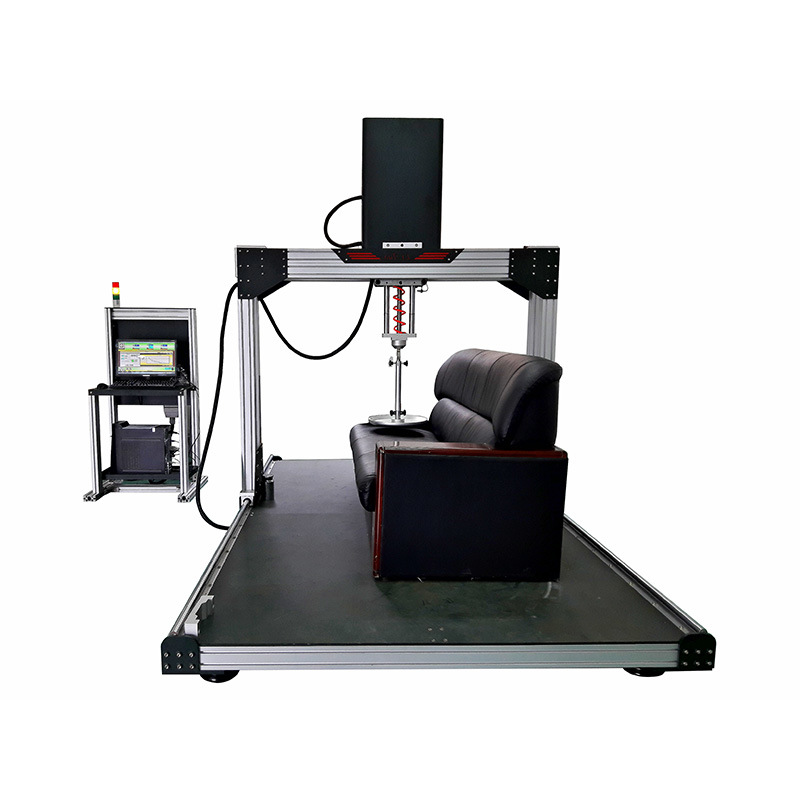
A Sofa soft hardness tester is a specialized mechanical instrument designed to objectively measure the indentation hardness and load-bearing characteristics of sofa cushions and seats. As your product description states, it mechanically simulates the act of a human sitting on the sofa. By applying a controlled force through a standardized indenter (typically a circular plate) to the cushion surface and measuring the resulting deflection, it generates a quantitative hardness value. This data is critical for determining the quality and predicting the service life of the sofa, ensuring strict compliance with the mechanical testing requirements of national standards, and moving beyond subjective judgment.
Core Components: The Anatomy of an Objective Measurement
To achieve accurate and repeatable results, a reliable sofa hardness tester is built around several key components:
- Indenter (Pressure Foot): A standardized, typically circular, plate that makes contact with the sofa cushion, simulating the pressure points of a human body.
- Load Frame & Drive Mechanism: A stable structure that applies a controlled, vertical force to the indenter at a constant speed.
- Force Sensor (Load Cell): Precisely measures the amount of force being applied to the cushion in newtons (N) or kilograms-force (kgf).
- Displacement Sensor: Measures how far the indenter sinks into the cushion (the deflection) in millimeters (mm).
- Control Unit & Display: Allows operators to set test parameters and displays the resulting hardness value, often calculated as a ratio of force to deflection.
How It Works: From Subjective Feel to Objective Data
The operation of a cushion compression tester is a precise, standardized process that eliminates guesswork:
- Sample Preparation: The sofa or cushion unit is positioned securely under the indenter of the machine.
- Test Initiation: The machine is activated, and the indenter descends at a constant speed towards the cushion surface.
- Data Acquisition: As the indenter presses into the cushion, the system simultaneously records the applied force and the corresponding deflection.
- Result Calculation: The machine’s software calculates a hardness value. A common method is to record the force required to achieve a specific indentation depth (e.g., 40% of the cushion’s initial height).
- Analysis & Reporting: This objective number allows for direct comparison between different foam densities, spring systems, and final products.
Universal Applications: Judging Comfort Across Sofa Types
The versatility of the sofa hardness tester makes it indispensable for a wide range of products, as highlighted in your description. It is specifically suitable for:
- Strong Spring Sofas: Evaluates the overall firmness and support provided by the combined spring system and padding.
- Foam Sofas: Directly measures the indentation hardness of the foam core, which is the primary determinant of comfort and durability. This is a critical foam hardness test for quality assurance.
- Hybrid Designs: Effectively tests sofas that combine both spring and foam elements, ensuring a consistent feel across complex constructions.
By applying the same objective test to all products, manufacturers can ensure a consistent brand feel and reliably judge comfort.
The Business Case: Why Objective Hardness Testing is a Strategic Advantage
Implementing a sofa soft hardness tester in your sofa quality control process is a strategic investment that delivers a clear return:
- Standardize Production & Reduce Variability: Ensure every sofa in a product line feels the same, building brand consistency and customer trust.
- Quantify Comfort for Marketing: Use objective data (e.g., “Our ‘Cloud’ model has a hardness index of 120N”) to communicate comfort features more effectively than subjective terms.
- Validate Material Quality & Durability: Correlate hardness data with foam density and other material specs to predict sagging and ensure long-term performance, ultimately determining quality and service life.
- Ensure Compliance & Mitigate Risk: Strictly adhere to national standards for mechanical testing, providing documented evidence of quality and safety.
Key Selection Criteria for Your Testing Lab
Choosing the right Sofa soft hardness tester requires careful consideration of your specific needs:
- Test Standard Compliance: Ensure the machine is designed to meet the specific national or international standards you are required to follow (e.g., GB, ISO, ASTM).
- Force and Displacement Range: The machine’s capacity must cover the full spectrum of hardness you encounter, from very soft plush cushions to very firm seating.
- Indenter Size and Shape: Verify that the indenter matches the specifications of your target test standards for results to be valid and comparable.
- Software and Data Output: Look for a system that provides clear, digital readouts and the ability to export data for further analysis and record-keeping.
- Ease of Use and Durability: The equipment should be robust enough for a factory floor environment and simple enough for quality control staff to operate reliably.
Conclusion: Build a Foundation of Trust Through Measurable Comfort
In an increasingly competitive market, a reputation for consistent quality and comfort is a powerful differentiator. The Sofa soft hardness tester is the tool that transforms this ambition into a measurable, manageable reality. By replacing subjective descriptions with objective data, you can control your manufacturing process with precision, make informed decisions about materials, and most importantly, build a foundation of trust with customers who know exactly what comfort to expect. It’s not just a tester; it’s your partner in delivering on a promise of quality.
Post time: Nov-20-2025


