



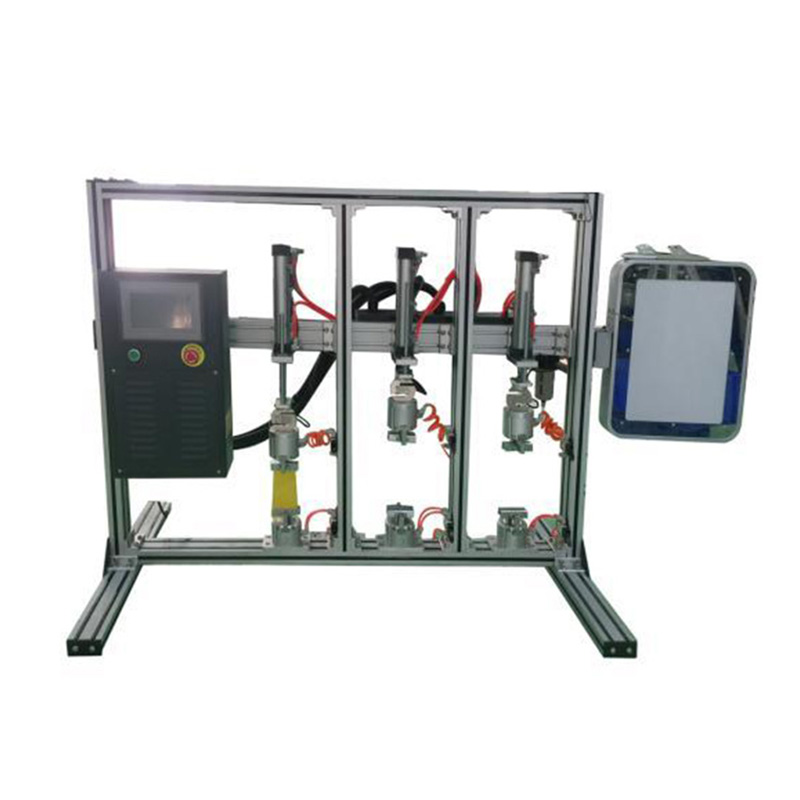
In the furniture manufacturing industry, especially for sofas and upholstered seating, the strength and durability of joint positions—such as seams, upholstery joints, frame connections and decorative components—are critical indicators of long-term quality and user satisfaction. The Sofa Joint Position Impact Resistance Fatigue Testing Machine is specialized equipment designed to simulate repeated impacts and fatigue cycles at those joint positions, thereby helping manufacturers validate product reliability and meet international durability standards.
Why Joint Impact & Fatigue Testing Matters
Furniture joints are typically the most vulnerable zones subjected to repeated stress: users sit down, lean back, reposition themselves, and components shift over time. Without proper testing, joints can loosen, seams can fray, upholstery can detach, or the frame can accumulate micro-damage leading to failure. Standards like BS EN 1728 and ISO 7173 highlight the necessity of fatigue and impact testing in furniture construction.
By applying controlled cyclic impacts or falls on predetermined joint positions, this testing machine simulates years of real-world use in a condensed timeframe—giving manufacturers data on how many cycles a joint can endure before degradation occurs, and what kind of impact height or load initiates failure.
What the Testing Machine Does
The Sofa Joint Position Impact Resistance Fatigue Testing Machine is engineered with key functions:
-
Impact weight & fall mechanism: An impact wheel (≈ 3.75 kg) drops from a fixed height (≈ 150 mm) onto the joint test specimen at high frequency (≈ 25±2 times/min) to replicate repeated accidental knocks or user motions.
-
Fatigue testing of joints: By focusing on seam, joint connection, upholstery edge, and decorative element positions (sample size ~190 × 255 mm) the equipment evaluates the resistance of those specific areas to repeated stress.
-
Counter & monitoring: LCD display counts cycles, logs test duration and provides real-time monitoring of damage progression.
-
Simulated service life acceleration: What might take years in real use is replicated in thousands of test cycles. By doing so, defects in joint design or material selection can be discovered before product release.
How It Works: Test Workflow
-
Specimen preparation & mounting
The joint position (seam, frame-join, decorative bracket) is mounted into the fixture. The test wheel is aligned above the impact zone to ensure repeatable strikes. -
Impact cycle execution
The machine drops the impact wheel at the set height (150 mm) at ~25 impacts per minute. This repetitive motion simulates fatigue at the joint. -
Damage assessment & data logging
After a pre-set number of impact cycles or until visible damage occurs, results are logged: separation, seam rupture, frame looseness, or surface distortion. -
Result interpretation
Manufacturers interpret the number of cycles to failure, severity of damage, and compare to acceptance criteria to judge joint design performance.
Technical Specifications & Key Features
-
Impact wheel weight: 3.75 kg (8.25 lb)
-
Fall height: 150 mm (6 inches)
-
Impact frequency: 25 ± 2 times per minute
-
Sample size: 190 × 255 mm
-
Dimensions & power: approx. 1500 × 1100 × 1100 mm, weight ~100 kg, power supply AC 220 V-50 Hz
-
Control & monitoring: LCD counter + automated cycle count
These features allow the machine to deliver precise, repeatable fatigue simulation targeted at furniture joint positions.
Benefits for Manufacturers
-
Early detection of weak joints: Identify seam failures, upholstery detachments or frame loosening before full-scale production.
-
Enhanced durability claims: Quantitative fatigue cycle data supports marketing claims of longevity and higher quality.
-
Reduced warranty and returns: By catching joint failure mechanisms early, product reliability–and customer satisfaction–improves.
-
Standard conformity: Aligns with recognized furniture durability standards such as EN 1728 and ISO 7173.
Application Scenarios
-
Upholstered sofa manufacturers validating seam and joint strength prior to assembly.
-
Contract furniture suppliers (e.g., hotels, lounges) requiring high-cycle durability for heavy-use environments.
-
R&D labs comparing joint materials and reinforcement methods for improved fatigue resistance.
-
Quality control teams conducting batch-level checks to ensure consistent joint performance across production.
Conclusion
The Sofa Joint Position Impact Resistance Fatigue Testing Machine is a specialized and powerful solution for evaluating the long-term durability of joint areas in furniture. By simulating real-world repetitive impact and stress conditions, it enables manufacturers to proactively improve design, enhance user satisfaction, and reduce post-sale risk. In a marketplace where reliability drives brand value, this machine offers the critical data needed to stay ahead of failure.
Post time: Oct-20-2025


