


In electronics, automotive components, semiconductor products, and other industries, products may gradually develop failures when exposed to high temperature, high humidity, and pressure over an extended period of time. Waiting for natural aging to reveal these problems can take a significant amount of time.
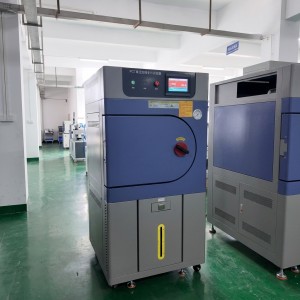
A PCT Pressure Cooker Test Chamber provides an accelerated reliability testing method by exposing products to a controlled saturated-steam environment. It helps manufacturers identify potential defects and weak points earlier during product development and quality verification.
1. What Is the Purpose of PCT Testing?
PCT testing is primarily used to evaluate how products respond to a combination of high temperature, saturated humidity, and elevated pressure.
The purpose is not simply to test whether a product works under high temperature. The combination of heat, moisture, and pressure can accelerate the penetration of moisture into materials, interfaces, seals, and other vulnerable areas.
This makes PCT testing particularly useful for identifying potential:
- Moisture-related failures
- Sealing problems
- Corrosion
- Delamination
- Insulation deterioration
- Material degradation
- Air-tightness problems
- Weak points in product construction
For manufacturers, these results can provide valuable information before products enter mass production.
2. Accelerating the Exposure of Potential Product Defects
One of the main roles of a PCT Pressure Cooker Test Chamber is to accelerate reliability evaluation.
Under normal operating conditions, some defects may take months or even years to become apparent. PCT testing creates a much more aggressive environment, allowing engineers to observe certain failure mechanisms within a shorter test period.
The chamber can provide:
- Test temperature: +100°C to +132°C
- Humidity: 100% RH saturated steam
- Operating pressure: 1.2–2.89 kg/cm²
- Test duration: 0–500 hours
This combination of elevated temperature, saturated steam, and pressure can accelerate environmental stress on the test specimen.
As a result, engineers can use the test data to identify potential weaknesses earlier and improve the product design.
3. Evaluating Sealing and Moisture Resistance
For products containing electronic components or sensitive internal structures, preventing moisture penetration is extremely important.
A small weakness in a housing, seal, bonding area, or interface may allow moisture to enter the product over time.
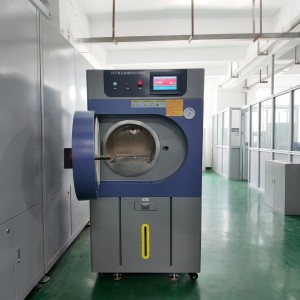
During PCT testing, the specimen is exposed to a 100% RH saturated-steam environment under elevated pressure.
This can help manufacturers evaluate whether the product’s:
- Housing
- Seals
- Bonding areas
- Interfaces
- Encapsulation
- Protective structures
can maintain their intended performance under severe environmental conditions.
For this reason, PCT testing is often valuable during the development of products where moisture resistance and sealing integrity are critical.
4. Detecting Weak Points During Product Development
PCT testing is particularly useful before mass production.
A product may pass conventional functional testing but still contain structural weaknesses that only become apparent after prolonged environmental exposure.
For example, testing may reveal:
Delamination → Review bonding materials or manufacturing processes.
Corrosion → Check material selection and moisture protection.
Seal failure → Improve gasket or housing design.
Insulation degradation → Review insulation materials and protection.
Component failure → Investigate vulnerable interfaces or components.
The test results therefore provide engineers with practical information for product improvement rather than simply producing a pass/fail result.
5. Pressure Provides an Additional Environmental Stress
Unlike conventional high-temperature or humidity testing, PCT testing also introduces elevated pressure.
The operating pressure range is:
1.2–2.89 kg/cm², including atmospheric pressure
The specified pressure stability/uniformity is:
±0.02 kg/cm²
The chamber requires approximately 45 minutes to reach a pressure of 1.04 kg/cm² from the specified starting condition.
The combination of pressure and saturated steam creates a more demanding environment for evaluating product resistance to moisture penetration and environmental stress.
6. Long-Duration Testing for Reliability Evaluation
PCT testing can also be used for extended reliability evaluation.
The test duration can be set from:
0–500 hours
Different products and development stages may require different test durations.
Longer exposure allows engineers to observe whether the performance of the specimen changes over time and whether potential failure mechanisms become progressively more serious.
Test duration can therefore be incorporated into a broader reliability testing program together with other environmental and mechanical tests.
7. Typical Applications of PCT Testing
A PCT Pressure Cooker Test Chamber can be used across a wide range of industries.
Electronics & Electrical Components
- Electronic components
- PCB and multilayer PCB
- ICs
- LCD components
- Electrical parts
- Sealed electronic assemblies
Automotive
- Automotive electronic components
- Sensors
- Electrical modules
- Sealed automotive parts
Other Applications
- Plastics
- Magnets
- Lighting products
- Pharmaceutical-related products
- Materials and components requiring accelerated environmental evaluation
The exact test conditions should always be selected according to the product, applicable testing procedure, and intended reliability requirements.
8. How PCT Testing Supports Product Quality Improvement
The value of PCT testing is not limited to identifying defective products.
The test results can create a feedback loop:
Product Design → PCT Testing → Failure Analysis → Design Improvement → Retesting
This process allows manufacturers to identify weaknesses before mass production and optimize materials, sealing structures, assembly processes, and component selection.
For quality-control teams, PCT test data can also be used to compare different materials, suppliers, product designs, and production batches.
Conclusion
The primary role of a PCT Pressure Cooker Test Chamber is to provide a controlled, accelerated environment for evaluating product reliability under high temperature, 100% saturated humidity, and elevated pressure.
With a temperature range of +100°C to +132°C, operating pressure of 1.2–2.89 kg/cm², and test duration of up to 500 hours, PCT testing can help manufacturers expose potential moisture-related defects, sealing problems, material degradation, and other weaknesses at an earlier stage.
For electronics, automotive components, PCBs, ICs, lighting products, plastics, and other reliability-sensitive products, PCT testing can serve as an important tool for accelerated reliability evaluation, product development, and quality improvement.
Using a properly configured PCT Pressure Cooker Test Chamber allows manufacturers to move beyond simple functional inspection and gain a deeper understanding of how products may perform under severe environmental conditions.
Post time: Oct-12-2026


