



From Arctic to Desert in Seconds: How Thermal Shock Chambers Predict Product Failure
Imagine a electronic component shipped from a freezing warehouse to a scorching summer day, or an aerospace part rapidly ascending from ground level to high-altitude cold. These sudden, extreme temperature transitions can cause catastrophic failure in materials—cracking, delamination, and circuit breaks—that gradual changes would not. How can manufacturers simulate years of such thermal abuse in a matter of days? The Cold And Hot Impact Test Chamber, also known as a thermal shock test chamber, is the definitive answer. This specialized environmental stress testing equipment is engineered to push products to their breaking point, revealing hidden weaknesses before they reach the customer. This guide explores its critical function in ensuring product reliability.
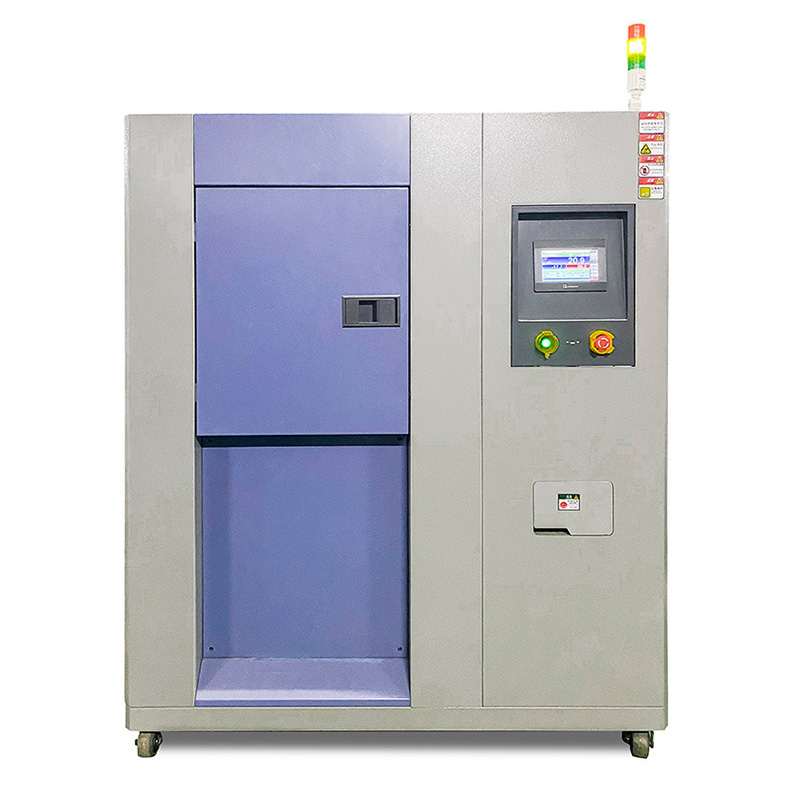
What is a Cold And Hot Impact Test Chamber?
A Cold And Hot Impact Test Chamber is a highly specialized piece of environmental testing equipment designed to subject products to rapid, extreme transitions between high and low temperatures. Its primary purpose is to evaluate a product’s resistance to thermal shock—the stress induced by a sudden change in temperature. Unlike standard temperature chambers that ramp rates slowly, this chamber utilizes a multi-zone design (typically two or three chambers) to achieve near-instantaneous transfers, exposing test specimens to the most severe conditions they might encounter in their lifecycle. This process is essential for conducting a rigorous product reliability test for failure analysis.
Core System Components: The Anatomy of a Thermal Shock Simulator
The ability to create such extreme conditions relies on a robust system of integrated components:
- High-Temperature Zone: An insulated chamber equipped with high-power heaters to rapidly achieve and maintain extreme heat (e.g., +150°C to +200°C).
- Low-Temperature Zone: A separate chamber with a cascade refrigeration system to generate and sustain deep cold (e.g., -40°C to -65°C).
- Test Basket or Elevating Mechanism: A automated basket that swiftly moves the test samples between the hot and cold zones, minimizing transition time.
- Advanced Controller: A programmable logic controller (PLC) that precisely manages temperature setpoints, dwell times, and the number of cycles.
The Science of Thermal Shock: How It Reveals Hidden Flaws
The operation of a temperature cycling tester is a brutal yet precise process. It works by exploiting the physical principle of thermal expansion and contraction. Different materials (and even different parts within a single assembly) expand and contract at different rates. A rapid temperature change induces mechanical stress at the interfaces of these materials. The test chamber automates this by:
- Soaking the test samples in the high-temperature zone until they are thermally stable.
- Within seconds, transferring the basket to the low-temperature zone for a specified dwell time.
- After stabilization, rapidly moving the samples back to the high-temperature zone.
This rapid temperature change chamber process is repeated for dozens or hundreds of cycles, accelerating fatigue and exposing latent defects like cracked solder joints, compromised seals, and material fractures.
Critical Applications Across Top Industries
The Cold And Hot Impact Test Chamber is a non-negotiable validation tool in industries where failure is not an option. Its applications are vast and critical:
- Electronics & Automotive: Testing circuit boards, sensors, and connectors for the automotive, aerospace, and consumer electronics sectors.
- Plastics & Polymers: Evaluating the impact resistance and glass transition temperature of plastic components and composites.
- Aerospace & Defense: Qualifying components that must withstand the extreme temperature swings of high-altitude flight or space.
- Medical Devices: Ensuring the reliability of implants, diagnostic equipment, and devices that undergo sterilization processes.
In all these fields, it is the cornerstone of a robust product reliability test protocol.
The Business Case: Why Thermal Shock Testing is Essential
Integrating a thermal shock test chamber into your R&D and QC processes is a strategic investment with a clear ROI. It directly contributes to:
- Preventing Catastrophic Field Failures: Identifying design and material flaws that only appear under rapid thermal stress, avoiding costly recalls and brand damage.
- Accelerating Time-to-Market: Quickly validating new designs and materials, allowing for faster product development cycles.
- Ensuring Compliance with Standards: Meeting rigorous international test standards (e.g., MIL-STD-810, IEC 60068-2-14) required for market entry in automotive, aerospace, and defense.
- Reducing Warranty Costs: By weeding out weak products before they ship, you significantly reduce future warranty claims and associated costs.
Key Specifications for Selecting the Right Chamber
Choosing the correct Cold And Hot Impact Test Chamber requires a careful evaluation of your specific testing needs. Focus on these critical specifications:
- Temperature Range: Ensure both the high and low extremes meet or exceed the requirements of your testing standards and product use cases.
- Recovery Time & Transition Time: This is a key differentiator. Look for the fastest possible transition time (e.g.,
- Chamber Volume & Basket Capacity: Select a size that can accommodate your largest products and required sample quantity.
- Control System & Programmability: The controller should allow for complex, multi-profile programming and provide detailed data logging for traceability.
- Compliance with Standards: Verify that the chamber’s design and performance are validated against the specific international standards you need to follow.
Conclusion: Build Unshakeable Product Reliability
In today’s global market, product reliability is a primary competitive advantage. A Cold And Hot Impact Test Chamber provides the ultimate stress test, separating robust designs from those prone to failure. By deliberately subjecting your products to the most extreme thermal conditions imaginable, you can uncover and rectify weaknesses with confidence. This isn’t just about passing a test; it’s about building a foundation of quality that ensures customer satisfaction, protects your brand reputation, and delivers products that truly stand the test of time and temperature.
Post time: Nov-17-2025


