



Manufacturers of smart toilets and sanitary-ware accessories face increasing demands for product integrity, safety, and compliance. The Anti-siphon Countercurrent Vacuum Leakage Test Machine is a specialized piece of equipment designed to evaluate leakage performance and anti-siphon behavior of intelligent toilets and related components. This guide explains how this machine works, why it matters, what technical specifications to inspect, and how to select the right one for your quality assurance needs.
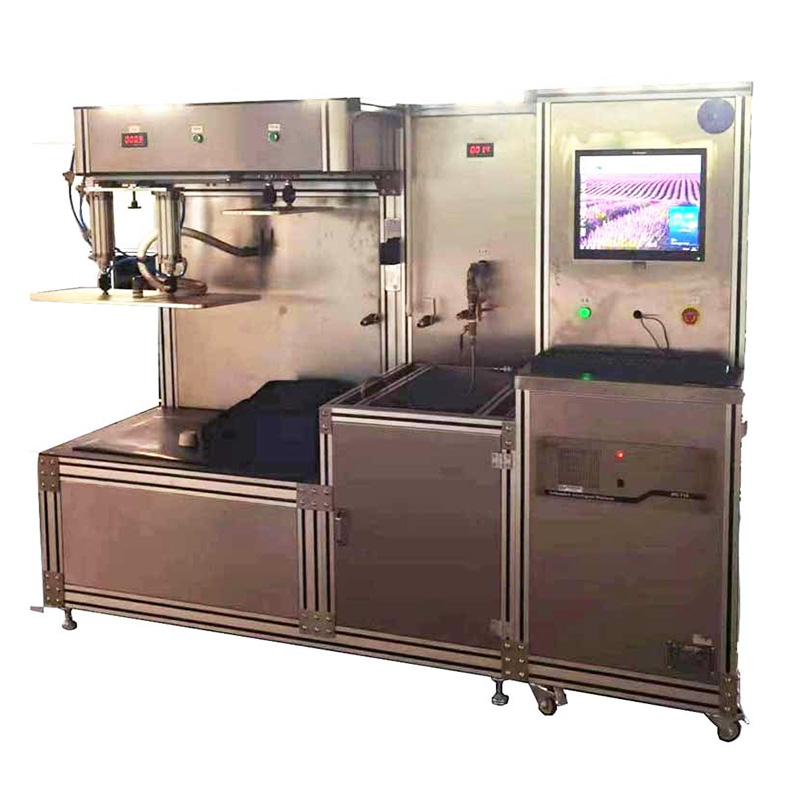
1. What is an Anti-siphon Countercurrent Vacuum Leakage Test Machine?
The Anti-siphon Countercurrent Vacuum Leakage Test Machine is engineered to simulate negative pressure intrusion, backflow resistance, and anti-siphon performance of intelligent toilets and their accessories.
- Anti-siphon: Prevents siphonage or backflow of contaminated water into the sanitary supply line.
- Countercurrent vacuum: Creates a controlled negative pressure to simulate backflow and detect leakage.
- Applications: Testing smart toilet sitting devices and related components under vacuum and negative pressure conditions.
2. Relevant Standards and Typical Test Methods
Compliance with international standards is critical. The following standards are commonly associated with the Anti-siphon Countercurrent Vacuum Leakage Test Machine:
- JC/T 285-2010: Stool Cleaner – clauses on counter-current and negative pressure performance.
- CBMF 15-2016: Intelligent Toilet – anti-siphon and backflow resistance standards.
- GB 26730-2011: Gravity Flush Device for Sanitary Ware – section on anti-siphon function.
Typical Test Methods:
- Generate negative pressure from 0 – 100 kPa to simulate backflow conditions.
- Anti-siphon test station to ensure resistance to siphonage.
- Leakage test station to identify unintended fluid ingress or egress under vacuum.
3. Key Technical Specifications
- Working Voltage: AC 220 V
- Negative Pressure Range: 0 – 100 kPa
- Test Stations: 2 (1 leakage station, 1 anti-siphon station)
- Test Range: Smart toilet sitting devices and accessories
- Machine Size (L×W×H): 2100 × 1200 × 1800 mm
- Frame Material: Aluminum profile with aluminum-plastic sealing plate
- Display: Touch screen or optional computer interface
4. Why It Matters
The Anti-siphon Countercurrent Vacuum Leakage Test Machine plays a vital role in ensuring product quality and hygiene. Its benefits include:
- Safety & Hygiene: Prevents contamination and backflow in sanitary products.
- Regulatory Compliance: Meets key standards (JC/T 285-2010, CBMF 15-2016, GB 26730-2011).
- Credibility: Enhances manufacturer reliability and brand reputation.
- Efficiency: Dual stations enable simultaneous tests and faster throughput.
- Accuracy: Computerized controls ensure consistent, traceable data.
5. Buying Guide: How to Choose the Right Machine
Step 1: Define Your Testing Scope
- Determine product types (full units or accessories).
- Assess daily testing volume and required throughput.
- Confirm whether you need both leakage and anti-siphon testing.
Step 2: Match Specifications
- Ensure negative pressure range (0–100 kPa) meets standards.
- Choose dual-station models for parallel testing.
- Confirm construction quality and sealing performance.
Step 3: Evaluate Automation & Software
- Check for touchscreen or computer control interface.
- Ensure data logging and report export features are available.
- Review calibration and parameter setting functions.
Step 4: Verify Supplier Support
- Check certification and calibration documents.
- Ask for user training and maintenance manuals.
- Confirm spare part availability and service response times.
Step 5: Prepare Your Lab Infrastructure
- Confirm lab space and power supply (AC 220 V).
- Ensure proper ventilation and noise control for vacuum pumps.
6. Common Mistakes to Avoid
- Overlooking standard compliance and test clauses.
- Using machines with poor sealing or weak construction.
- Purchasing single-station models when high throughput is needed.
- Neglecting data logging and automation capabilities.
- Skipping calibration and routine maintenance.
7. Future Trends in Test Equipment
- IoT & Data Analytics: Real-time monitoring and predictive maintenance.
- Modular Upgrades: Quick reconfiguration for different product types.
- Energy Efficiency: Quieter, low-power vacuum systems.
- Standard Harmonization: Unified global anti-siphon testing standards.
- Remote Diagnostics: AR-based troubleshooting and support.
8. Summary
The Anti-siphon Countercurrent Vacuum Leakage Test Machine is a cornerstone in quality control for smart toilet and sanitary-ware manufacturing. It safeguards product integrity, ensures compliance, and enhances production efficiency.
- Align machine specifications with relevant standards.
- Opt for automation, dual stations, and accurate vacuum control.
- Maintain calibration and data traceability.
- Stay updated with industry innovations to future-proof your lab.
Post time: Oct-29-2025


