


Water Hammer Testing for Fill and Flush Valves: Why It Matters
Water hammer testing is an important quality control procedure for fill valves and flush valves used in flushing cisterns and water tank systems. When water flow starts, stops, or changes rapidly, a sudden pressure surge can occur inside the valve and connected piping. Repeated pressure surges may cause leakage, component deformation, connection failure, or premature wear.
For manufacturers, testing this behavior before products reach the market can help identify potential weaknesses and improve valve reliability.
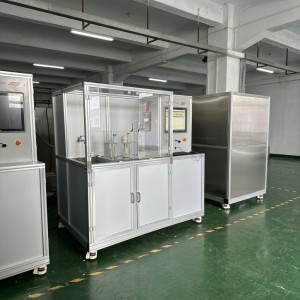
What Is Water Hammer Testing?
Water hammer, also known as hydraulic shock, occurs when flowing water is suddenly accelerated or decelerated. The resulting pressure fluctuation can place additional stress on valve components and sealing structures.
A Water Hammer and Static Pressure Tester for Fill and Flush Valves simulates controlled water pressure conditions and measures the pressure response of the test valve. This allows engineers to evaluate how the valve performs when exposed to pressure changes.
The test is particularly relevant to fill valves and flush valves, which frequently control water flow in flushing cisterns.
Why Test Fill and Flush Valves?
A valve may perform normally during a basic functional inspection but still have weaknesses under pressure fluctuations.
Water hammer testing can help manufacturers identify potential problems such as:
- Excessive pressure peaks
- Leakage after repeated pressure changes
- Seal damage
- Valve body deformation
- Connection failure
- Abnormal valve operation
- Reduced service life
By identifying these issues during laboratory testing, manufacturers can improve component design and reduce the risk of failures during actual use.
Static Pressure Testing Provides Additional Verification
In addition to water hammer testing, static pressure testing can be used to evaluate the pressure resistance of the valve.
The testing machine can provide a water pressure range of 0.02–1.0 MPa using room-temperature water. This allows manufacturers to assess whether a fill valve or flush valve can maintain its structural integrity and sealing performance under controlled pressure.
Combining water hammer testing with static pressure testing provides a more comprehensive evaluation of valve performance.
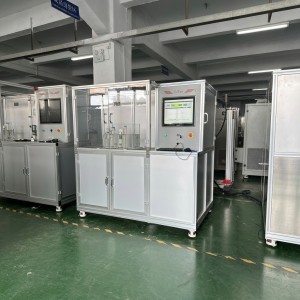
Real-Time Pressure Data for Quality Analysis
Modern valve testing is not limited to simply determining whether a product passes or fails.
The testing machine can record the real-time pressure curve during testing and automatically capture the peak pressure value. Test data can also be exported to Excel and test reports, allowing engineers and quality control teams to compare different products or production batches.
This data can be useful for:
- Product development
- Failure analysis
- Production quality control
- Supplier evaluation
- Design optimization
- Test report generation
For example, if one production batch produces significantly higher pressure peaks than another, engineers can investigate whether the difference is related to materials, valve structure, assembly, or manufacturing processes.
Testing According to EN 14124
The equipment is designed for the water hammer test specified in EN 14124:2004, Clause 7.7, which addresses water hammer testing for fill valves used in flushing cisterns with an internal overflow.
Manufacturers should always confirm the applicable edition and detailed test conditions of the standard for their specific product and target market.
Suitable Applications
The Water Hammer and Static Pressure Tester for Fill and Flush Valves is suitable for testing:
- Fill valves
- Flush valves
- Water tank fittings
- Flushing cistern components
- Sanitary ware components
- Plumbing fixtures
It can be used by sanitary ware manufacturers, plumbing component manufacturers, quality inspection laboratories, and product R&D departments.
Conclusion
Reliable fill valves and flush valves need to withstand not only normal water pressure but also pressure fluctuations that can occur during operation. Water hammer testing provides manufacturers with a practical method to evaluate these potential risks before products enter the market.
By combining water hammer testing, static pressure testing, real-time pressure monitoring, and automated data recording, manufacturers can gain a clearer understanding of valve performance and identify potential weaknesses at an early stage.
For companies producing sanitary ware and water tank fittings, establishing a systematic fill valve and flush valve testing process can help improve product reliability, reduce leakage and pressure-related failures, and support consistent quality across production batches.
Post time: Oct-13-2026


