



In today’s logistics and packaging industry, safety and packaging strength have become critical factors for ensuring product integrity during transportation. The Servo System Carton Compression Test Machine stands out as a cutting-edge solution, offering unmatched precision and control. This guide will walk you through what it is, how it works, key specifications, applications, and how to choose the right machine for your business.
What Is a Servo System Carton Compression Test Machine?
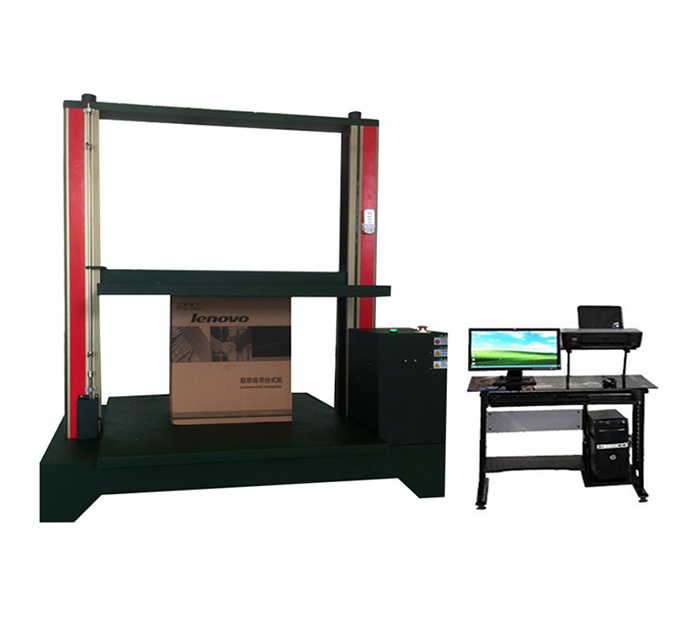
A Servo System Carton Compression Test Machine is designed to measure the strength and durability of corrugated cartons, packaging boxes, and shipping containers. Unlike traditional compression testers, it uses a servo motor, ball screw system, and intelligent software to achieve precise, stable, and controllable testing. It is widely used in logistics, food & beverage, electronics, and industrial packaging industries.
How It Works: Core Components & Technical Principles
The system’s accuracy relies on its advanced components:
- Servo motor (Panasonic) ensures stability and speed control;
- Ball screw rod delivers efficient pressure transfer with minimal loss;
- Load cell and software system provide real-time force-deformation data and compression curves.
These features enable not only compression testing but also holding, tensile, and multi-condition simulations.
Key Specifications You Should Know
- Capacity options: 500kg – 50,000kg, covering small to large packaging needs;
- Accuracy & resolution: 1/100,000 resolution, ±0.3% accuracy, ±1% deformation precision;
- Compression speed: adjustable between 0.01–300 mm/min;
- Test space: up to 1500×1500×1200mm for large cartons;
- Safety & software functions: limit protection, emergency stop, multi-unit switching, computer display, and pressure graphs.
These specifications ensure the reliability of results, directly reflecting how packages withstand stacking and shipping stress.
Why Precision Matters: Applications & Benefits
Accurate carton compression testing is vital for:
- Transportation safety: preventing damage caused by collapsed cartons during stacking;
- Quality control: helping manufacturers optimize design and material selection;
- Standards compliance: meeting ASTM D642, ISO, and other international testing requirements.
By reducing losses and returns, businesses can enhance supply chain efficiency and customer satisfaction.
Choosing the Right Machine: A Buyer’s Checklist
When selecting the right machine, consider the following factors:
- Capacity & test space – match your carton size and weight;
- Accuracy & speed range – ensure consistent, reliable test results;
- Software features – curve plotting, data export, automated reporting;
- Standards compatibility – compliance with ASTM and ISO protocols;
- After-sales service – technical support, training, and maintenance.
For example, Lituo offers versatile capacity options, RS-8401 highlights servo precision, while Haida provides advanced software systems.
Testing Tips: Best Practices for Reliable Results
To maximize accuracy and efficiency, follow these best practices:
- Keep cartons conditioned under consistent humidity;
- Calibrate the machine before every test;
- Place cartons properly to avoid misalignment;
- Check all safety features (limits, emergency stop);
- Analyze deformation vs force curves for deeper insights.
These steps ensure consistent results that reflect real-world conditions.
Conclusion & Next Steps
The Servo System Carton Compression Test Machine is more than just a testing device—it is a reliable guarantee of packaging quality and logistics safety. With the right selection and usage, companies can significantly reduce shipping losses and improve customer trust.
Post time: Aug-18-2025


