



Introduction: Why Door Hardware Durability Testing is Critical
In architectural design and building management, decorative doors serve both aesthetic and functional purposes. The hardware that controls their movement—particularly floor springs and concealed door closers—must operate flawlessly through thousands of cycles. A Floor Spring Durability Testing Machine provides the scientific methodology to validate this reliability, simulating years of daily use in a controlled laboratory environment. This specialized equipment helps manufacturers, architects, and building owners ensure that decorative door systems maintain their functionality and safety throughout their intended lifespan.
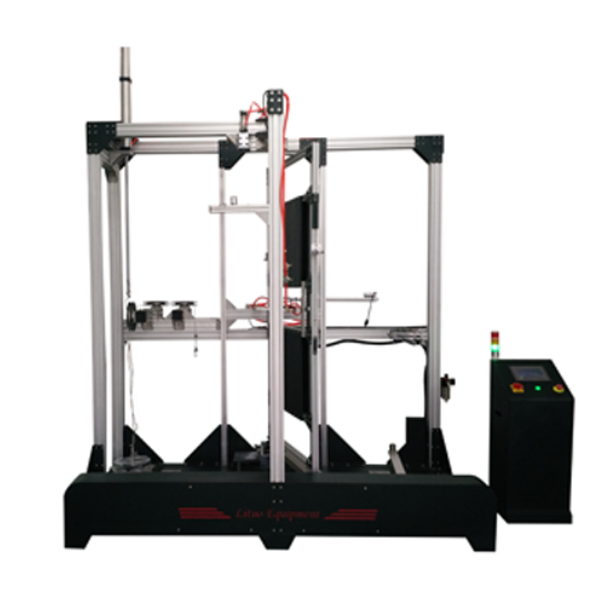
Understanding the Testing Principle: Simulating Real-World Door Operation
The core function of a floor spring durability tester is to replicate the complete open-close cycle of a door under controlled, repeatable conditions. The test specimen (floor spring mechanism) is mounted in its normal operating configuration, connected to a simulated door leaf or load arm. The machine then automatically cycles the mechanism through its full range of motion—from fully closed to fully open and back—thousands or even hundreds of thousands of times. This accelerated life testing compresses years of normal use into days or weeks, revealing potential failure modes before products reach installation.
Key Testing Parameters and Machine Components
- Cyclic Motion Mechanism: Provides precise, repeatable opening and closing movements with adjustable speed and force profiles.
- Programmable Control System: Allows operators to set specific test parameters including cycle count, speed, dwell times, and stop conditions.
- Torque and Force Measurement: Monitors the operational forces throughout the test to detect changes in performance that indicate wear or impending failure.
- Failure Detection System: Automatically stops the test if the mechanism fails, jams, or exceeds predefined force thresholds.
- Adjustable Mounting Fixtures: Accommodates different floor spring sizes, door weights, and installation configurations.
Comprehensive Testing Capabilities for Door Hardware
Modern floor spring durability testers evaluate multiple aspects of hardware performance beyond simple cycle counting.
1. Cycle Life and Endurance Testing
The primary test determines how many complete open-close cycles the mechanism can perform before failure. Tests typically run to predetermined counts (e.g., 500,000 or 1,000,000 cycles) or until functional failure occurs. This data directly correlates to expected service life in high-traffic installations like commercial buildings, hospitals, or hotels.
2. Performance Degradation Monitoring
Throughout the test, the machine continuously monitors key performance indicators:
- Closing Force Consistency: Measures whether the closing mechanism maintains consistent force throughout its life.
- Latching Reliability: Tests whether the door reliably reaches the fully closed and latched position each cycle.
- Smoothness of Operation: Detects developing friction, binding, or irregular motion that indicates internal wear.
- Speed Control Stability: Verifies that opening and closing speeds remain within specified ranges.
3. Failure Mode Analysis
When failure occurs, the testing process helps identify specific weakness points:
- Seal and Bearing Failure: Common in hydraulic floor springs where fluid leakage or bearing wear affects performance.
- Spring Fatigue: The main spring losing tension or breaking under repeated compression/extension cycles.
- Mechanical Linkage Wear: Pivots, pins, and connections developing play or excessive wear.
- Adjustment Mechanism Failure: Speed and latching adjustments losing their settings or becoming inoperable.
- Housing Integrity: Cracks or deformation in the cast housing due to repeated stress.
Applications Across Architectural Hardware
While designed for floor springs, this testing methodology applies to various door control hardware systems.
1. Decorative and Architectural Door Systems
Specifically tests the concealed floor springs used in high-end decorative doors where both aesthetics and performance are critical. Ensures that beautiful doors function reliably in demanding environments such as luxury hotels, corporate headquarters, and high-end residential buildings.
2. Commercial Door Closers
Validates the durability of surface-mounted and concealed door closers used in office buildings, schools, hospitals, and retail spaces where high traffic volumes demand exceptional reliability.
3. Specialized Door Hardware
Tests specialized mechanisms like pivot door systems, balanced doors, and automatic door operators that incorporate spring mechanisms for control and counterbalancing.
The Testing Protocol: Standardized Procedures for Reliable Results
To ensure meaningful, comparable results, durability testing follows standardized protocols:
- Specimen Preparation: The floor spring is installed according to manufacturer specifications, typically in a simulated door frame with appropriate loads representing the intended door weight and size.
- Baseline Measurement: Initial performance metrics (closing force, speed, latching force, opening resistance) are recorded using calibrated instruments.
- Test Parameter Setting: Cycle speed, range of motion (typically 0° to 90° or 0° to 180°), and any load conditions are programmed into the testing machine.
- Continuous Cycling: The machine operates continuously, with periodic stops (e.g., every 50,000 cycles) to check performance consistency and inspect for visible wear, leakage, or damage.
- Final Evaluation: After completing the target cycle count or upon failure, the mechanism undergoes comprehensive inspection and performance testing, comparing post-test metrics to baseline measurements.
- Reporting: A detailed report documents cycle count, performance degradation patterns, failure mode (if applicable), photographs of any damage, and compliance with relevant standards.
Advantages of Automated Durability Testing Over Manual Methods
- Unmatched Consistency: Eliminates human variability in opening speed, force, and cycle rhythm, ensuring truly comparable results across different test runs and operators.
- Time Efficiency: Can operate 24/7, compressing years of real-world use into weeks and dramatically accelerating product development cycles.
- Objective Data Collection: Continuously records precise force, position, and timing data throughout the entire test duration, capturing subtle performance changes that manual inspection might miss.
- Operator Safety: Removes the repetitive strain injury risk associated with manual cycling of heavy door mechanisms and eliminates pinch-point hazards.
- Failure Mode Documentation: Precisely records the cycle count and conditions at failure, providing invaluable data for design improvements and root cause analysis.
Compliance with International Standards
Professional floor spring durability testing machines help manufacturers comply with key industry standards:
- ANSI/BHMA A156.4: American standard for Door Controls (Closers) – Includes cycle testing requirements (typically 500,000 cycles) for various grades of door closers.
- EN 1154: European standard for Building hardware – Controlled door closing devices – Requirements and test methods, including durability cycles.
- EN 1158: Building hardware – Door coordinator devices – Requirements and test methods.
- ISO 18082: Hardware for windows and door height windows – Requirements and test methods for pivoting door hardware.
- GB/T 9301-2008: Chinese national standard for floor door closers (includes durability requirements and test methods).
- JIS A 1510-2: Japanese standard for door closers – Performance test methods.
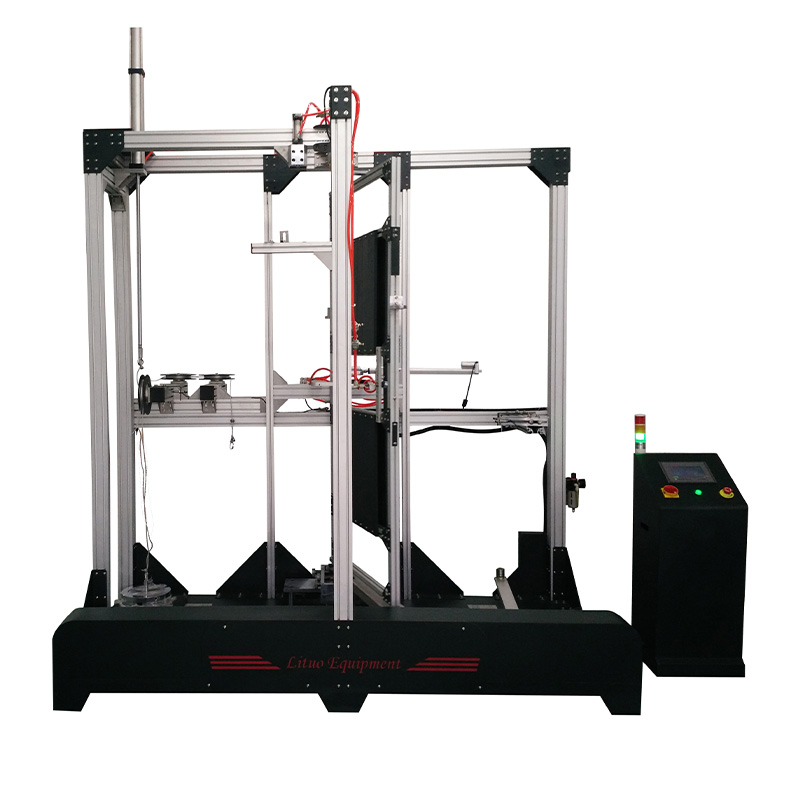
Selecting the Right Testing Machine: Key Considerations
- Cycle Capacity: Ensure the machine can achieve the required cycle counts (typically 500,000 to 2,000,000+ cycles) with minimal maintenance.
- Force Measurement Capability: The system should accurately measure the operational forces of the mechanisms being tested (typically 50-500 N range).
- Flexibility: Look for adjustable mounting fixtures that can accommodate different sizes, types, and brands of floor springs and door closers.
- Data Acquisition System: Ensure the software provides comprehensive data logging, real-time graphing, customizable reporting, and export capabilities.
- Safety Features: Automatic shutoff in case of mechanism failure, overload protection, emergency stop button, and safety guarding are essential.
- Environmental Control (Optional): Some advanced models include temperature chambers to test hardware performance under extreme conditions (-20°C to +50°C).
The Business Case: Why Invest in Professional Durability Testing?
For manufacturers and specifiers of architectural hardware, durability testing delivers tangible business benefits:
- Reduced Warranty Claims: Identifying and correcting design weaknesses before production prevents costly field failures and callbacks.
- Competitive Differentiation: Certified cycle life ratings (e.g., “Tested to 1 million cycles”) provide powerful marketing claims and specification advantages over uncertified competitors.
- Improved Product Design: Detailed failure mode analysis informs iterative design improvements for more robust, longer-lasting products.
- Regulatory Compliance: Ensures products meet building code requirements and industry standards for safety and performance, avoiding legal liability.
- Risk Management: Minimizes liability risks associated with door hardware failures in commercial and public buildings, where a stuck or unsafe door can cause injuries or accessibility violations.
- Customer Confidence: Architects, specifiers, and building owners prefer products with documented durability testing, increasing sales and market share.
Maintenance and Calibration of Testing Equipment
To ensure ongoing accuracy and reliability of test results, the durability testing machine itself requires regular maintenance and calibration:
- Annual Calibration: Force sensors, cycle counters, and speed controls should be calibrated against certified reference standards annually.
- Lubrication: Moving parts, bearings, and drive mechanisms require periodic lubrication according to manufacturer specifications.
- Wear Part Replacement: Drive belts, bearings, and contact surfaces that experience wear during testing should be inspected and replaced as needed.
- Software Updates: Keep control software updated to ensure compatibility with new test standards and data reporting requirements.
- Verification Runs: Perform periodic verification tests using a reference floor spring with known performance characteristics to confirm machine accuracy.
Conclusion: Ensuring Long-Term Performance of Architectural Systems
The Floor Spring Durability Testing Machine represents an essential investment in quality assurance for architectural hardware manufacturers. By scientifically simulating years of door operation in a controlled environment, this specialized equipment provides the data needed to design, validate, and certify reliable door control systems. In an industry where hardware failures can lead to safety issues, accessibility problems, and costly repairs, comprehensive durability testing has become not just a quality measure but a fundamental requirement for responsible product development. Whether for elegant decorative doors in luxury settings or high-traffic entrances in commercial buildings, this testing technology ensures that door hardware performs reliably for its entire intended lifespan—cycle after cycle, year after year.
Post time: Apr-09-2026


