


Introduction: When Mechanical Tests Demand Extreme Forces
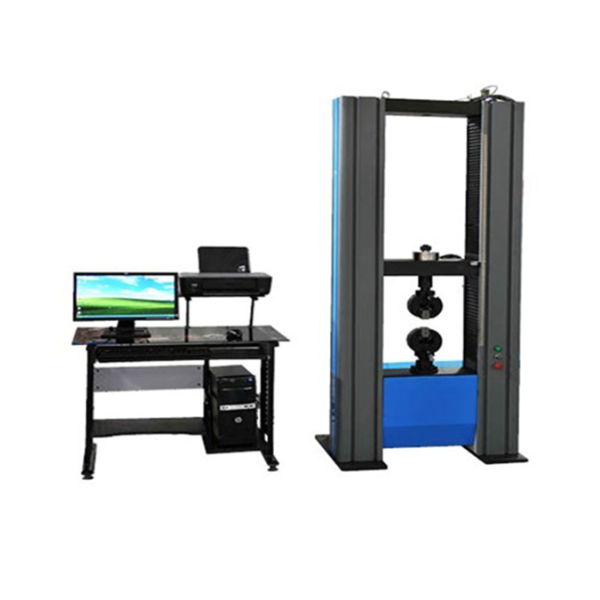
For testing high-strength materials like metals, alloys, composites, and construction components, standard electromechanical testers often lack the necessary force capacity. The Hydraulic Computerized Universal Material Tensile Testing Machine fills this gap by using hydraulic power to generate forces from 100 kN up to 2000 kN or more. This equipment performs tension, compression, bending, shear, and other mechanical tests on specimens such as steel rebar, cables, fasteners, welded joints, and structural beams. With computer control and data acquisition, the Hydraulic Computerized Universal Material Tensile Testing Machine provides accurate, repeatable results essential for quality control, R&D, and compliance with international standards.
How Hydraulic Universal Testers Work
Unlike servo-electric systems, a Hydraulic Computerized Universal Material Tensile Testing Machine uses a hydraulic pump and servo-valve to drive a piston that applies force to the specimen. Key components include:
- Hydraulic Power Unit (HPU): Provides high-pressure oil to the actuator.
- Servo Valve & Controller: Precisely regulates oil flow for smooth force application.
- Load Cell: Measures actual force with high accuracy (typically ±0.5% of reading).
- Crosshead & Grips: Heavy-duty wedge or hydraulic grips to hold specimens securely.
- Computer Control System: Software for test setup, real-time graphing, and report generation.
The computer sends commands to the servo valve, which controls the hydraulic pressure and thus the applied force. Displacement is measured by an encoder or LVDT. This closed-loop control enables precise force-controlled, displacement-controlled, or strain-controlled tests according to standards like ASTM E8, ISO 6892, or GB/T 228.
Common Applications and Tests
The Hydraulic Computerized Universal Material Tensile Testing Machine is indispensable in industries that work with high-strength materials:
- Metals & Alloys: Tensile test on steel, aluminum, copper, titanium.
- Rebar & Wire: Yield strength, ultimate tensile strength, elongation.
- Fasteners: Proof load, tensile strength of bolts, nuts, screws.
- Welded Joints: Cross-weld tensile tests to evaluate weld quality.
- Composites & Plastics: High-force compression or flexure tests on thick sections.
- Construction Materials: Compression tests on concrete cylinders or blocks (with special platens).
Key Advantages of Hydraulic Systems
- Ultra-High Force Capacity: Up to 2000 kN or more, unmatched by electric testers.
- Rugged Construction: Designed for heavy daily use in production labs.
- Large Test Space: Accommodates long or oversized specimens (e.g., 1m rebar).
- Versatile Testing Modes: Tension, compression, bend, shear, and even tear or peel with appropriate fixtures.
- Computerized Data Processing: Automatic calculation of modulus, yield point, max force, elongation, and more.
Compliance with Testing Standards
A professional Hydraulic Computerized Universal Material Tensile Testing Machine is designed to meet major international standards, including:
- ASTM E8/E8M: Tension testing of metallic materials.
- ISO 6892-1: Metallic materials – Tensile testing at ambient temperature.
- GB/T 228.1: Chinese standard for metallic tensile testing.
- ASTM A370: Mechanical testing of steel products.
- ISO 15630-1: Test methods for reinforcing steel bars.
Selecting the Right Machine
When choosing a Hydraulic Computerized Universal Material Tensile Testing Machine, consider:
- Maximum Force: Match to your strongest materials (e.g., 300 kN for rebar, 1000 kN for thick steel plates).
- Test Space (vertical & horizontal): Ensure it fits your longest specimens.
- Accuracy Class: Class 0.5 or Class 1 depending on regulatory needs.
- Software Capabilities: User-friendly interface, pre-programmed test methods, export options.
- Hydraulic Grip Options: Automatic grips improve throughput and consistency.
Conclusion: The Workhorse for High-Force Material Testing
The Hydraulic Computerized Universal Material Tensile Testing Machine is the backbone of any serious metallurgical lab, construction material testing facility, or quality assurance department dealing with high-strength components. By combining immense force capacity with precision computer control, this machine delivers reliable, repeatable data that ensures product safety, regulatory compliance, and material optimization. Investing in a quality Hydraulic Computerized Universal Material Tensile Testing Machine is an investment in product integrity and customer confidence.
Post time: Apr-27-2026


