


Why Strength Testing is Critical for Office Chairs
Office chairs endure daily stresses from users leaning, pushing, and shifting weight. A sudden failure of an armrest or backrest can cause serious injury and costly liability. The Office Chair Backrest & Armrest Strength Testing Machine simulates both normal use and habitual misuse — applying single-cycle overloads and repetitive cyclic loads to evaluate structural integrity. This equipment helps manufacturers meet global standards like BIFMA X5.1 (USA), EN 1335 (Europe), and GB/T 10357.2 (China).
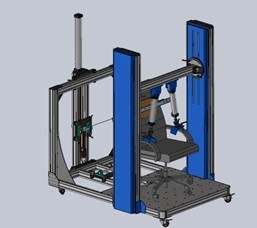
Armrest Strength Test: Vertical & Horizontal Pressure
The armrest strength test assesses resistance to downward and sideward forces:
- Vertical load test: Applies a downward force (typically 1000N for 1 minute) simulating a user pushing up from the chair. No permanent deformation or fracture allowed.
- Horizontal load test: Applies lateral force (e.g., 500N) to simulate leaning on one armrest. Checks for loosening or breakage of attachment points.
- Cyclic fatigue test: Repeatedly applies lower forces (e.g., 600N for 10,000 cycles) to mimic years of daily use.
A professional Office Chair Backrest & Armrest Strength Tester uses servo-controlled actuators to apply precise forces while measuring displacement. Pass/fail criteria require no visible cracks, no functional damage, and residual deformation below standard limits.
Backrest Strength Test: Simulating Reclining Pressure
The backrest strength test applies a horizontal force to the top center of the backrest (or at a defined height). The test simulates a user leaning backward with full body weight. Typical requirements (per BIFMA X5.1):
- Static load test: Apply 2224N (500 lbf) for 1 minute. The backrest must not fracture, and the tilt mechanism must remain functional.
- Cyclic test (optional): 10,000 cycles at 1330N to check long-term fatigue.
- Acceptance criteria: No structural failure, permanent set less than 5mm (or per manufacturer spec).
The Office Chair Backrest & Armrest Strength Tester can test both synchronous and independent tilt mechanisms, with adjustable loading pads to match different backrest shapes.
Key Features of a Professional Testing Machine
- Dual-test capability: Separate stations or sequential testing for armrests and backrest.
- High-precision load cells: Accuracy ±0.5% of reading.
- Programmable controller: Set load, speed, cycles, and hold time per standard.
- Real-time force-deflection curve: Visualize material behavior.
- Quick-change fixtures: Adapt to different chair sizes.
- Safety enclosure: Protects operator during high-force tests.
Compliance with International Standards
Using a certified Office Chair Backrest & Armrest Strength Tester ensures your products meet:
- BIFMA X5.1-2017 – Sections 12 (armrest static) and 13 (backrest static)
- EN 1335-3:2009 – Clauses 4.4 (armrest strength) and 4.5 (backrest strength)
- ANSI/BIFMA X5.11 – Heavy-duty/bariatric chair requirements
- GB/T 10357.2-2013 – Chinese furniture strength standard
Benefits for Manufacturers & Quality Labs
- Reduce liability risk by validating designs before mass production.
- Accelerate R&D with rapid iterative testing of new materials (e.g., nylon vs. aluminum armrests).
- Ensure batch consistency by auditing random samples from production lines.
- Win tenders with certified test reports for corporate and government buyers.
Conclusion: Invest in Safety and Quality
The Office Chair Backrest & Armrest Strength Tester is an indispensable tool for any office furniture manufacturer serious about product safety and global compliance. By simulating both normal use and worst-case misuse scenarios, this machine gives you the data to build stronger, longer-lasting chairs that protect users and your brand reputation.
Post time: May-22-2026


