


Introduction: Why Pen Cap Fatigue Testing Matters
In the writing instrument industry, a pen cap that fails prematurely—whether by cracking, losing its secure fit, or becoming impossible to remove—creates immediate customer dissatisfaction and potential choking hazards for children. The Pen Cap Fatigue Tester (also known as a pen cap durability tester or pen cap fatigue testing machine) is a specialized laboratory instrument designed to evaluate the longevity of pen caps under repeated use. By simulating thousands of capping and uncapping cycles, this machine helps manufacturers ensure that their products meet rigorous quality standards and provide reliable performance throughout their intended lifespan.
Operation Principle: How the Pen Cap Fatigue Tester Works
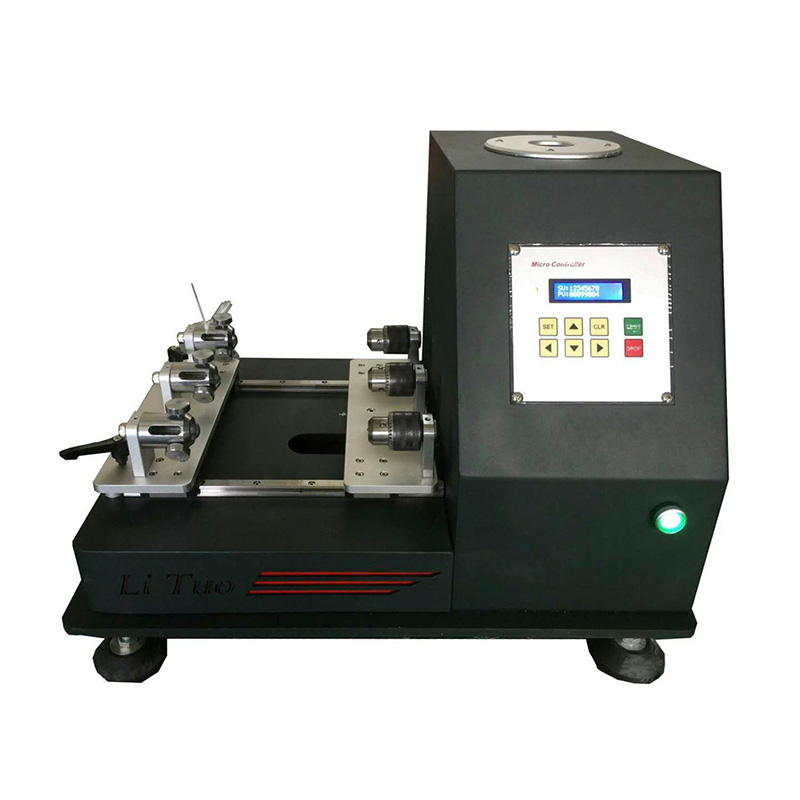
The core function of a Pen Cap Fatigue Tester is to automatically and repeatedly insert and remove the pen cap from the pen barrel (or simulate the opening and closing of a flip-style cap), simulating the wear and tear of daily use[reference:0]. The pen barrel or body is securely fixed in a dedicated fixture, while the pen cap fatigue testing machine grips the cap via a moving actuating mechanism. Ensuring perfect coaxial alignment between the pen barrel and cap is fundamental to obtaining accurate and reliable test results[reference:1][reference:2]. Once properly set up, the machine drives the cap vertically up and down at a set speed and frequency, completely seating the cap onto the barrel with each downward stroke. This cycle of removal and replacement is repeated tens or even hundreds of thousands of times[reference:3]. Throughout the process, the pen cap durability tester continuously runs, allowing operators to periodically inspect the test specimen for visible damage, such as cracks in the plastic, loosening of the grip, deformation of the closure mechanism, or a significant loss of retention force.
Testing Parameters and Standards Compliance
Professional testers are built to meet the requirements of international standards. For capping/uncapping tests on standard pens, the pen cap fatigue tester commonly operates at a speed of 100 cycles per minute (cpm), while flip-cap or mechanical pencil tests often run at 30–60 cpm[reference:5][reference:6]. The total number of test cycles is typically programmable, often up to 100,000 cycles[reference:7]. The standard insertion stroke of the test fixture is generally adjustable from 0 to 40mm to accommodate different product sizes[reference:8]. The fixture system on a pen cap fatigue testing machine is designed to be adjustable and versatile, capable of securely holding a wide range of pen cap and barrel sizes[reference:9]. High-end models also incorporate precision sensors that can monitor the mechanical insertion/removal force in real time, providing quantitative data on performance degradation over the lifespan of the product[reference:10][reference:11].
The pen cap fatigue tester is designed to comply with international regulatory standards such as GB/T 26717-2011 (for fountain pens), QB/T 2775-2006 clause 5.11 (for general writing instruments), QB/T 1023-2018 (for mechanical pencils), and BS 7272-2:2000 (for child safety requirements regarding closure integrity)[reference:12][reference:13][reference:14][reference:15].
Key Features and Technical Specifications
Modern testers are usually PLC-controlled and feature a large touch screen for intuitive and straightforward test parameter programming[reference:16]. Professional models often feature a multi-station configuration (three or five stations), allowing for simultaneous testing of multiple product samples, greatly speeding up the quality control process[reference:17]. At the heart of the instrument is a high-quality motor, often a brushless DC motor designed for longevity, with a lifespan exceeding 20 years of use in a lab environment[reference:18]. A closed-loop speed control system ensures the motor maintains a perfectly constant velocity throughout the test, eliminating deviations that could affect results[reference:19]. An independent safety interlock system also shuts down the test instantly if a sample fails or a fixture jams, preventing damage to the equipment[reference:20].
Business Benefits of Using a Pen Cap Fatigue Tester
For manufacturers, investing in a pen cap fatigue tester yields significant returns, dramatically reducing the number of consumer returns and warranty claims for broken caps[reference:21]. It provides objective, quantifiable data on design weaknesses such as spring fatigue, poor material choices, or weak snap-fit geometries[reference:22]. Meeting international standards like GB/T, QB/T, or BS 7272 through documented testing is often a requirement for securing large-scale retail procurement contracts and achieving market authorization in regulated regions. In a competitive market, brands that can back their durability claims with certified test data and direct customer experiences build significantly higher levels of trust and credibility, leading to brand loyalty and premium sales.
Conclusion: The Foundation of Writing Instrument Quality Assurance
The Pen Cap Fatigue Tester is the definitive instrument for scientifically validating the closure integrity of writing instruments. Its ability to automatically and precisely simulate the wear of thousands of uses is essential for any manufacturer, test lab, or regulatory body dedicated to ensuring product safety, durability, and performance. This equipment provides the objective, repeatable data necessary to design better, more reliable products and build strong, trusted brands in the global market.
Post time: Apr-28-2026


