


Introduction: Beyond Foam Hardness – A True Universal Tester
The Sponge Foam Indentation Hardness Tester—also referred to as a foam compression tester, foam indentation hardness tester, or IFD/ILD tester—is far more than a single-purpose instrument. While its primary function is to measure the indentation hardness of porous elastic materials such as polyurethane sponge and foam, its true value lies in its exceptional versatility. This computer-controlled universal testing machine can perform a comprehensive range of mechanical tests, including tensile, compression, bending, and low-cycle fatigue tests, on metals, non-metals, and various polymer materials. This makes it an indispensable asset for quality control labs, R&D departments, universities, and engineering supervision agencies.
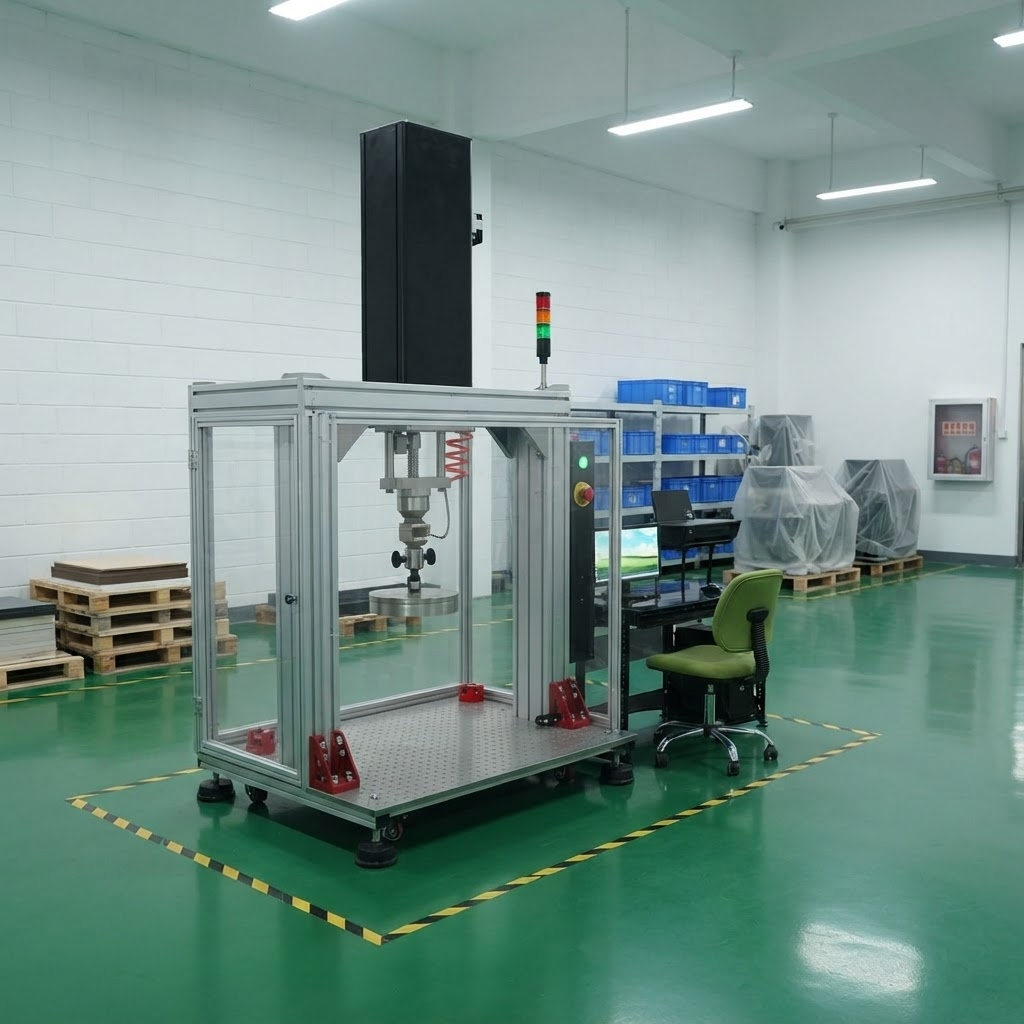
Core Testing Principle: Indentation Force Deflection (IFD/ILD)
The core test for foam materials evaluates firmness and support characteristics. The process involves pressing a standardized, flat, circular indenter (typically 200 mm or 203 mm diameter) into a foam specimen at a controlled speed until a specific percentage of the original thickness is reached — usually 25%, 40%, or 65%. The indenter holds at that depth for a set dwell time (e.g., 30 seconds), and the force required to maintain the indentation is measured. This value, known as Indentation Force Deflection (IFD) or Indentation Load Deflection (ILD), is a direct and repeatable measure of foam firmness. The machine’s high-precision load cell and displacement sensor capture these values with laboratory-grade accuracy.
Comprehensive Testing Capabilities: One Machine, Multiple Tests
The true power of this system lies in its ability to conduct a wide variety of tests with simple fixture changes, making it a highly cost-effective solution for diverse testing needs.
1. Indentation Hardness (IFD/ILD)
Measures the firmness of flexible foams, critical for comfort and support in furniture, mattresses, automotive seating, and packaging.
2. Tensile Testing
Determines tensile strength, tear strength, elongation at break, and elastic modulus of materials such as foam, rubber, films, textiles, and plastics.
3. Compression Testing
Evaluates compressive strength, compression set, and stress-strain behavior of rigid foams, honeycomb structures, and other materials under crushing loads.
4. Bending/Flexural Testing
Measures flexural strength and modulus of rigid and semi-rigid foams, composites, and plastics, assessing their resistance to bending forces.
5. Low-Cycle Fatigue Testing
Assesses material durability under repeated cyclic loading, simulating long-term usage patterns and predicting service life.
6. Additional Test Types
With specialized fixtures, the machine can also perform shear tests, peel tests, tear tests, and friction coefficient measurements.
Compliance with International Standards
The Sponge Foam Indentation Hardness Tester is designed to meet the stringent requirements of a wide range of global standards, ensuring test results are recognized and accepted worldwide. The system can be easily configured to perform tests according to:
- ISO 2439: Determination of indentation hardness of flexible cellular polymeric materials.
- ASTM D3574: Standard test methods for flexible cellular materials — includes IFD testing.
- GB/T 10807: Chinese standard for the determination of hardness of soft foam materials.
- JIS K 6400: Japanese standard for flexible polyurethane foam testing.
- EN 826 & EN 1607: European standards for compression and tensile testing of thermal insulation products.
- GB/T 6343 & GB/T 6669: Chinese standards for foam compression testing.
Key Applications Across Industries
This versatile testing system finds critical applications in numerous sectors that rely on material performance and quality assurance.
- Furniture & Upholstery: Characterizing seat cushions, backrests, and mattress foams to ensure consistent comfort and durability.
- Automotive & Transportation: Testing seat foam, headrests, armrests, and interior padding for safety and comfort compliance.
- Material Science & R&D: Developing new polymer blends, composite materials, and innovative foam formulations.
- Quality Control: Ensuring batch-to-batch consistency and meeting production specifications for raw materials and finished goods.
- Packaging: Evaluating the protective performance of foam cushioning materials for sensitive products.
- Aerospace & Defense: Testing high-performance, lightweight foam materials used in aircraft interiors and protective equipment.
Technical Specifications of a Professional System
Modern, computer-controlled models offer advanced capabilities for precise and efficient testing.
- Testing Capacity: Ranges from 5 kN to 50 kN (or more) to accommodate a wide variety of materials.
- Accuracy Class: Class 1 or better (typically ±0.5% of indicated value).
- Crosshead Speed: Continuously adjustable from 0.001 mm/min to 500 mm/min for versatile testing conditions.
- Displacement Resolution: As fine as 0.5 µm, ensuring precise deformation measurements.
- Control System: Full digital control with multiple closed-loop functions (force, displacement, strain).
- Data Output: Automatic calculation of key parameters, including tensile strength, yield strength, elastic modulus, elongation, and IFD/ILD values.
- Safety Features: Comprehensive protection against overload, over-travel, over-current, and over-temperature.
Key Features and Benefits for Your Laboratory
Investing in a professional sponge foam indentation hardness tester delivers substantial operational and economic benefits.
- Unmatched Versatility: Eliminates the need for multiple specialized machines, saving valuable floor space and capital investment.
- High Precision & Repeatability: Advanced sensors and closed-loop control ensure reliable, traceable results every time.
- Automated Operation: Computer-controlled testing, automatic data acquisition, and intelligent report generation increase lab efficiency.
- Flexible Software: User-friendly interface with built-in standard test methods, custom test creation, and comprehensive data analysis tools.
- Interchangeable Fixtures: Quick-change grips and attachments allow rapid transition between different test types.
- Regulatory Confidence: Designed to meet major international standards, simplifying compliance and certification processes.
Conclusion: The Essential Tool for Quality and Innovation
The Sponge Foam Indentation Hardness Tester transcends its primary function as a foam hardness gauge. It is a comprehensive, computer-controlled universal testing machine that delivers precise, reliable data across an extraordinary range of materials and test methods. From ensuring the comfort of a car seat to validating the strength of a new composite, this system provides the critical insights needed for product innovation, rigorous quality control, and maintaining a competitive edge. For any organization serious about material characterization, this tester is an essential and invaluable investment.
Post time: Jul-13-2026


