



Mattress manufacturers and quality laboratories rely on precision instruments to ensure their products meet durability and safety requirements. Among these, the Computer Type National Standard Mattress Comprehensive Test Machine stands out as a high-accuracy, multi-function device that simulates real-world sleeping conditions to evaluate a mattress’s long-term performance. This guide explains how it works, what standards it meets, and how to select the right model for your needs.
What Is a Computer Type National Standard Mattress Comprehensive Test Machine?
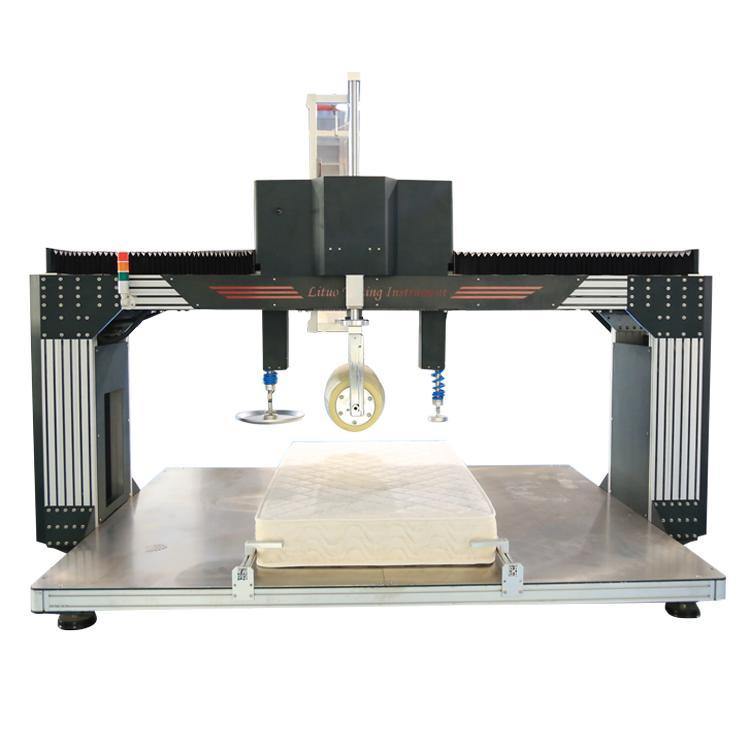
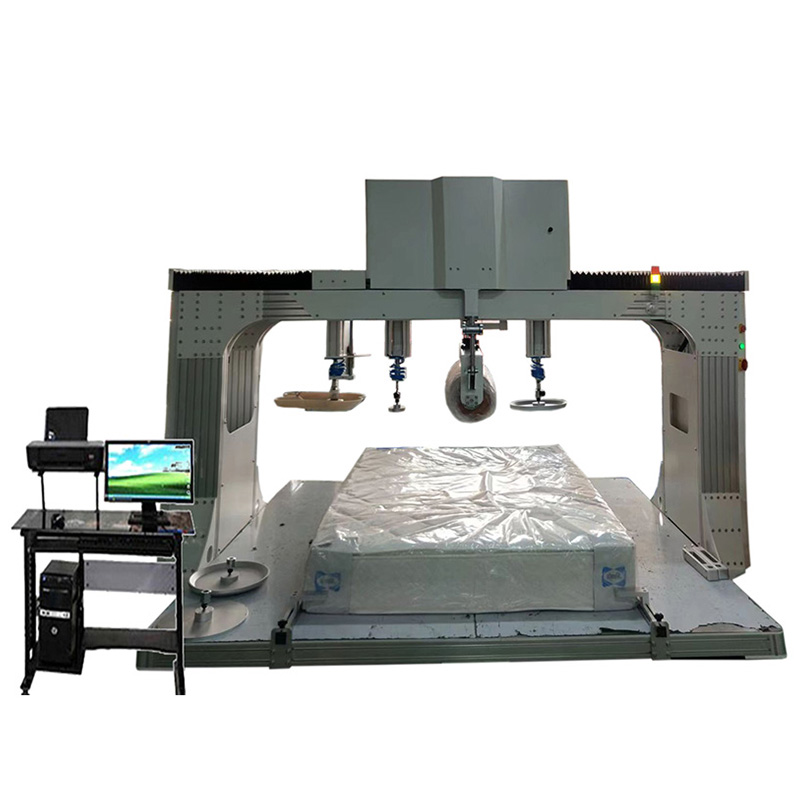
A Computer Type National Standard Mattress Comprehensive Test Machine is a professional testing device designed to evaluate the durability, hardness, and edge performance of various mattress types—such as spring, foam, or fiber mattresses.
The term “computer type” refers to its automated control system, which uses servo motors and digital software to ensure stable loading, accurate data recording, and programmable test cycles.
The “national standard” aspect ensures that the testing process complies with recognized quality regulations like GB/T 26706-2011, EN 1957, or equivalent standards in mattress performance evaluation.
This type of machine replicates the mechanical actions of human sleeping—rolling, pressing, and edge loading—to simulate long-term use and assess how a mattress withstands repeated stress over thousands of cycles.
Key Standards and Test Methods Covered
The Computer Type National Standard Mattress Comprehensive Test Machine typically covers multiple testing modules in one integrated system, following global testing norms.
The main methods include:
-
Rolling Durability Test – simulates body movement and rolling during sleep. A heavy roller repeatedly moves horizontally over the mattress surface more than 30,000 times to measure resilience and fatigue resistance.
-
Hardness and Firmness Test – measures deformation under specific loads to evaluate comfort and support levels.
-
Edge Pressure Durability Test – tests the firmness and safety of mattress edges when people sit or lie on them.
-
Height-Loss Test – measures the permanent deformation and thickness reduction after prolonged loading.
Each test strictly follows national and international mechanical testing standards, ensuring that results are objective, repeatable, and accepted by quality certification agencies.
Core Technical Specifications Explained
A typical Computer Type National Standard Mattress Comprehensive Test Machine features the following parameters:
-
Control Mode: Fully computer-controlled, offering automatic test cycles, data logging, and real-time monitoring.
-
Rolling Device: Driven by a high-precision Panasonic servo motor, ensuring smooth, stable, and repeatable motion.
-
Roller Inertia: (0.5 ± 0.05) Kgm² – critical for simulating the realistic impact of human weight.
-
Loading Frequency: (16 ± 2) times/min – mimics natural rolling speed.
-
Static Load: (1400 ± 7) N – represents average body pressure.
-
Roller Dimensions: Length (1000 ± 2) mm; Max diameter 300 ± 1 mm; Surface friction 0.2 – 0.5; Chamfer R30.
-
Test Stroke: ± 250 mm around the mattress centerline.
-
Accuracy: Force ≤ 1 % error; Dimensional ≤ 1 mm error; Load position ± 5 mm.
These parameters ensure that the simulation accurately reflects human behavior and stress distribution on the mattress surface.
Why Choose a Computer-Controlled Model?
Compared to older mechanical or semi-automatic testers, a computer-controlled mattress testing machine delivers unmatched consistency and efficiency:
-
Precision Automation: The system automatically controls test frequency, loading force, and motion cycles with high repeatability.
-
Real-Time Data Monitoring: Operators can track force, displacement, and time graphs directly on the computer interface.
-
Programmable Tests: Users can preset test counts, frequency, and automatic stop functions.
-
Smart Report Generation: Results are automatically compiled into standardized digital reports with graphs and tables.
-
Reduced Human Error: Minimal manual intervention means improved repeatability and reliability.
For laboratories conducting multiple daily tests, these advantages translate into time savings, lower operational costs, and higher data integrity.
How to Evaluate and Select the Right Model
When selecting your Computer Type National Standard Mattress Comprehensive Test Machine, consider the following factors:
-
Testing Requirements – Determine if you need only rolling durability tests or also edge and hardness modules.
-
Sample Size Compatibility – Ensure the testing area supports your mattress dimensions (typically 2400 × 2400 × 440 mm).
-
Motor and Control System – Prefer models using Japanese Panasonic servo motors for stability.
-
Software and Reporting Capabilities – Check whether it supports multi-language interfaces, automatic data export, and network connection.
-
Durability and Maintenance – High-quality rollers and structural parts extend lifespan and accuracy.
-
After-Sales Support – Reliable suppliers should offer calibration, spare parts, and online technical assistance.
Common Pitfalls and How to Avoid Them
Even the best equipment can underperform if misused or poorly maintained. Below are the most frequent issues users encounter:
-
Incorrect Calibration: Causes inaccurate test loads or displacement readings. Calibrate regularly following national guidelines.
-
Worn Rollers or Bearings: Lead to unstable friction or unbalanced motion; replace periodically.
-
Software Malfunctions: Outdated software versions can corrupt test logs—always install vendor updates.
-
Neglected Maintenance: Dust, lubricant issues, or sensor drift may reduce reliability over time.
Avoidance Tips:
Schedule preventive maintenance, store equipment in controlled environments, and maintain a clear record of all test cycles and calibrations.
Common Pitfalls and How to Avoid Them
Even the best equipment can underperform if misused or poorly maintained. Below are the most frequent issues users encounter:
-
Incorrect Calibration: Causes inaccurate test loads or displacement readings. Calibrate regularly following national guidelines.
-
Worn Rollers or Bearings: Lead to unstable friction or unbalanced motion; replace periodically.
-
Software Malfunctions: Outdated software versions can corrupt test logs—always install vendor updates.
-
Neglected Maintenance: Dust, lubricant issues, or sensor drift may reduce reliability over time.
Future Trends in Mattress Testing Technology
The future of mattress testing is moving toward digital intelligence and sustainability:
-
IoT-Enabled Monitoring: Real-time remote control and data access from cloud platforms.
-
AI Data Analytics: Automated interpretation of fatigue data to predict mattress lifespan.
-
Energy-Efficient Designs: Lower noise levels, reduced power use, and environmentally friendly materials.
-
Modular Upgrades: Machines will support add-on modules for specialized mattress types (baby, medical, hotel mattresses).
-
Smart Calibration: Self-diagnostic sensors that alert users before performance drift occurs.
These trends aim to make mattress quality testing more precise, eco-friendly, and adaptive to evolving production needs.
Summary & Key Takeaways
A Computer Type National Standard Mattress Comprehensive Test Machine is indispensable for any mattress manufacturer aiming for certification, consistency, and long-term brand reputation.
It integrates rolling durability, edge pressure, and hardness tests into one intelligent platform, fully aligned with international standards.
When choosing one, focus on computer control reliability, mechanical accuracy, and supplier support—these determine both test credibility and operational lifespan.
In short: smart, computer-controlled mattress testing is no longer a luxury but a necessity for modern quality assurance.
Post time: Oct-28-2025


