


Introduction: When Standard Chambers Are Not Enough
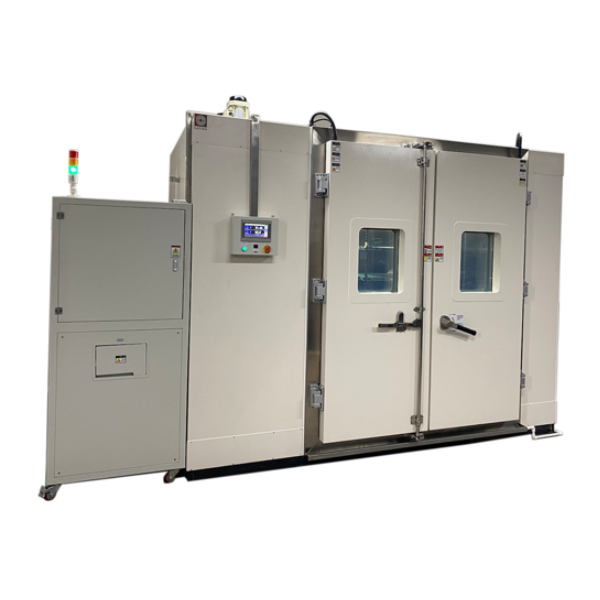
For testing large products, assemblies, or palletized components, a standard benchtop or reach-in chamber is impractical. The Walk-in constant temperature and humidity test chamber solves this problem by providing a room-sized environment where engineers can actually walk inside to set up specimens, monitor tests, and make adjustments. This equipment is widely used across aerospace, automotive, electronics, instrumentation, electrical products, materials, components, and equipment manufacturing to perform high-temperature tests, low-temperature tests, cold resistance tests, and low-temperature storage. By simulating extreme environmental conditions, the Walk-in constant temperature and humidity test chamber helps manufacturers analyze product performance and behavior under prescribed environmental changes.
Key Applications Across Industries
The versatility of a Walk-in constant temperature and humidity test chamber makes it indispensable for quality assurance and R&D in multiple sectors:
- Aerospace: Testing avionics, sensors, and structural components under rapid temperature cycling and extreme cold/humidity.
- Automotive: Evaluating batteries, control units, interior materials, and full instrument panels.
- Electronics & Electrical Products: Assessing reliability of servers, power supplies, and industrial controls.
- Materials & Components: Checking for thermal expansion, embrittlement, or moisture absorption.
- Low-Temperature Storage Validation: Verifying that products survive cold-chain logistics or cold warehouse storage.
Core Testing Capabilities
A professional Walk-in constant temperature and humidity test chamber typically offers:
- Wide Temperature Range: -70°C to +150°C, with ramp rates adjustable from 1°C/min to 5°C/min.
- Humidity Control: 20% to 98% RH, enabling damp heat, dry heat, and cyclic humidity tests.
- Large Interior Volume: Customizable from 8 m³ to over 100 m³, with walk-in doors and interior lighting.
- Programmable Control: Touchscreen controller with multi-step profiles for complex test sequences (e.g., thermal shock, freeze-thaw cycling).
- Safety Features: Over-temperature protection, emergency stop, and door release from inside.
Why Choose a Walk-In Design?
Compared to smaller chambers, the Walk-in constant temperature and humidity test chamber offers unique advantages:
- Test Large or Assembled Products: No need to disassemble or cut samples.
- Realistic Load Conditions: Test multiple components simultaneously under identical conditions.
- Operator Access: Easy specimen inspection and sensor attachment without breaking the environment (via built-in ports or during door open cycles).
- Compliance with Standards: Meets IEC 60068, MIL-STD-810, GB/T 2423, and other major test methods.
Operational Considerations
To get reliable results from your Walk-in constant temperature and humidity test chamber, follow these best practices:
- Ensure adequate floor space and ventilation for the refrigeration unit.
- Use distilled/deionized water for humidity generation to prevent mineral buildup.
- Regularly calibrate sensors (temperature, humidity) to maintain accuracy.
- Load specimens with proper spacing to allow air circulation.
Conclusion: Invest in Large-Scale Environmental Reliability
Whether you are qualifying a satellite component for space, a car battery for extreme climates, or an industrial control for cold storage, the Walk-in constant temperature and humidity test chamber delivers the capacity and performance you need. By providing a controlled, repeatable environment that fits your largest products, this equipment helps you analyze behavior under changing conditions—ensuring quality, safety, and regulatory compliance.
Post time: Apr-21-2026


