


Introduction: Why Precision Testing Matters for Faucet Valves
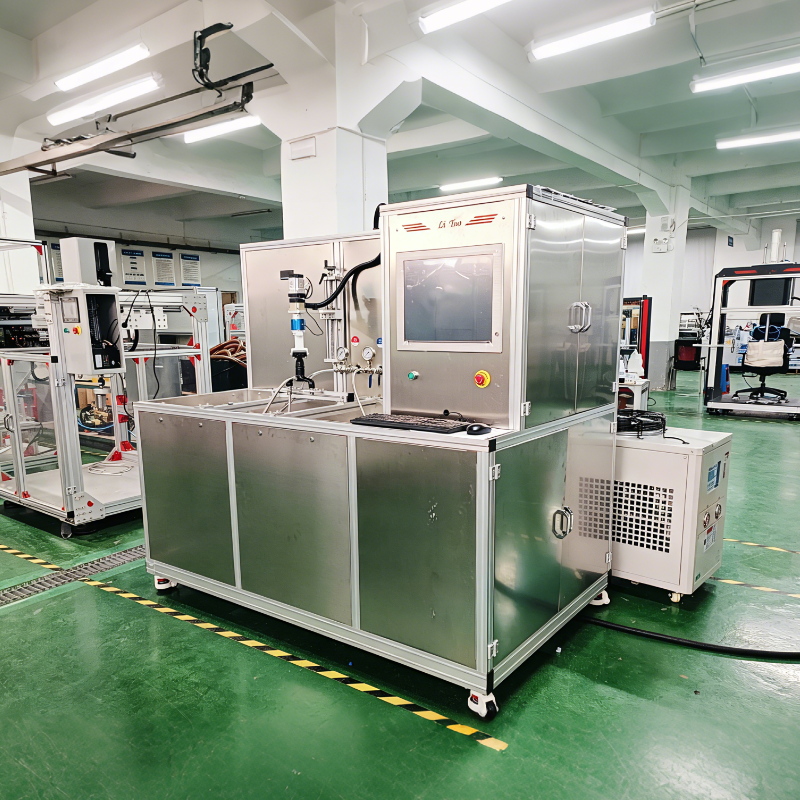
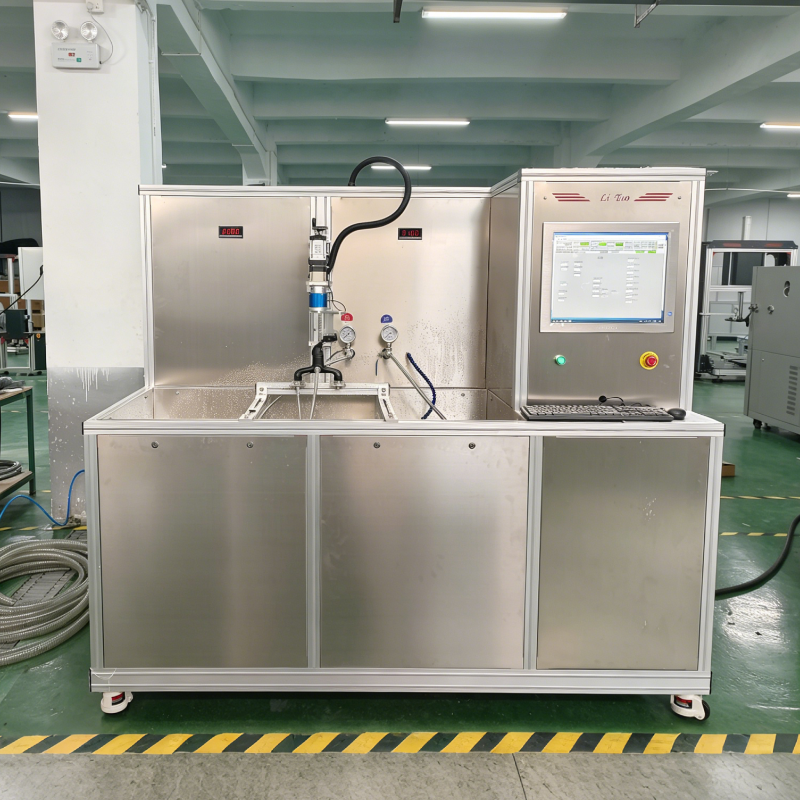
The quality of a faucet ultimately depends on its internal valve core (cartridge). A leaky faucet wastes water and irritates users; a poorly calibrated valve creates inconsistent flow or temperature; a low-sensitivity valve feels stiff and unresponsive. The Water Faucet Flow Sensitivity Testing Machine is a specialized instrument designed to evaluate these exact properties. This machine performs three critical tests: seal integrity (leakage), sensitivity (handle response), and flow performance (flow rate). For manufacturers of faucet cartridges or complete faucets, the Water Faucet Flow Sensitivity Testing Machine ensures every product meets quality standards before leaving the factory.
Core Testing Capabilities of the Machine
The Water Faucet Flow Sensitivity Testing Machine integrates multiple test functions into one automated platform. Here’s what it evaluates:
1. Seal (Leakage) Testing
The machine applies water or air pressure to the closed valve and measures any pressure drop or visible leakage. This identifies microscopic defects in ceramic discs, rubber seals, or valve body casting. A reliable Water Faucet Flow Sensitivity Testing Machine can detect leaks as small as a few milliliters per minute, ensuring long-term drip-free operation.
2. Sensitivity Testing
Sensitivity refers to how smoothly and precisely the faucet handle controls water flow and temperature. The Water Faucet Flow Sensitivity Testing Machine rotates the valve stem at a controlled speed while measuring flow and temperature changes. It quantifies “play” (free movement before engagement), torque (resistance to turning), and linearity (whether a 10° handle turn produces a consistent 10% flow increase). This test is crucial for single-lever mixer valves.
3. Flow Performance Testing
The machine measures flow rate (liters per minute) at standard water pressures (typically 0.3–0.5 MPa). It verifies that the valve meets regulatory requirements (e.g., EPA WaterSense, EN 817) and provides a consistent user experience. The Water Faucet Flow Sensitivity Testing Machine can also test flow at multiple handle positions to map the full performance curve.
How the Testing Process Works
Using a Water Faucet Flow Sensitivity Testing Machine is straightforward. The operator mounts the faucet or cartridge onto a fixture, connects water supply and sensors, and selects the desired test sequence via computer interface. The machine automatically pressurizes the system, cycles the handle through programmed angles, records flow and pressure data, and generates a pass/fail report. Typical test cycles take 2–5 minutes per sample, making the Water Faucet Flow Sensitivity Testing Machine ideal for both R&D and production line quality control.
Key Benefits for Manufacturers
- Eliminate Leaks: Catch defective seals before assembly, reducing warranty claims.
- Ensure Smooth Operation: Quantify handle sensitivity to avoid “sticky” or “loose” faucets.
- Validate Flow Compliance: Meet water efficiency regulations globally.
- Automated & Repeatable: Remove human error from manual testing.
- Data Logging: Every test result is stored for traceability and process improvement.
Conclusion: Invest in Quality with a Professional Tester
For any faucet or valve manufacturer, the Water Faucet Flow Sensitivity Testing Machine is not a luxury—it’s a necessity. It protects your brand from field failures, ensures customer satisfaction, and provides objective data for continuous improvement. Whether you produce standard compression valves, ceramic disc cartridges, or advanced thermostatic mixers, a Water Faucet Flow Sensitivity Testing Machine will pay for itself many times over by preventing defects from reaching the market.
Post time: Apr-15-2026


