


Introduction: The Industry Standard for Abrasion and Pilling Testing
The 6-Station Martindale Abrasion & Pilling Tester is a precision laboratory instrument designed to evaluate the abrasion resistance and pilling propensity of textiles, shoe uppers, linings, insoles, and similar flexible materials. Manufactured based on the J.G. Martindale principle and meeting the specifications of the Wool Industries Research Association (WIRA), this tester has become the global standard for assessing material durability against mechanical wear. With six independent test stations, it dramatically improves laboratory efficiency while delivering highly repeatable and comparable results.
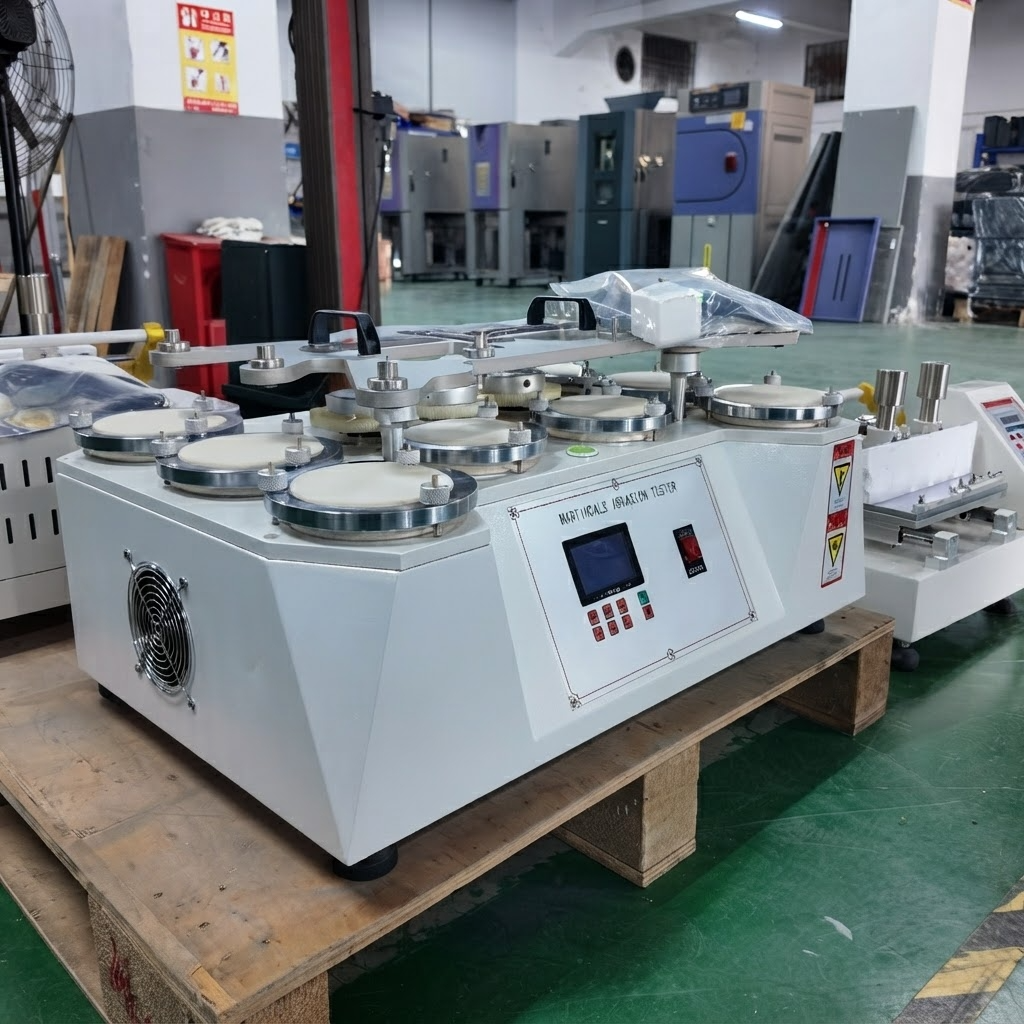
Core Abrasion Test Principle
The Martindale abrasion tester operates on a well-established mechanical principle that simulates the complex rubbing actions experienced by textiles during actual use. The test specimens are clamped in cylindrical specimen holders, which are then pressed against an abrasive medium under a specified load. The abrasive medium can be:
- Standard wool felt: The default friction medium for most textile abrasion tests, providing consistent and reproducible abrasion.
- Sandpaper or other abrasive materials: Can be substituted according to different test standards to simulate specific wear conditions.
During the test, the specimen holder follows a Lissajous multi-directional friction motion – a unique figure-eight pattern that ensures all-directional rubbing, closely mimicking the multidirectional wear that occurs during everyday use. This sophisticated motion pattern is generated by the interaction of vertical and horizontal eccentric wheels, providing uniform abrasion across the entire specimen surface.
Lissajous Multi-Directional Friction Motion: The Martindale Advantage
The defining characteristic of the Martindale tester is its Lissajous trajectory. Unlike simple back-and-forth or rotary abrasion testers, the Lissajous motion creates a complex, non-repeating pattern that subjects the fabric to rubbing from every direction. This is achieved through:
- Vertical and horizontal eccentric drives that operate at different frequencies and amplitudes
- Precisely calculated gearing that produces the characteristic figure-eight movement
- Standardized weighted loads that maintain consistent pressure between specimen and abrasive medium
This multi-directional abrasion is critical for realistically simulating the complex wear that fabrics experience during actual use – from sitting and walking to bending and stretching. The Lissajous motion ensures that yarns and fibers are abraded from all angles, revealing weaknesses that might not be detected by simpler abrasion test methods.
6-Station Design: Maximizing Laboratory Efficiency
The 6-station configuration of this Martindale tester offers significant advantages for busy testing laboratories:
- Simultaneous testing: All six stations operate concurrently, allowing six specimens to be tested under identical conditions at the same time.
- Independent specimen holders: Each station has its own specimen holder and weight, enabling testing of different materials or different test parameters simultaneously.
- LCD cycle counter: Each station features a digital cycle counter with automatic preset stop function, allowing the tester to stop automatically after reaching the target abrasion cycles.
- Space efficiency: Six stations in a compact footprint maximize testing capacity without requiring excessive laboratory space.
Dry & Wet Dual Test Modes: Comprehensive Material Evaluation
Recognizing that footwear and textile materials are exposed to both dry and wet conditions in real-world applications, the 6-Station Martindale Tester supports both dry and wet abrasion testing:
Dry Abrasion Test
The standard dry abrasion test is performed on conditioned specimens using standard wool felt or other specified abrasive media under controlled temperature and humidity conditions. This test evaluates:
- Abrasion mass loss: The amount of material worn away after a specified number of cycles.
- Color transfer/color fastness: The degree of color rub-off from the specimen, especially critical for shoe uppers and linings.
- Surface pilling: The formation of small fiber balls (pills) on the fabric surface.
Wet Abrasion Test
Wet abrasion testing simulates the effects of rain on shoe uppers and sweat on shoe linings – conditions that significantly affect material performance. The wet test involves:
- Specimen conditioning: Specimens are saturated with distilled water or artificial sweat solution prior to testing.
- Wet abrasion cycles: The test is performed with the specimen maintained in a wet state throughout the abrasion process.
- Evaluation parameters: Wet abrasion loss, color bleeding, and structural integrity are assessed.
Applications Across Textile and Footwear Industries
The 6-Station Martindale Abrasion & Pilling Tester is widely used across multiple industries for quality control, material development, and product certification:
- Textile Manufacturing: Evaluating woven and knitted fabrics, upholstery textiles, and clothing materials for abrasion resistance and pilling performance.
- Footwear Industry: Testing shoe uppers (leather, synthetic, textile), linings, insoles, and shoe laces for wear resistance under both dry and wet conditions.
- Leather Goods: Assessing the abrasion resistance of leather for bags, belts, and accessories.
- Technical Textiles: Evaluating protective textiles, workwear, and industrial fabrics.
- Interior Textiles: Testing carpets, curtains, and furniture fabrics for abrasion resistance and pilling.
Key Technical Specifications
- Number of Test Stations: 6
- Specimen Holder Diameter: 38.5mm (standard)
- Felt Pad Diameter: 140mm
- Loading Weights: 9kPa and 12kPa (standard), others available as options
- Motion Pattern: Lissajous figure-eight trajectory
- Cycle Display: LCD digital counter with preset stop function
- Test Modes: Dry and wet abrasion
- Power Supply: 220V / 110V AC
Compliance with International Standards
The 6-Station Martindale Abrasion & Pilling Tester is designed to meet the requirements of major international textile testing standards:
- ISO 12947 – Textiles – Determination of abrasion resistance of fabrics by Martindale method
- ISO 12945-2 – Textiles – Determination of fabric propensity to surface pilling – Part 2: Modified Martindale method
- ASTM D4966 – Standard test method for abrasion resistance of textile fabrics (Martindale abrasion tester method)
- EN 388 – Protective gloves against mechanical risks – Abrasion resistance testing
- SATRA TM 31 – Abrasion resistance of footwear materials
- GB/T 21196 – Chinese standard for textile abrasion resistance Martindale method
Benefits for Testing Laboratories
Investing in the 6-Station Martindale Abrasion & Pilling Tester delivers significant operational and quality benefits:
- High Efficiency: Six stations operate simultaneously, allowing six specimens to be tested at once.
- Reproducible Results: The Martindale principle ensures consistent, repeatable abrasion results across different laboratories.
- Versatility: Compatible with various abrasive media and test standards, accommodating a wide range of materials.
- Dual Mode Capability: Dry and wet testing provides comprehensive material evaluation.
- Automated Operation: LCD cycle counters with preset stop function enable unattended testing.
- Global Recognition: Results are recognized by the Wool Industries Research Association (WIRA) and major international standards bodies.
Conclusion: The Essential Tool for Textile and Footwear Durability Testing
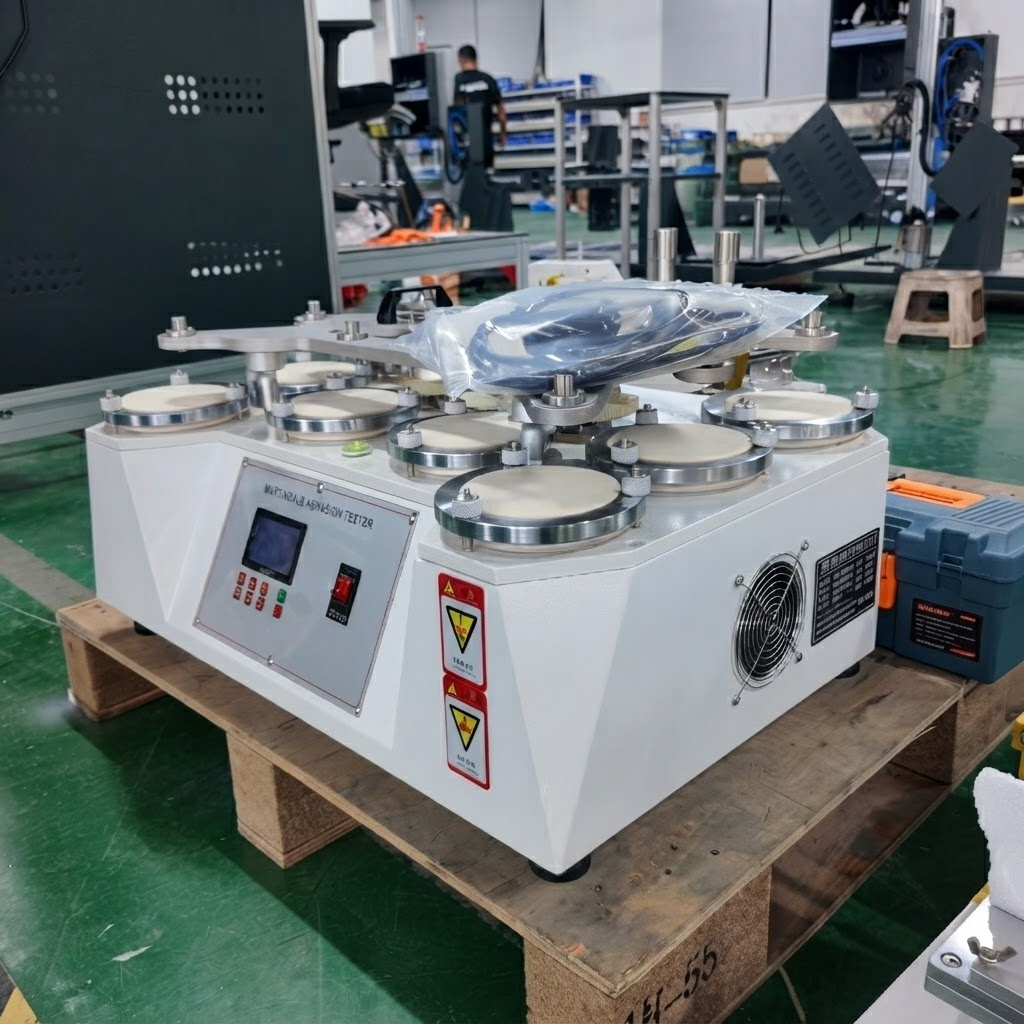
The 6-Station Martindale Abrasion & Pilling Tester is the industry-standard instrument for evaluating the abrasion resistance and pilling performance of textiles, shoe uppers, linings, and insoles. Its unique Lissajous multi-directional friction motion accurately simulates real-world wear conditions, while the 6-station design maximizes laboratory throughput. With support for both dry and wet testing modes and compliance with major international standards, this tester is an indispensable tool for textile manufacturers, footwear producers, quality control laboratories, and research institutions committed to delivering durable, high-quality products.
Post time: Jul-28-2026


