



Servo System Carton Compression Testing Machine: Precision Box Strength Analysis
The Foundation of Packaging Integrity: Why Compression Testing is Essential
In the world of packaging and logistics, the structural strength of a carton directly impacts product safety and supply chain efficiency. The Servo System Carton Compression Testing Machine represents the pinnacle of precision in measuring this critical parameter. Utilizing advanced servo technology and high-precision load cells, this equipment provides manufacturers with definitive data on how their containers will withstand the stacking pressures encountered during storage and transportation.
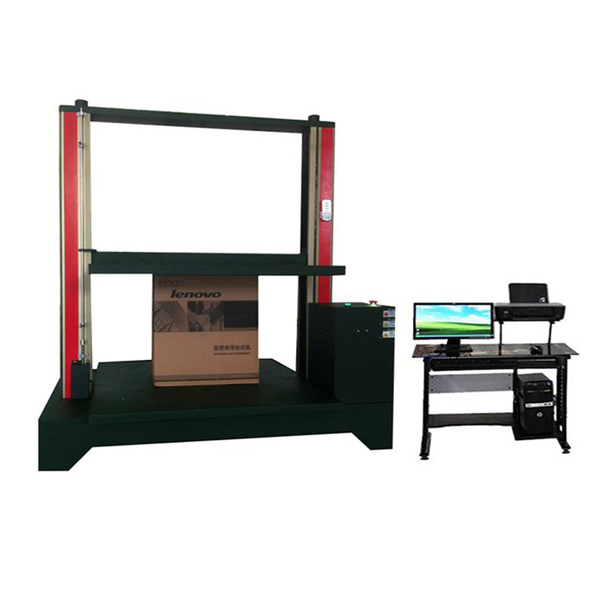
Core Technology: How Servo Precision Enhances Testing Accuracy
At the heart of this testing machine lies a sophisticated servo control system paired with a high-precision Load Cell. Unlike traditional mechanical systems, the servo motor allows for exceptionally smooth, controllable, and repeatable application of compression force. This is managed and displayed via an intuitive computer interface, which not only controls the test but also captures, records, and analyzes the force-displacement data with laboratory-grade accuracy.
Key System Components
- Servo Motor & Drive System: Provides precise speed and position control for consistent, repeatable test cycles.
- High-Precision Load Cell: The core sensor that accurately measures the compression force applied to the specimen, typically with an accuracy of ±0.5% or better.
- Computer Control & Data Acquisition: Software allows for setting test parameters (speed, stop conditions) and generates detailed graphs of force vs. compression.
- Rigid Test Frame: Ensures all force is applied vertically to the specimen without frame deflection, guaranteeing test validity.
Understanding the Test: From Setup to Box Compression Strength (BCT)
The primary function is to determine the compression strength of corrugated boxes, cartons, and other container types. The test specimen is placed centrally on the machine’s lower platen. The upper platen, driven by the servo system, descends at a constant speed to apply a progressively increasing compressive load until the box fails (crushes). The maximum force recorded before failure is the Box Compression Strength (BCT), a vital metric for design and quality control.
Beyond Peak Load: Valuable Data Points Captured
The computer system captures the entire force-displacement curve, offering insights beyond just the maximum load:
- Peak Load (BCT): The maximum force the container can withstand.
- Stiffness: The slope of the initial linear portion of the curve, indicating material rigidity.
- Energy Absorbed: The area under the curve, representing the total energy required to crush the box.
- Deformation at Failure: How much the box was compressed when it failed.
Applications Across Materials and Industries
While designed for carton compression testing, the machine’s versatility extends to various containers and materials:
- Corrugated Boxes & Trays: Primary application for determining stacking strength and optimizing flute/profile design.
- Plastic Crates & Totes: Evaluating the durability of reusable packaging.
- Composite Material Containers: Testing boxes made from alternative, sustainable materials.
- Individual Packaging Components: Can be used to test the compressive strength of partitions, inserts, or cushioning elements.
The Operational Workflow: From Sample to Report
Operation is streamlined for efficiency. The user inputs test parameters (platen speed, expected load range) into the software, places the box on the platen, and initiates the test. The servo system automatically performs the compression, with the Load Cell feeding real-time data to the computer. Upon box failure, the machine stops and retracts. A comprehensive test report is instantly generated, often including statistical analysis for multiple samples.
Strategic Benefits for Packaging Professionals
- Optimize Material Usage: Precisely determine the minimum board grade needed for a given load, reducing material costs without sacrificing safety.
- Quality Assurance: Perform batch testing to ensure incoming or outgoing packaging consistently meets strength specifications.
- Design Validation: Test new box designs, flute combinations, or closure methods before full-scale production.
- Compliance & Certification: Generate auditable test data to comply with international standards like ASTM D642, ISO 12048, or TAPPI T804.
- Problem Solving: Diagnose root causes of warehouse collapses or in-transit damage with definitive strength data.
Conclusion: The Essential Tool for Data-Driven Packaging Decisions
In an era where supply chain resilience and sustainability are paramount, guessing a box’s strength is an unacceptable risk. The Servo System Carton Compression Testing Machine transforms packaging strength from an assumption into a precise, measurable science. By investing in this high-precision testing technology, manufacturers, packaging designers, and quality managers gain the critical data needed to create robust, cost-effective, and reliable packaging solutions that protect products from the production line to the end user.
Post time: Jan-08-2026


