


Springs are widely used in furniture, mattresses, automotive components, mechanical assemblies, and industrial products. During actual use, many springs are subjected to repeated compression and recovery. Although a spring may perform well under a single load, continuous compression can gradually cause fatigue, permanent deformation, or loss of performance.
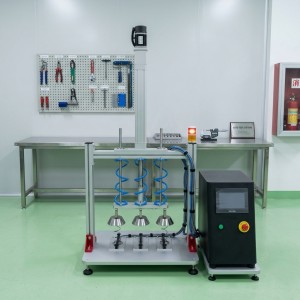
The Spring Repeated Compression Testing Machine is designed to simulate these repeated loading conditions and evaluate the compression fatigue, durability, and service life of springs.
What Is a Spring Repeated Compression Test?
A repeated compression test evaluates how a spring performs when it is compressed and released repeatedly for a specified number of cycles.
Before testing, the spring’s initial height is measured and the specimen is positioned between the compression plates. The machine then repeatedly compresses the spring to a predetermined height at a controlled test speed.
After the preset number of cycles has been completed, the machine automatically stops. The spring can then be inspected for:
- Permanent deformation
- Loss of spring height
- Fatigue damage
- Cracking or structural failure
- Changes in load-bearing performance
- Other conditions that may affect normal use
This makes repeated compression testing an important method for evaluating long-term spring reliability.
Why Is Spring Fatigue Testing Important?
A spring experiences different mechanical stresses depending on its application. For example, springs used in mattresses and furniture may be compressed thousands of times during normal use, while automotive and mechanical springs may experience much higher numbers of loading cycles.
A Spring Fatigue Tester helps manufacturers identify potential problems before products enter mass production.
1. Evaluate Spring Durability
Repeated compression provides a more realistic evaluation of long-term spring performance than a single compression test.
2. Identify Permanent Deformation
After repeated compression, some springs may fail to return to their original height. Measuring this change helps engineers evaluate the spring’s permanent deformation.
3. Compare Different Spring Designs
Manufacturers can compare different materials, wire diameters, coil designs, and manufacturing processes to determine which design provides better durability.
4. Improve Product Reliability
Test results can help engineers identify weak points and optimize spring design before the product reaches customers.
How Does the Spring Compression Testing Machine Work?
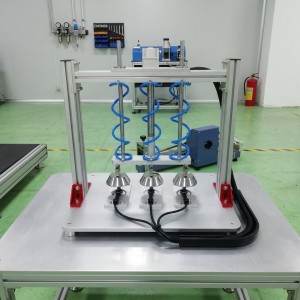
The Spring Compression Testing Machine uses upper and lower compression plates to apply repeated mechanical loading to the test spring.
The specimen is placed between the compression plates, and the required compression height is configured according to the test procedure. During operation, the AC variable-frequency motor drives the compression mechanism at a controlled speed.
The machine supports a compression stroke of 0–300 mm, while the test speed can be adjusted from 0 to 40 cycles/min.
This adjustable configuration allows the machine to accommodate different spring sizes and testing conditions.
High-Capacity Cycle Counting
Long-term fatigue testing requires accurate cycle counting.
The equipment uses an LCD cycle counter with a range of 0–999,999 cycles. This allows operators to perform extended durability tests without manually recording every compression cycle.
Once the preset number of cycles is reached, the machine automatically stops. This improves testing efficiency and reduces the need for continuous operator supervision.
Adjustable Compression Speed and Stroke
Different springs may require different compression conditions.
The Spring Life Testing Machine provides an adjustable test speed of 0–40 cycles/min and a compression stroke of 0–300 mm. Operators can configure the test according to the characteristics of the spring and the applicable test procedure.
An optional displacement measurement function provides a resolution of 0.01 mm, which can be useful when more detailed displacement or deformation measurements are required.
Applications of Spring Compression Fatigue Testing
Repeated compression testing is widely used across different industries.
Furniture and Mattress Industry
Furniture and mattress products often contain springs that experience repeated loading throughout their service life. Testing helps manufacturers evaluate whether springs can maintain their intended performance after prolonged use.
Automotive Industry
Automotive components may experience repeated mechanical loading under demanding operating conditions. Spring fatigue testing can help evaluate the durability of relevant spring components.
Mechanical Components
Springs are used in numerous mechanical systems for energy storage, cushioning, force control, and vibration absorption. Repeated compression testing helps verify their mechanical reliability.
Hardware Manufacturing
Spring manufacturers can use durability testing to perform incoming material inspection, process verification, product development, and production quality control.
Key Features of a Spring Durability Tester
A professional Spring Testing Machine should provide stable mechanical operation and convenient test control.
The main features of this equipment include:
- 0–300 mm adjustable compression stroke
- 0–40 cycles/min adjustable test speed
- 0–999,999 cycle counter
- AC variable-frequency motor
- LCD display
- 100 × 100 mm compression plate
- Optional 0.01 mm displacement resolution
- Automatic stop after preset cycles
These features make the equipment suitable for both routine quality control and long-duration spring durability testing.
How Can Manufacturers Use Test Results?
The results obtained from repeated compression testing can be used to improve both product design and manufacturing processes.
Engineers can compare the initial and final spring dimensions, observe changes after repeated compression, and identify potential fatigue-related problems.
Testing data can also support:
- New product development
- Material selection
- Spring design optimization
- Production quality control
- Supplier evaluation
- Product durability verification
- Failure analysis
By identifying problems during laboratory testing, manufacturers can reduce the risk of premature spring failure in actual applications.
Conclusion
Spring performance cannot be evaluated effectively through a single load test alone when the product is designed for repeated use. Spring repeated compression testing provides a practical way to simulate repetitive loading and evaluate fatigue, permanent deformation, and long-term durability.
The Spring Repeated Compression Testing Machine combines adjustable compression stroke, variable test speed, high-capacity cycle counting, and optional displacement measurement to provide a reliable solution for spring fatigue and durability evaluation.
For spring, furniture, mattress, automotive, and mechanical component manufacturers, incorporating Spring Compression Testing into product development and quality control can help improve product reliability and extend service life.
Post time: Sep-08-2026


