


Introduction: The Need for Rapid Temperature Change Testing
In today’s demanding industrial environment, materials and components must withstand not only extreme temperatures but also the rapid alternation between hot and cold conditions. Thermal expansion and contraction caused by sudden temperature changes can lead to cracking, delamination, seal failure, and other structural damages that compromise product reliability. The Three-Zone Thermal Shock Test Chamber is a specialized environmental testing system designed to evaluate the tolerance of material structures and composite materials under alternating extreme high and low temperature environments in a short period. This equipment helps manufacturers examine chemical changes or physical damages caused by thermal expansion and contraction within minimal testing time, providing reliable reference data for product optimization and design improvement.
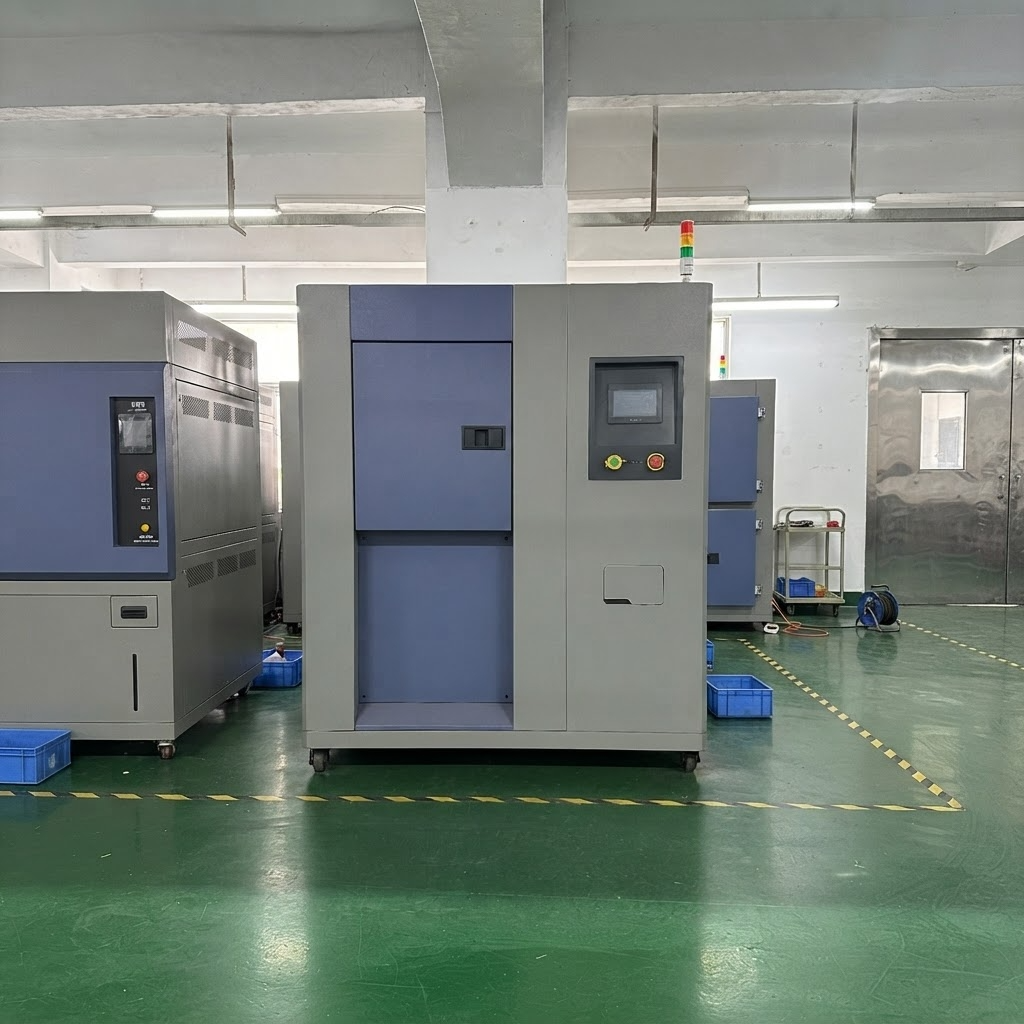
How the Three-Zone Thermal Shock Test Chamber Works
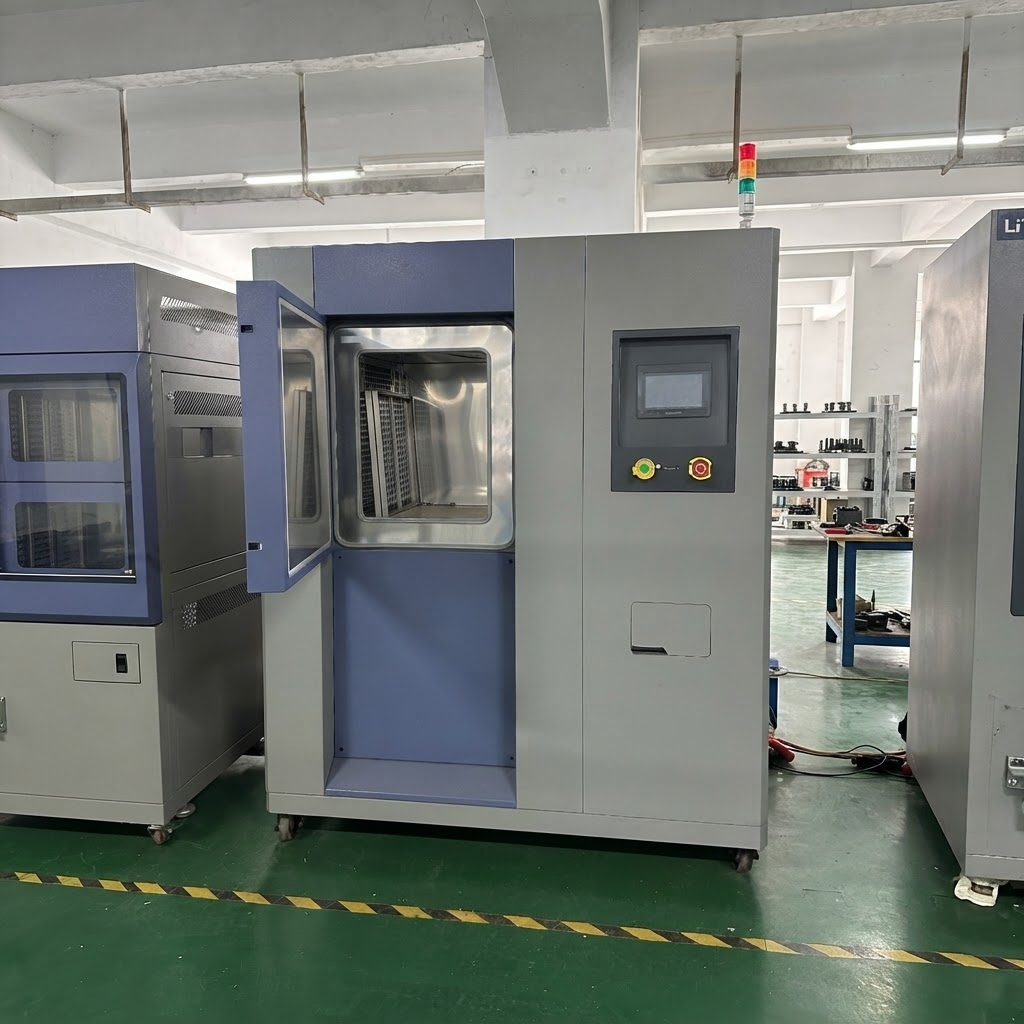
The Three-Zone Thermal Shock Test Chamber operates on a unique and highly efficient design that enables rapid temperature transitions. Unlike single-chamber systems that gradually change temperature, the three-zone design features three distinct chambers:
- Hot Zone (High Temperature Chamber): Maintains a constant high temperature (typically up to +200°C), ready for immediate exposure.
- Cold Zone (Low Temperature Chamber): Maintains a constant low temperature (typically down to -70°C or lower), ready for immediate exposure.
- Test Zone (Specimen Chamber): A separate chamber where the test specimen is placed. It can be rapidly moved between the hot and cold zones via a pneumatic or motorized transfer mechanism.
During a test, the specimen is sequentially exposed to the hot zone and then the cold zone, or vice versa, with minimal transfer time (typically 5–10 seconds). This rapid alternation subjects the material to extreme temperature shocks, simulating conditions such as sudden cold starts, rapid environmental changes, or exposure to alternating climatic conditions.
Comprehensive Testing Capabilities and Applications
The Three-Zone Thermal Shock Test Chamber is widely used across multiple industries to evaluate materials and components that must withstand rapid temperature changes.
1. Electronics and Electrical Components
Printed circuit boards (PCBs), semiconductors, connectors, sensors, and integrated circuits are tested for solder joint integrity, component adhesion, and electrical performance under temperature shock. Failure modes include cracked solder joints, delamination, and open circuits.
2. Automotive Components
Engine sensors, control units, dashboard displays, and interior materials are subjected to thermal shock to simulate rapid temperature changes from cold starts, desert heat, or rapid climate transitions.
3. Aerospace and Defense
Avionics, structural composites, and critical components are tested per MIL-STD-810 to ensure they withstand the extreme temperature changes experienced during flight and ground operations.
4. Plastics and Polymers
Plastic housings, seals, gaskets, and structural parts are evaluated for cracking, hardening, embrittlement, and dimensional changes under thermal shock.
5. Rubber and Elastomers
Rubber seals, O-rings, vibration mounts, and flexible components are tested for loss of elasticity, hardening, or cracking under rapid temperature change.
6. Metals and Composites
Metallic parts, welded joints, and composite materials are assessed for fatigue, stress cracking, and structural integrity under thermal cycling.
7. Coating and Plating
Paints, powder coatings, electroplating, and surface treatments are evaluated for adhesion, cracking, blistering, and color change under thermal shock.
Key Technical Specifications
Professional three-zone thermal shock test chambers are equipped with advanced features to ensure precise, repeatable, and efficient testing:
- Temperature Range (Hot Zone): Ambient +10°C to +200°C (or higher, up to +220°C).
- Temperature Range (Cold Zone): -70°C to ambient -10°C (or lower).
- Transfer Time: 5–10 seconds (typically ≤ 10 seconds).
- Exposure Duration: Programmable from 5 minutes to 999 hours.
- Number of Cycles: Programmable up to 9999 cycles.
- Specimen Capacity: Variable depending on chamber size (typically 50L to 300L or more).
- Control System: PLC with touchscreen interface, supporting multiple preset standard test profiles.
- Data Logging: Automatic recording of temperature, exposure time, and cycle data.
Compliance with International Standards
The Three-Zone Thermal Shock Test Chamber is designed to meet the requirements of major international testing standards for temperature shock and thermal cycling:
- IEC 60068-2-14: Environmental testing – Part 2-14: Tests – Test N: Change of temperature.
- MIL-STD-810: Environmental engineering considerations and laboratory tests – Method 503 (Temperature shock).
- JIS C 60068-2-14: Environmental testing – Test N: Change of temperature.
- GB/T 2423.22: Environmental testing for electric and electronic products – Test N: Change of temperature.
- GJB 150.5: Military equipment environmental testing – Temperature shock test.
Key Features and Advantages
Investing in a Three-Zone Thermal Shock Test Chamber offers substantial benefits for manufacturers, testing labs, and R&D institutions:
- Rapid Temperature Transition: Transfer between hot and cold zones in seconds, enabling true thermal shock testing.
- Efficient Testing: Reduced test time compared to single-chamber systems that require slow temperature ramping.
- Versatility: Suitable for a wide range of materials and components across multiple industries.
- Precision: Accurate temperature control and rapid transfer ensure consistent, repeatable test conditions.
- Compliance: Meets major international and military standards for thermal shock testing.
- Data-driven Improvement: Test results reveal failure mechanisms, enabling targeted design and material optimization.
- Reliability Assurance: Identify potential field failures before products reach customers, reducing warranty claims and liability.
Testing Workflow Overview
Using the Three-Zone Thermal Shock Test Chamber follows a streamlined procedure:
- Specimen Preparation: Prepare test specimens according to the relevant standard (size, mounting method, etc.).
- Parameter Setting: Program test parameters including hot zone temperature, cold zone temperature, exposure duration, number of cycles, and transfer time via the touchscreen interface.
- Specimen Mounting: Place specimens in the test zone specimen basket, ensuring proper positioning for uniform temperature exposure.
- Test Execution: Start the test; the chamber automatically transfers the specimen between hot and cold zones according to the programmed cycle profile.
- Monitoring: The system continuously monitors temperature in all three zones, recording data for analysis.
- Final Evaluation: After completing the required cycles, remove specimens for visual inspection, dimensional measurement, and functional testing.
- Reporting: Generate a comprehensive test report documenting test parameters, temperature data, and observations.
Benefits for Manufacturers and Testing Laboratories
Adopting a Three-Zone Thermal Shock Test Chamber delivers substantial returns across quality assurance, R&D, and regulatory compliance:
- Accelerated Reliability Testing: Identify thermal shock failure mechanisms in a compressed time frame.
- Design Optimization: Use test results to improve material selection, component design, and manufacturing processes.
- Reduced Field Failures: Catch thermal shock-related defects before products are deployed.
- Regulatory Compliance: Generate documented test data for certification to IEC, MIL-STD, and other standards.
- Competitive Advantage: Demonstrate superior product reliability to customers and regulatory bodies.
Conclusion: The Essential Tool for Thermal Shock Reliability Testing
The Three-Zone Thermal Shock Test Chamber is an indispensable instrument for any organization that develops, manufactures, or certifies products that must withstand rapid temperature changes. Its unique three-zone design enables rapid and efficient thermal shock testing, providing critical data on material tolerance to thermal expansion and contraction. From electronic components and automotive parts to aerospace systems and plastic components, this chamber helps engineers evaluate chemical changes and physical damage, optimize designs, and ensure reliable performance in the most demanding environments. Investing in a professional thermal shock test chamber is an investment in product quality, safety, and long-term reliability.
Post time: Aug-06-2026


