


Introduction: The Challenge of Testing Large Packages
During transportation, loading, and unloading, large and heavy packages frequently suffer drops from forklifts, conveyor belts, or manual handling. Traditional drop testers often have limited table sizes and lifting capacities, making them unsuitable for oversized cartons, palletized loads, or industrial containers. The Zero Drop Test Machine solves this problem with a unique design that enables safe, repeatable drop testing of bulky packages. This equipment assesses the impact resistance of both packaging and contents, helping manufacturers validate protective designs and reduce shipping damage.
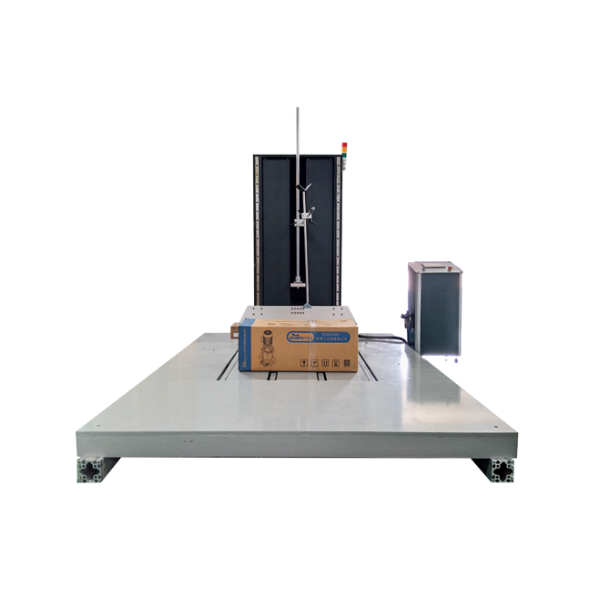
How the Zero Drop Test Machine Works
Unlike conventional drop testers that lift and release a package from a height, the Zero Drop Test Machine uses a rapidly descending support platform (often called an “E-fork” due to its shape). The test package is placed on the platform and positioned according to the desired orientation—face drop, edge drop, or corner drop. Once aligned, the platform is triggered to drop away at high speed, allowing the package to free-fall onto a shock-absorbed base plate (typically covered with rubber or impact-absorbing material). The drop height is precisely set by the operator via the control system, and the machine automatically performs the test cycle. The term “zero drop” refers to the platform’s ability to retract to a position virtually flush with the base, enabling extremely low drop heights that are difficult to achieve with traditional lift-and-release mechanisms.
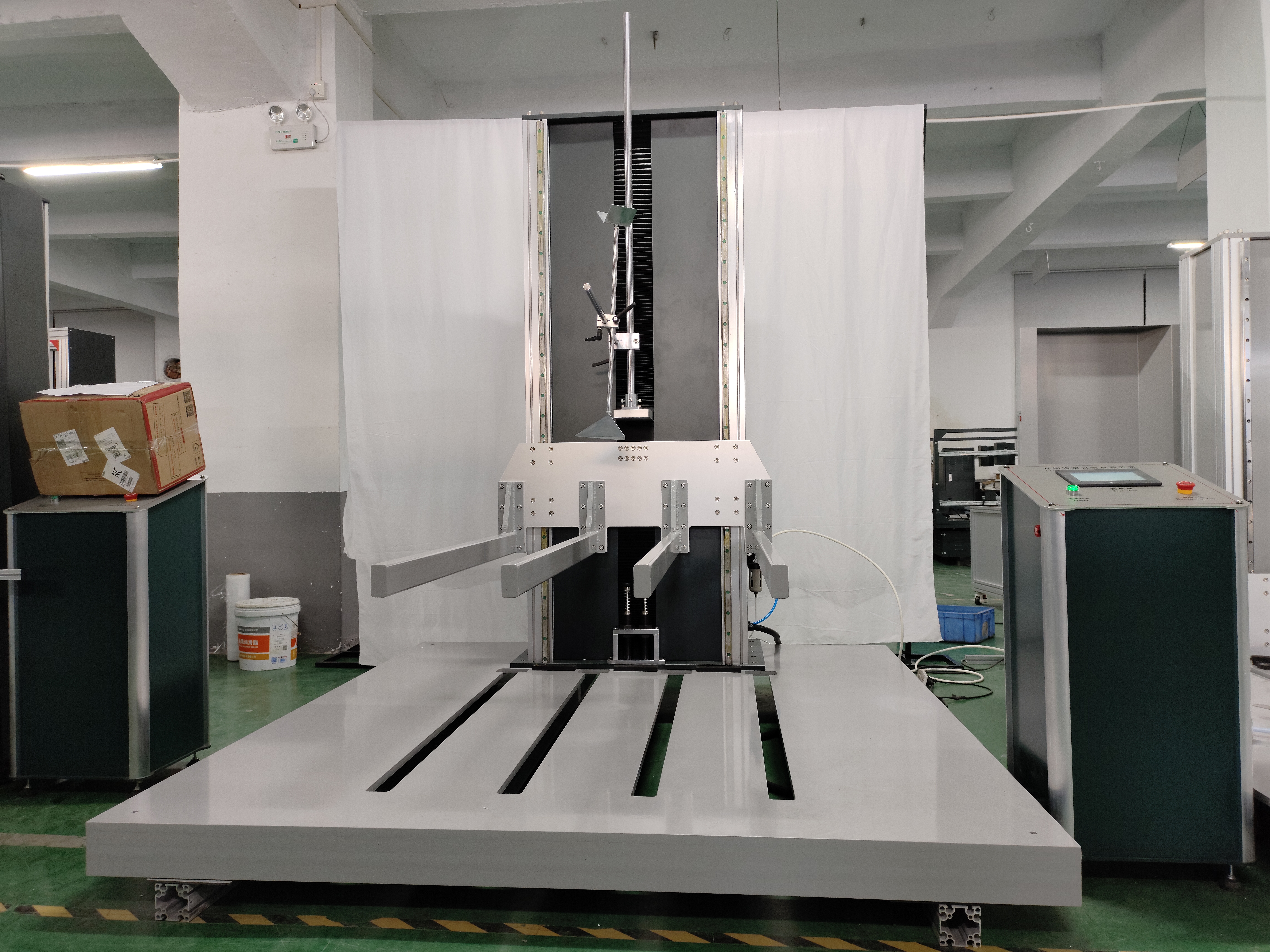
Key Features and Technical Specifications
- Large Test Capacity: Accommodates bulky packages up to 1.5m × 1.5m or more (customizable).
- Adjustable Drop Height: Typically 100mm to 1500mm, digitally set and controlled.
- Multi-Orientation Testing: Fixtures allow face, edge, and corner drops without repositioning the product on the platform.
- High-Speed Pneumatic or Servo Release: Ensures instant, repeatable platform retraction for consistent free fall.
- Shock-Absorbing Base: Protects both the test specimen and the machine from rebound damage; often uses oil dampers or polyurethane pads.
- Safety Enclosure: Guards against package debris and operator injury during high-energy drops.
Applications and Benefits
The Zero Drop Test Machine is ideal for:
- Large appliances: Refrigerators, washing machines, air conditioners.
- Industrial components: Engines, transformers, machinery parts.
- Palletized goods: Stacked cartons or drums.
- Furniture: Ready-to-assemble cabinets, sofas, mattresses.
Key benefits include:
- Realistic simulation: Represents actual handling hazards (forklift drops, conveyor falls).
- Compliance with standards: Meets ISTA (1A, 2A, 3E), ASTM D5276, ISO 2248, and GB/T 4857.5.
- Data-driven packaging design: Optimize corrugated board, foam, or air cushions to minimize material costs while ensuring protection.
- Reduced shipping damage: Identify weak packaging designs before mass production, cutting returns and warranty claims.
Operational Workflow
- Mount the package on the E-fork platform in the desired orientation (face, edge, or corner).
- Set drop height via the touchscreen controller.
- Activate the safety enclosure and initiate the test.
- The platform drops away at high speed; the package free-falls onto the shock-absorbing base.
- Inspect package and contents for damage; the machine records drop parameters.
- Repeat for required number of drops (typically 10–20 per ISTA schedule).
Conclusion: Essential for Heavy-Duty Packaging Validation
The Zero Drop Test Machine bridges the gap between small benchtop drop testers and expensive custom rigs. Its innovative retracting platform design allows precise, repeatable drop testing of large and heavy packages while maintaining safety and ease of use. For any manufacturer shipping bulky products, investing in a Zero Drop Test Machine is a direct path to lower damage rates, happier customers, and stronger packaging engineering.
Post time: May-28-2026


