


Introduction: The Ultimate Solution for Material Mechanical Property Testing
The Computer Double Column Universal Material Tensile Testing Machine is a state-of-the-art testing system designed for precise, comprehensive mechanical property evaluation of a vast range of materials. With its robust double-column frame, high-precision load cell sensor, and advanced computer control, this machine performs a complete spectrum of tests including tensile, elongation, compression, bending, shearing, tearing, and peeling. It also supports sophisticated closed-loop tests such as constant stress, constant strain, creep, and stress relaxation. With optional auxiliary fixtures, it can even perform torsion and cupping tests, making it one of the most versatile material testing instruments available. This equipment is the ideal choice for quality control laboratories, R&D departments, and production facilities across industries ranging from textiles and packaging to adhesives and rubber.
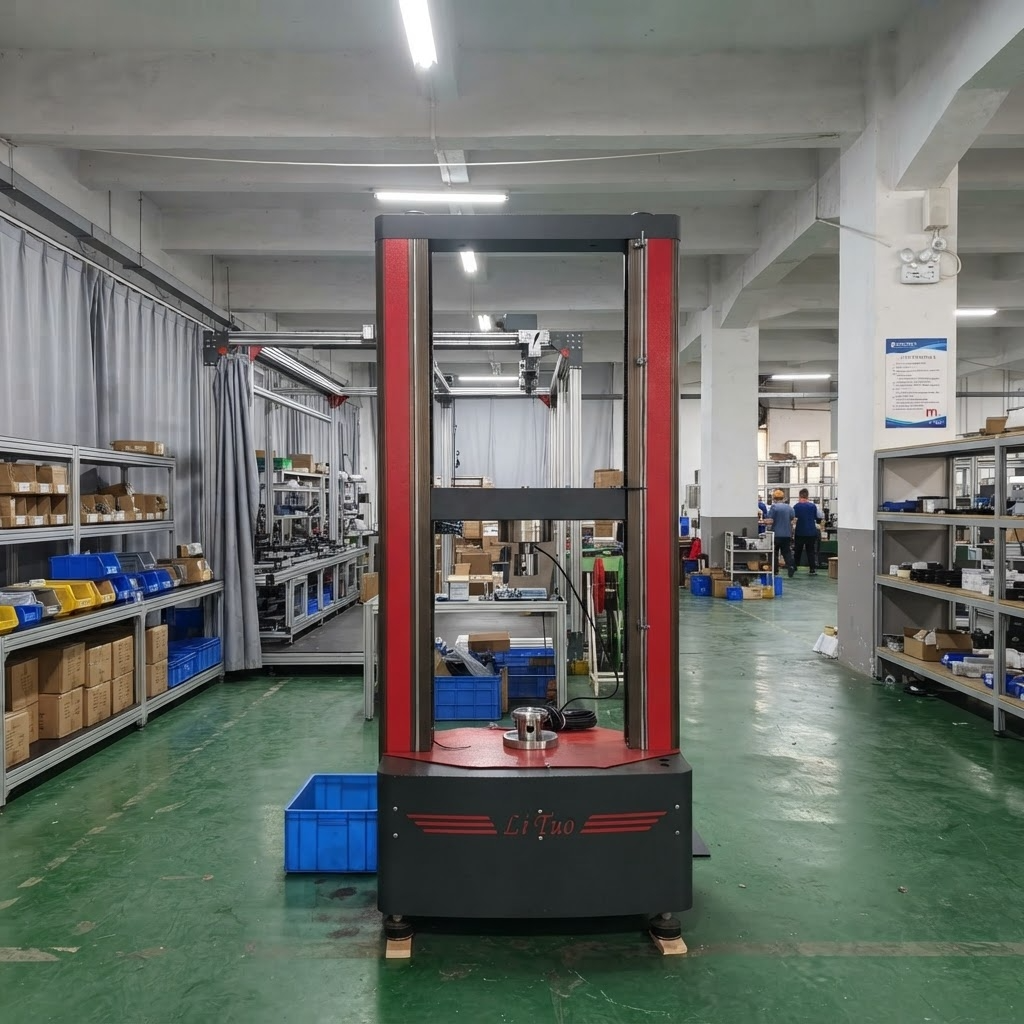
Core Technical Principle: Precision Measurement and Control
The Computer Double Column Universal Tensile Testing Machine operates on a precise electromechanical principle. A powerful servo motor drives the crosshead via a precision ball screw system, applying force to the test specimen. The high-precision load cell sensor captures the applied force with exceptional accuracy, while an optical encoder or displacement sensor measures crosshead movement. The computer control system synchronizes these measurements, generating real-time force-displacement or stress-strain curves. The double-column design ensures exceptional rigidity and alignment, critical for accurate test results, especially for high-force applications or materials with high modulus.
Comprehensive Testing Capabilities
This machine is designed to perform a full range of mechanical tests, making it suitable for virtually any material testing requirement.
1. Standard Mechanical Property Tests
- Tensile Test: Measures tensile strength, yield strength, elongation at break, and modulus of elasticity for materials such as plastics, rubber, metals, textiles, and paper.
- Compression Test: Evaluates compressive strength, modulus, and deformation behavior of foams, rubber, packaging materials, and other compressible materials.
- Bending (Flexural) Test: Determines flexural strength and modulus for rigid plastics, composites, wood, and construction materials.
- Shear Test: Measures shear strength of adhesives, metals, plastics, and composite materials.
- Tear Test: Evaluates tear resistance of films, textiles, rubber, paper, and nonwovens.
- Peel Test: Measures the peel strength of adhesive bonds, laminates, tapes, and self-adhesive materials. Common configurations include 90° and 180° peel tests.
2. Advanced Closed-Loop Test Modes
Beyond standard tests, the machine supports advanced closed-loop control modes for sophisticated material characterization:
- Constant Stress Test: Maintains a constant stress level while measuring strain over time, critical for creep analysis.
- Constant Strain Test: Maintains a constant strain level while measuring stress relaxation.
- Creep Test: Measures time-dependent deformation under constant load, essential for polymer and composite evaluation.
- Stress Relaxation Test: Measures the decrease in stress over time under constant strain, important for seal materials and gaskets.
3. Optional Specialized Tests (with Auxiliary Fixtures)
- Torsion Test: Evaluates torsional strength and stiffness using optional torsion fixtures.
- Cupping Test (Erichsen Test): Measures formability and ductility of sheet metals using a specialized cupping fixture.
Wide Range of Material Applications
The Computer Double Column Universal Tensile Testing Machine is suitable for physical performance testing across a diverse array of materials and products:
- Textiles & Nonwovens: Tensile strength, seam strength, tear resistance, elongation, and fabric stiffness.
- Plastic Films & Laminated Films: Tensile properties, heat seal strength, tear resistance, and puncture resistance.
- Flexible Packaging & Woven Bags: Tensile strength, burst strength, seal integrity, and tear resistance.
- Adhesives, Adhesive Tapes & Self-Adhesive Stickers: Peel strength, shear adhesion, tack, and holding power.
- Rubber & Elastomers: Tensile strength, elongation, tear resistance, compression set, and modulus.
- Paper & Paperboard: Tensile strength, burst strength, tear resistance, and elongation.
- Fibers & Filaments: Tensile strength, modulus, elongation, and creep behavior.
- Bonding Strength (Adhesive Joints): Shear and peel strength of bonded materials.
Flexible Fixture System: Quick Change for Diverse Test Standards
One of the key advantages of this universal tester is its interchangeable fixture system. The machine is equipped with a quick-change coupling mechanism that allows operators to switch between different grips and fixtures in seconds, adapting to various specimen types and test methods. Common fixture options include:
- Pneumatic Grips: Ideal for delicate films and textiles requiring consistent clamping pressure without specimen slippage.
- Mechanical Wedge Grips: Suitable for high-force tests on plastics, rubber, and composites.
- Roller Grips: Prevent specimen damage during fiber and yarn testing.
- Peel Test Fixtures: 90° and 180° peel test configurations for adhesive and tape testing.
- Compression Platens: Flat plates for compression testing of foams and packaging materials.
- Bending Fixtures: 3-point and 4-point bend configurations for flexural testing.
- Tear Test Fixtures: Trouser tear and Elmendorf-type fixtures for films and paper.
Testing Workflow: From Setup to Report
Using the Computer Double Column Universal Tensile Testing Machine follows a streamlined, efficient workflow:
- Fixture Selection: Choose the appropriate grips or fixtures for the material and test type.
- Parameter Setting: Define test speed, stop condition (force, displacement, or break detection), and calculation requirements via the computer software.
- Specimen Mounting: Secure the sample in the grips according to standard dimensions.
- Test Execution: Initiate the test; the servo system applies precise loading while software records force and displacement data in real time.
- Data Analysis: Software automatically calculates tensile strength, elongation, modulus, tear strength, peel force, or other specified properties.
- Reporting: Generate customizable test reports with graphs, statistical summaries, and pass/fail analysis.
Compliance with International Standards
The Computer Double Column Universal Tensile Testing Machine is designed to meet the requirements of numerous global testing standards across different industries:
- ASTM Standards: D638 (plastics), D412 (rubber), D882 (thin films), D5034 (textiles), D3330 (tape peel), D1000 (pressure-sensitive tape), E8 (metals)
- ISO Standards: 527 (plastics), 37 (rubber), 1184 (films), 13934 (textiles), 29862 (peel test), 6892 (metals)
- GB/T Standards: 1040 (plastics), 528 (rubber), 2792 (adhesive peel), 228 (metals)
- JIS, DIN, TAPPI, EN: Various industry-specific standards
Key Features and Benefits
Investing in the Computer Double Column Universal Tensile Testing Machine delivers substantial operational and quality benefits:
- Unmatched Versatility: One machine replaces multiple specialized testers, saving floor space and capital investment.
- High Precision: High-accuracy load cell and displacement sensors ensure reliable, repeatable results.
- Advanced Closed-Loop Control: Enables sophisticated tests like creep, stress relaxation, and constant stress/strain.
- Extensive Fixture Compatibility: Quick-change fixture system adapts to virtually any specimen type and test standard.
- Automated Operation: Computer control streamlines testing, reduces operator error, and increases throughput.
- Comprehensive Data Management: Software provides real-time graphing, automatic calculations, and customizable reporting.
- Regulatory Confidence: Designed to meet major international standards for material testing.
Conclusion: The Ultimate Testing Solution for Material Quality Assurance
The Computer Double Column Universal Material Tensile Testing Machine is the definitive solution for comprehensive material mechanical property testing. Its robust design, high-precision measurement, advanced closed-loop control capabilities, and extensive fixture compatibility make it suitable for virtually any material testing application. Whether you are testing the peel strength of an adhesive tape, the tensile strength of a technical textile, or the compression behavior of a foam, this machine delivers the precise, repeatable data needed for quality assurance, R&D, and regulatory compliance. For any organization committed to material quality and performance, this universal tester is an essential investment.
Post time: Aug-03-2026


