


Introduction: The Critical Need for Packaging Drop Testing
During transportation, loading, and unloading, packages inevitably suffer falls, bumps, and impacts. A package that fails to protect its contents during a drop can lead to damaged goods, customer complaints, returns, and significant financial losses. The Single-Wing Drop Tester (also known as a Single-Arm Drop Test Machine) is a specialized laboratory instrument designed to evaluate packaging damage and assess the impact resistance strength of products and their packaging during transportation and handling. By simulating real-world drops in a controlled laboratory environment, this equipment helps manufacturers optimize packaging designs, reduce shipping damage, and ensure product integrity from factory to end-user.
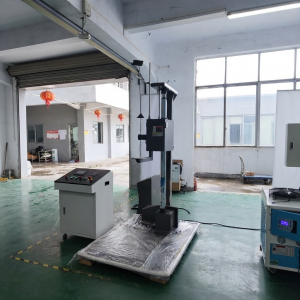
How the Single-Wing Drop Tester Works
The Single-Wing Drop Tester features a robust pivoting arm (the “wing” or “arm”) that securely holds the test specimen at a preset height. When released, the arm drops instantly, allowing the package to fall freely onto a rigid impact surface (typically a solid steel base plate). The machine supports drops from multiple orientations: flat (face), edge, and corner, comprehensively simulating the various impact scenarios that occur during real-world handling.
Key operational features include:
- Adjustable drop height: 300mm to 1500mm, covering typical falls from forklifts, conveyors, or truck beds.
- Electric drive system: Smooth and reliable elevation and release mechanism.
- Digital height display: LED digital indicator for precise height setting and readout.
- Multi-orientation testing: Face, edge, and corner drops to simulate different impact scenarios.
Technical Specifications
The Single-Wing Drop Tester is engineered with precision and durability in mind, featuring the following specifications:
- Drop Height Range: 300–1500 mm (adjustable)
- Maximum Specimen Weight: 0–80 kg
- Base Plate Thickness: 10 mm (solid steel plate)
- Maximum Specimen Size: 800 × 800 × 1000 mm (L × W × H)
- Impact Base Plate Size: 1700 × 1200 mm
- Support Arm Size: 160 × 250 × 10 mm
- Drop Height Accuracy: ±10 mm
- Machine Dimensions: Approximately 1700 × 1200 × 2300 mm (L × W × H)
- Height Display: LED digital display
- Test Orientations: Face, edge, and corner drops
- Drive System: Electric motor drive
- Impact Plate Parallelism Error: ≤ 1 degree
- Drop Surface Angle Error: ≤ 1 degree during drop
- Power Supply: AC380V 50Hz
- Power Consumption: 1.5 kW
- Net Weight: Approximately 550 kg
Comprehensive Testing Capabilities: Face, Edge, and Corner Drops
The Single-Wing Drop Tester supports three primary drop orientations to comprehensively evaluate packaging performance:
1. Face Drop (Flat Drop)
The package is dropped onto one of its flat faces. This simulates the most common impact scenario, such as a package falling from a conveyor belt or being dropped during manual handling. Face drops evaluate the structural integrity of the package’s largest surface areas.
2. Edge Drop
The package is dropped onto one of its edges. Edge impacts are particularly severe because the impact force is concentrated on a smaller area, often causing corner crushing or seam failure. This test evaluates the strength of package corners and edge protection.
3. Corner Drop
The package is dropped directly onto one of its corners. Corner drops represent the worst-case impact scenario, concentrating the full force of the drop onto a single point. This test assesses the package’s ability to protect its contents during the most severe impacts.
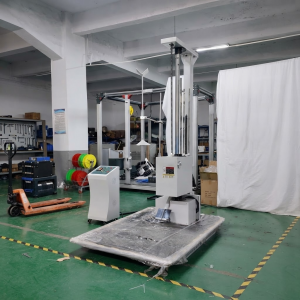
Standards Compliance
The Single-Wing Drop Tester is designed and manufactured to meet the requirements of major international packaging testing standards, ensuring test results are globally recognized and comparable:
- ISO 2248: Packaging – Complete filled transport packages – Vertical impact test by dropping
- JIS Z0202-87: Japanese industrial standard for package drop testing
- GB/T 4857.5-92: Chinese national standard for transport packages – Vertical impact test by dropping
- ASTM D5276: Standard test method for drop test of loaded containers by free fall
- ISTA (International Safe Transit Association): Series 1A, 2A, 3A test protocols
Key Benefits for Manufacturers and Testing Laboratories
- Packaging Optimization: Identify weak points in packaging design and optimize materials to reduce costs while maintaining protection.
- Quality Assurance: Regular drop testing ensures consistent packaging quality across production batches.
- Regulatory Compliance: Meet ISO, JIS, GB, ASTM, and ISTA requirements for packaging certification.
- Reduced Shipping Damage: Identify and correct packaging weaknesses before products are shipped, reducing returns and customer complaints.
- Versatility: Test various package types, including cartons, plastic containers, and palletized loads.
- Objective Data: Generate repeatable, comparable test results for continuous improvement and customer documentation.
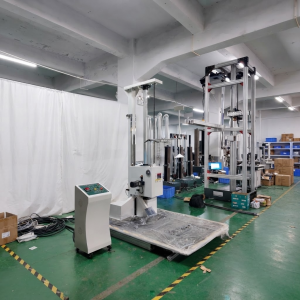
Applications Across Industries
The Single-Wing Drop Tester is widely used across multiple sectors for packaging validation and quality control:
- E-commerce and Logistics: Testing shipping cartons and mailer boxes for online retail packaging.
- Consumer Goods: Validating packaging for electronics, appliances, toys, and household products.
- Food and Beverage: Testing packaging for bottled goods, canned products, and food containers.
- Pharmaceutical and Medical: Ensuring drug packaging protects contents during transport.
- Automotive: Testing packaging for spare parts and components.
- Manufacturing: Evaluating industrial packaging for heavy or fragile components.
Testing Procedure Overview
A typical drop test using the Single-Wing Drop Tester follows this workflow:
- Specimen Preparation: Prepare the test package with actual contents or representative dummy loads.
- Height Setting: Adjust the drop height via the electric drive system and verify using the LED digital display.
- Orientation Setup: Position the package for face, edge, or corner drop as required by the test protocol.
- Test Execution: Release the package; it falls freely onto the impact base plate.
- Inspection: Examine the package and contents for damage, deformation, or functional impairment.
- Documentation: Record drop height, orientation, and damage observations for reporting.
Conclusion: The Essential Tool for Packaging Impact Testing
The Single-Wing Drop Tester is an indispensable instrument for any manufacturer, packaging engineer, or testing laboratory committed to ensuring product integrity during transportation. By accurately simulating the impacts that packages experience during handling, loading, and transit, this machine provides the objective data needed to design robust packaging, reduce damage costs, and meet international standards. With its robust construction, precise height control, and versatile drop orientation capabilities, the Single-Wing Drop Tester delivers reliable, repeatable results that help businesses protect their products and their reputation.
Post time: Aug-26-2026


