


During transportation and handling, packaged products may be dropped accidentally during loading, unloading, warehouse operations, or distribution. Even when the product itself is well designed, insufficient packaging protection can result in cracks, deformation, component damage, or complete product failure.
A Single Wing Drop Testing Machine provides a controlled laboratory method for simulating these accidental drops. By testing packages from defined heights and in different orientations, manufacturers can evaluate packaging impact resistance and identify weaknesses in their packaging design.
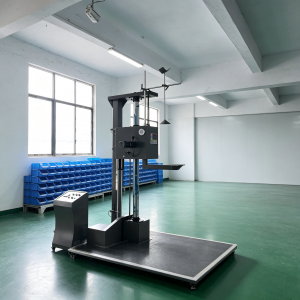
What Is a Single Wing Drop Testing Machine?
A Single Wing Drop Tester is a packaging testing machine designed to simulate free-fall impacts that occur during product transportation and handling.
The test package is positioned on the lifting arm and raised to a specified height. The support mechanism then releases the specimen so that it falls onto a rigid impact surface.
Depending on the test requirement, the package can be dropped onto its:
- Face
- Edge
- Corner
This makes the equipment useful for evaluating different vulnerable areas of a package.
The Lituo Single Wing Drop Testing Machine provides an adjustable drop height of 300–1500 mm and supports specimens weighing up to 80 kg.
Why Is Packaging Drop Testing Important?
Packaging is expected to protect a product throughout its transportation and distribution journey.
However, real-world handling can involve unexpected impacts. Packages may be:
- Dropped during loading
- Knocked over during warehouse handling
- Mishandled during distribution
- Dropped while being manually moved
- Subjected to impacts during shipping
A laboratory packaging drop test helps manufacturers reproduce these situations under controlled conditions.
The resulting test can reveal weaknesses in the packaging structure before the product is shipped to customers.
How Does a Drop Test Work?
A typical packaging drop test consists of several basic steps.
Step 1: Prepare the Package
The product is placed inside its intended transportation packaging, including cushioning materials and protective structures.
Step 2: Select the Drop Height
The required drop height is selected according to the applicable test method and packaging requirements.
The Single Wing Drop Tester supports a height range of:
300–1500 mm
Step 3: Position the Specimen
The package is positioned so that the required face, edge, or corner will make contact with the impact surface.
Step 4: Release the Package
The electric transmission system raises the specimen to the selected height, after which the package is released to produce the impact.
Step 5: Inspect the Product and Packaging
After the drop, both the packaging and the product are inspected for damage.
Depending on the test purpose, engineers may evaluate:
- Cracks
- Deformation
- Broken components
- Packaging collapse
- Cushioning damage
- Product functional failure
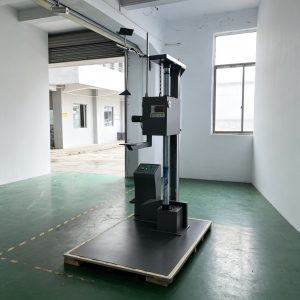
Face, Edge, and Corner Drop Testing
One of the key advantages of a Packaging Drop Tester is the ability to test different impact orientations.
Face Drop
A face drop applies impact over a relatively large area of the package.
It can be used to evaluate the structural strength of the packaging panel and the cushioning protection beneath the product.
Edge Drop
An edge impact concentrates the impact force along the package edge.
This can reveal weaknesses in carton construction, reinforcement, or internal cushioning.
Corner Drop
A corner drop creates a highly concentrated impact and can be particularly useful for evaluating vulnerable package areas.
Testing multiple orientations provides a more comprehensive understanding of packaging performance.
Key Specifications of the Single Wing Drop Tester
The Lituo Single Wing Drop Testing Machine is designed for medium- and heavy-duty packaging impact testing.
Key specifications include:
| Parameter | Specification |
|---|---|
| Drop Height | 300–1500 mm |
| Maximum Specimen Weight | 80 kg |
| Maximum Specimen Size | 800 × 800 × 1000 mm |
| Impact Panel | 1700 × 1200 mm |
| Impact Plate Thickness | 10 mm solid steel |
| Drop Method | Face, edge, and corner |
| Height Display | LED digital display |
| Drive System | Electric |
| Drop Height Error | ±10 mm |
| Impact Panel Parallel Error | ≤1° |
| Drop Surface Angle Error | ≤1° |
| Power | 1.5 kW |
The 10 mm solid steel impact plate provides a rigid impact surface for repeatable testing.
Packaging Materials and Products That Can Be Tested
A Drop Testing Machine can be used for many different types of transportation packages.
Corrugated Cartons
Corrugated boxes are widely used for transportation packaging. Drop testing can help evaluate carton strength and the effectiveness of internal cushioning.
Electronic Products
Electronics can be sensitive to mechanical shock. Packaging drop tests can determine whether protective materials provide sufficient protection during handling.
Household Appliances
Large or relatively heavy appliances may require higher-capacity packaging testing equipment. The 80 kg capacity of this model allows a wide range of packaged products to be evaluated.
Furniture and Consumer Products
Furniture components, household products, gifts, toys, and other consumer goods can also be tested to evaluate their transportation packaging.
Drop Testing for Packaging Design
Packaging testing should ideally be performed during the product development stage rather than only after packaging problems occur.
Engineers can compare different packaging solutions, such as:
- Different carton structures
- Different cushioning materials
- Different internal supports
- Different corner protections
- Different packaging thicknesses
Test results can then be used to improve the packaging design.
For example, if corner drops repeatedly result in product damage while face drops do not, engineers may focus on improving corner protection rather than increasing the overall packaging material.
This approach can help balance product protection, packaging cost, material consumption, and transportation efficiency.
Applicable Packaging Testing Standards
The supplied equipment references the following standards:
- ISO 2248
- JIS Z 0202-87
- GB/T 4857.5-92
The exact drop height, specimen orientation, number of drops, and evaluation criteria should be selected according to the applicable standard and the specific product packaging requirements.
How to Choose a Packaging Drop Tester
When selecting a Packaging Impact Tester, several factors should be considered.
1. Maximum Product Weight
Determine the maximum weight of the packaged product that needs to be tested.
This model supports specimens up to 80 kg.
2. Drop Height
Different products and packaging standards may require different drop heights. A wider adjustable range provides greater flexibility for laboratory testing.
3. Specimen Dimensions
The maximum package size should be compared with the equipment’s available test space.
This model supports specimens up to 800 × 800 × 1000 mm.
4. Impact Surface
A rigid and sufficiently thick impact plate helps provide consistent impact conditions.
The machine uses a 10 mm solid steel impact plate.
5. Drop Orientation
If the laboratory needs to evaluate face, edge, and corner impacts, the tester should provide suitable positioning and release functions.
Applications Across Industries
The Single Wing Drop Tester can be used across multiple industries, including:
- Packaging
- Electronics
- Home Appliances
- Furniture
- Toys
- Ceramics
- Gifts
- Consumer Products
- Logistics
- E-commerce
It is suitable for manufacturers, packaging engineers, quality-control departments, and third-party testing laboratories.
Conclusion
The Single Wing Drop Testing Machine provides a practical method for evaluating how products and packages respond to accidental drops during transportation and handling.
With a 300–1500 mm adjustable drop height, 80 kg maximum load capacity, face/edge/corner testing capability, digital height display, and rigid steel impact platform, the equipment can support a broad range of packaging impact tests.
For manufacturers, drop testing is more than simply checking whether a carton breaks. It provides valuable information for understanding how packaging protects the product and where the packaging structure can be improved.
By combining laboratory drop testing with appropriate packaging design, manufacturers can reduce transportation-related damage and develop packaging solutions that provide an appropriate balance between protection, cost, and material efficiency.
Post time: Sep-16-2026


