


Introduction: The Importance of Compression Set Testing for Foam Materials
Sponge and foam materials are widely used in furniture, mattresses, automotive seating, packaging, and insulation applications. One of the most critical performance indicators for these materials is their compression set — the permanent deformation that remains after a foam sample has been compressed under specific conditions for a defined period and then allowed to recover. The Sponge Compression Set Tester is a specialized instrument designed to measure this property precisely. By evaluating how much a foam specimen fails to return to its original thickness after compression, this tester helps manufacturers assess material quality, predict long-term performance, and ensure consistency in production.
Understanding the Compression Set Test Principle
The Sponge Compression Set Tester is primarily designed and manufactured according to the requirements of ISO 1856 Method A, but it can also be adapted to other international standards. The test procedure evaluates the permanent deformation of foam materials after compression.
Core Test Procedure Overview
- Sample Preparation: A test specimen of specified dimensions is cut from the foam material. Its initial thickness is measured at multiple points.
- Compression Setup: The specimen is placed between two parallel plates of a compression device (fixture). The plates are adjusted to compress the sample to a predetermined percentage of its original thickness — typically 50% of its original thickness (or other specified percentages, such as 25% or 75%, depending on the standard).
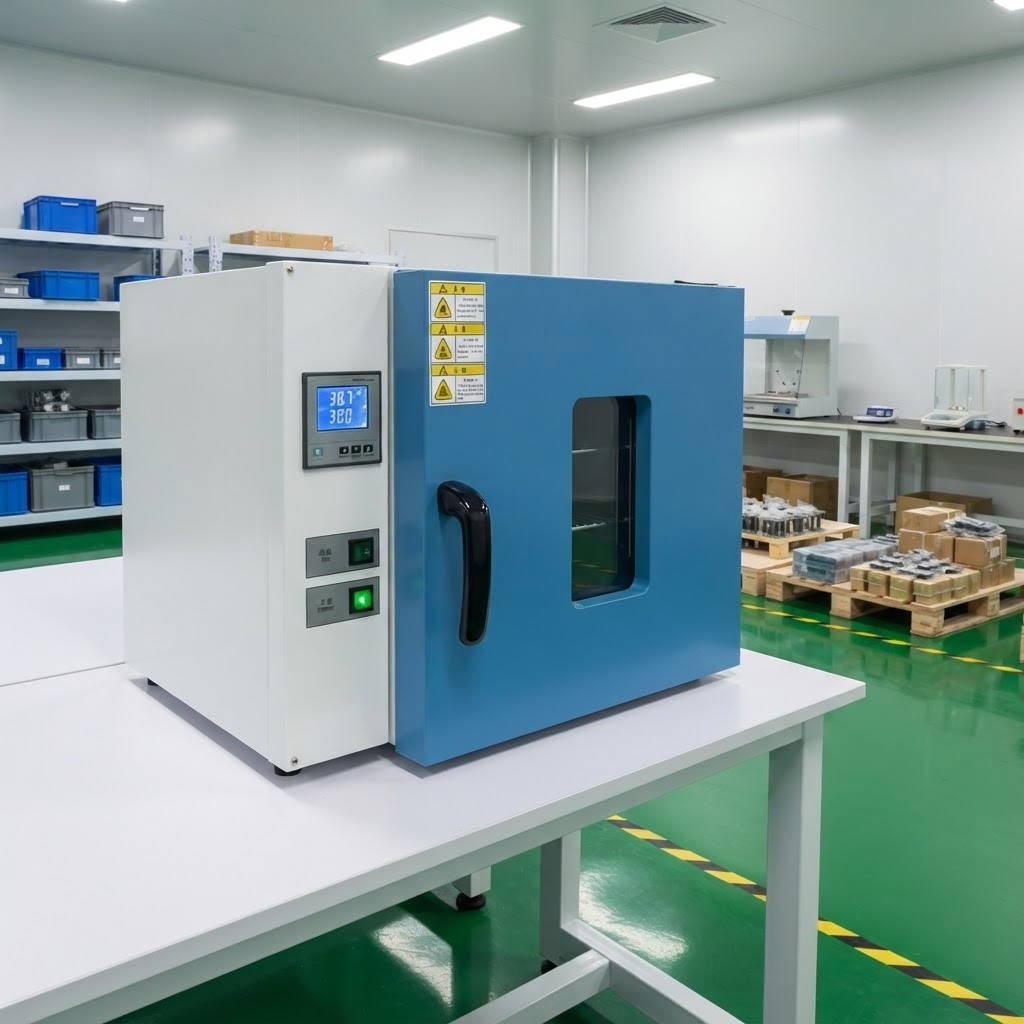
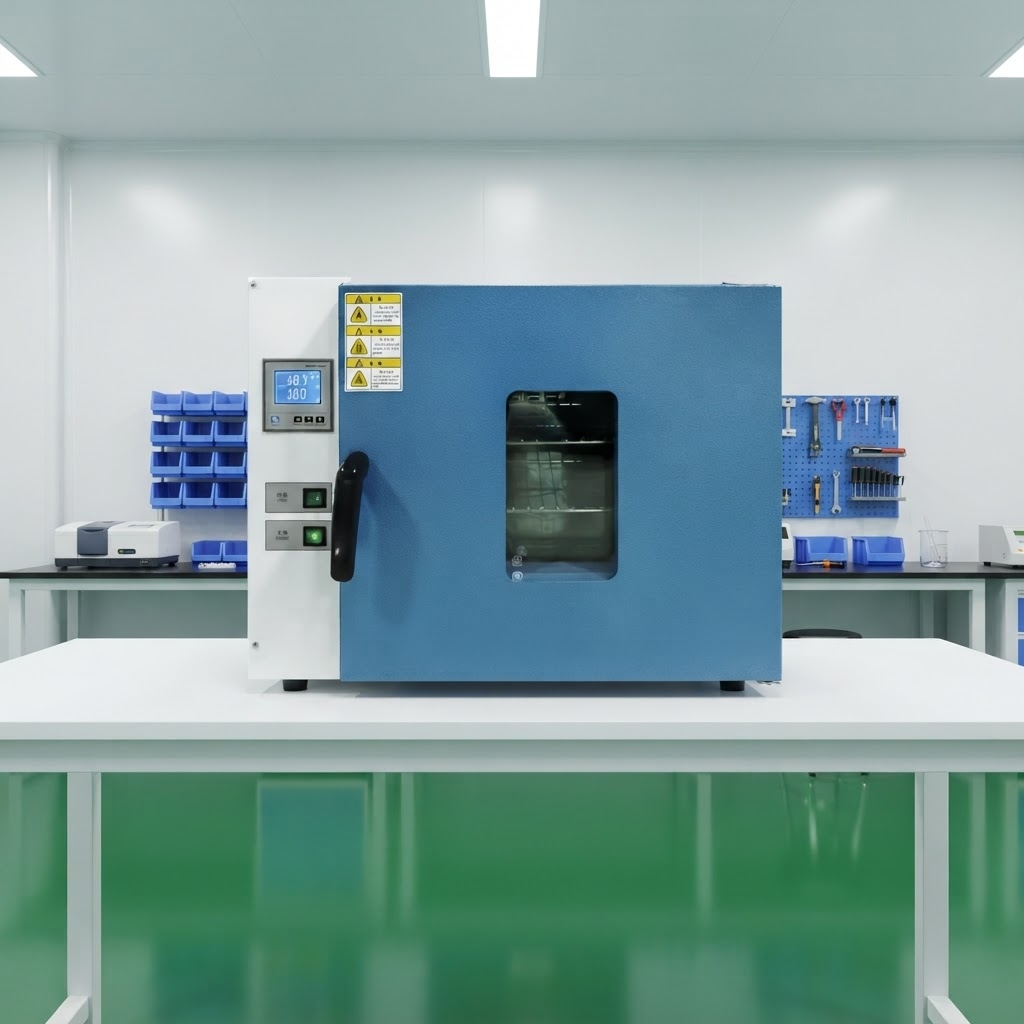
- Temperature Conditioning: The entire compression device with the compressed specimen is placed into a temperature-controlled oven set to the required test temperature — for ISO 1856 Method A, this is 70 ± 1°C. The specimen remains under compression at this temperature for a specified duration, typically 22 hours.
- Recovery Period: After the heating period, the compression device is removed from the oven. The specimen is released from compression and allowed to recover under standard laboratory conditions (typically 23 ± 2°C, 50 ± 5% RH) for a defined recovery period — normally 30 minutes.
- Final Measurement: After the recovery period, the final thickness of the specimen is measured at the same points as the initial measurement.
- Calculation: The compression set is calculated as a percentage of the original thickness:
Compression Set (%) = [(Initial Thickness - Final Thickness) / (Initial Thickness - Compressed Thickness)] × 100%
The compression set value indicates how much permanent deformation the foam has undergone. A lower compression set value indicates better recovery properties and higher resilience.
Key Technical Specifications
The Sponge Compression Set Tester is designed with precision and reliability in mind to ensure accurate and repeatable test results.
- Standards Compliance: ISO 1856 Method A, ASTM D3574 (Test D – Compression Set), GB/T 6669, DIN 53577, JIS K 6400-4, and other related international standards.
- Compression Ratio: Typically 50%, with adjustable options for 25%, 75%, or custom ratios.
- Specimen Size: Usually 50mm × 50mm or 100mm × 100mm, with thickness ranging from 10mm to 30mm.
- Test Temperature: 70 ± 1°C (per ISO 1856 Method A).
- Compression Duration: 22 hours (or as specified by the standard).
- Recovery Time: 30 minutes (or as specified by the standard).
- Compression Fixture Material: Corrosion-resistant stainless steel or aluminum alloy, with precision parallel plates.
- Measurement Precision: Thickness measurement with 0.01mm resolution.
Test Fixture (Compression Device) Design
The compression fixture is a critical component of the Sponge Compression Set Tester. It ensures that the specimen is uniformly compressed to the required thickness and remains stable during the high-temperature conditioning period. The fixture typically consists of:
- Two parallel plates: Made of corrosion-resistant materials, with a smooth, flat surface to avoid marking the specimen.
- Spacer bars or adjustment mechanism: Precisely machined spacer bars or adjustable screws to set the exact compression gap (e.g., 50% of the specimen’s original thickness).
- Locking mechanism: To prevent the plates from shifting during handling and oven placement.
- Multiple sample capacity: Some fixtures are designed to hold multiple specimens simultaneously, increasing testing efficiency.
Advantages of Using a Professional Compression Set Tester
Investing in a professional Sponge Compression Set Tester offers manufacturers and test labs several key advantages.
- Standardization: The tester is designed to meet international standards, ensuring that test results are comparable and widely accepted across the industry.
- Efficiency: The ability to test multiple samples simultaneously with fixtures that hold up to 3 or more specimens reduces testing time per batch.
- Accuracy: Precision-engineered fixtures and measurement procedures ensure reliable and repeatable results.
- Quality Assurance: Regular compression set testing helps manufacturers identify variations in raw materials or production processes, enabling continuous quality improvement.
- Compliance: Many end-user specifications and regulations require documented compression set performance, making this tester essential for regulatory compliance.
Conclusion: The Essential Tool for Foam Material Quality Assurance
The Sponge Compression Set Tester is an indispensable instrument for manufacturers, quality control labs, and R&D departments working with flexible foam materials. By providing precise, repeatable measurements of permanent deformation after compression, this equipment enables material developers to fine-tune formulations, quality teams to ensure production consistency, and engineers to predict the long-term performance of foam products. From automotive seating to high-end mattresses, compression set testing is the key to delivering foam products that maintain their comfort and performance over time.
Post time: Jul-22-2026


